
Searching for reliable scientific resources often leads to a handful of familiar websites but many users wonder what else is out there. Whether you want fresh perspectives on medical research or are looking for user friendly platforms with advanced tools your options might surprise you. With growing demand for trustworthy information new sites continue to appear each year and some offer standout features you might not expect. The right choice can make all the difference for your research or academic needs. Which alternatives are setting themselves apart and what makes them worth your time
Table of Contents
- National Center for Biotechnology Information (NCBI))
- Ensembl
- EMBL-EBI (European Bioinformatics Institute))
- UCSC Genome Browser
- National Cancer Institute (NCI) Website-website)
National Center for Biotechnology Information (NCBI)
At a Glance
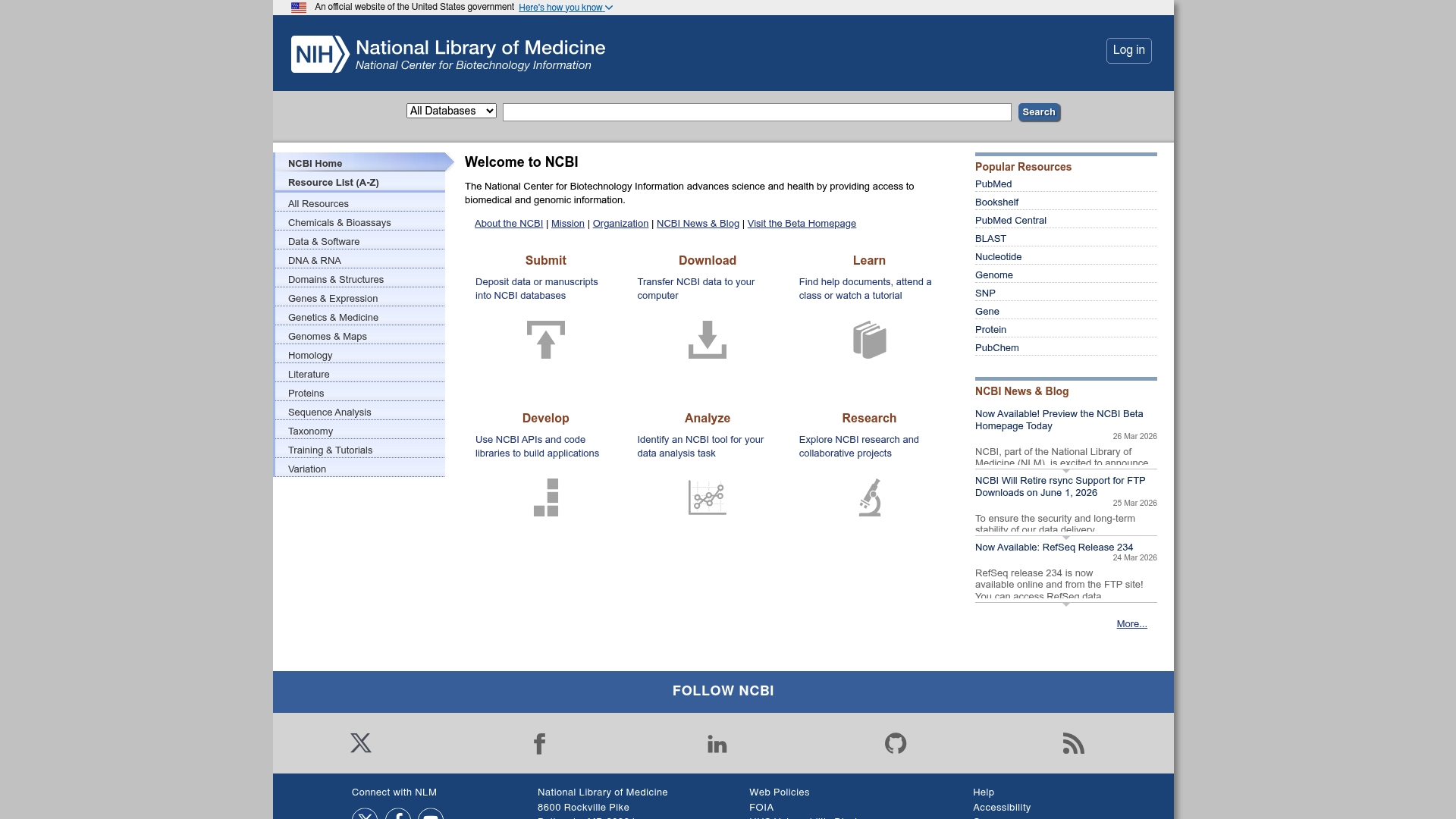
NCBI delivers access to biomedical and genomic databases backed by the United States Government, making it a trusted hub for researchers, clinicians, and students. The site pairs searchable archives with analysis tools so you can move from data discovery to practical insight quickly.
Core Features
NCBI combines a searchable index of biological data with tools for sequence analysis, genome browsing, and programmatic access through APIs and software libraries. Training materials and tutorials help users apply tools to research and clinical projects efficiently.
- Access to biomedical and genomic information databases for broad data discovery
- Search engine for biological data including literature and sequence records
- Tools for sequence analysis and genome browsing such as BLAST and genome viewers
- Resources for research and training including tutorials and documentation
- APIs and software libraries for application development and automated workflows
Pros
- Official government site ensuring data reliability and security. The federal hosting and curation provide strong provenance for clinical and research use.
- Wide range of biomedical and genomics resources. You get literature, sequence archives, and specialized databases in one place.
- User friendly interface with dedicated tools and tutorials. Guided documentation reduces time to competency for common tasks.
- Supports research, education, and clinical work in biotech and medicine. The resource set maps well to academic and healthcare workflows.
- Regular updates with new data releases and news. Continuous curation keeps datasets current for longitudinal studies.
Cons
- Complex interface for new users due to extensive data and tools. The volume of content can feel overwhelming when you are starting out.
- Requires specific knowledge for effective use of advanced features. Advanced sequence analysis and API integration demand technical skill.
- Some data and tools may have a steep learning curve. Mastery of specialized tools like BLAST takes time and practice.
Who It's For
NCBI is ideal for researchers, scientists, and healthcare professionals who need authoritative genomic and biomedical data for studies, clinical interpretation, or teaching. Graduate students and bioinformaticians also benefit when building reproducible analyses and pipelines.
Unique Value Proposition
NCBI uniquely pairs comprehensive public data with integrated analysis tools and programmatic access, offering a one stop environment for discovery and development. The federal stewardship and frequent data releases ensure trust and continuity for long term projects.
Real World Use Case
A researcher runs BLAST through NCBI to find homologous DNA sequences across species, then uses genome browsers and literature links to interpret variants for a comparative genetics study. Results feed into publications and follow up experiments.
Pricing
Free access to all datasets and tools.
Website: https://www.ncbi.nlm.nih.gov
Ensembl
At a Glance
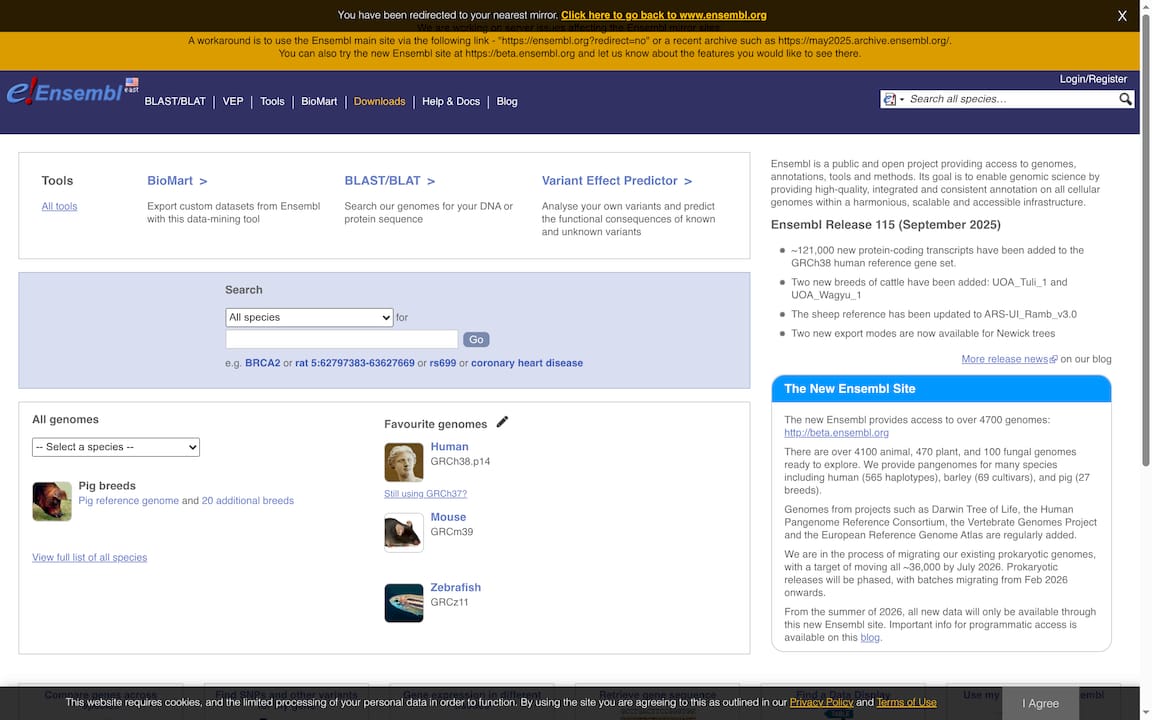
Ensembl is a public genomic resource that delivers broad, integrated genome data and analysis tools for researchers. It excels at large scale access to annotated genomes while requiring time to learn for users new to bioinformatics.
Core Features
Ensembl provides access to over 4700 genomes across humans, animals, plants, and fungi along with integrated tools such as BLAST/BLAT, Variant Effect Predictor (VEP), and BioMart for targeted data retrieval. The platform supports programmatic access and regular data releases.
Pros
-
Comprehensive coverage: Ensembl houses a wide range of species and genomes, giving researchers broad comparative context in one place.
-
Integrated analysis tools: The platform includes VEP, BLAST/BLAT, and BioMart so you can analyze variants, search sequences, and export data without switching sites.
-
Regular updates: Ensembl issues new releases and feature updates which keep annotations and reference data current for research projects.
-
Open access: The resource is freely available to the scientific community which lowers barriers for academic and clinical research teams.
-
Programmatic support: Ensembl supports custom data uploads and API access so bioinformaticians can automate workflows and integrate results into pipelines.
Cons
-
The platform can feel complex for new users because the breadth of tools and datasets creates a steep initial learning curve.
-
Some datasets or tools may be temporarily unavailable during server maintenance or service interruptions which can disrupt time sensitive analyses.
-
Advanced tools require technical know how and scripting skills to use effectively which raises the entry bar for clinicians and students without bioinformatics support.
Who It's For
Ensembl targets researchers, bioinformaticians, and advanced students working in genomics and molecular biology who need reliable, annotated reference genomes. It fits teams that can invest time learning the tools and that value programmatic access for reproducible workflows.
Unique Value Proposition
Ensembl uniquely combines broad species coverage with integrated analysis tools and programmatic interfaces. Its strength is offering both high volume genome access and toolsets like VEP and BioMart in a single, freely accessible platform.
Real World Use Case
A researcher investigating disease linked variants uses Ensembl to compare gene annotations across species, run VEP to assess variant consequences, and download sequence data for follow up functional experiments and cross species analyses.
Pricing
Ensembl is free and open access which makes it suitable for academic, nonprofit, and early stage clinical research without licensing costs.
Website
Website: https://ensembl.org
EMBL-EBI (European Bioinformatics Institute)
At a Glance
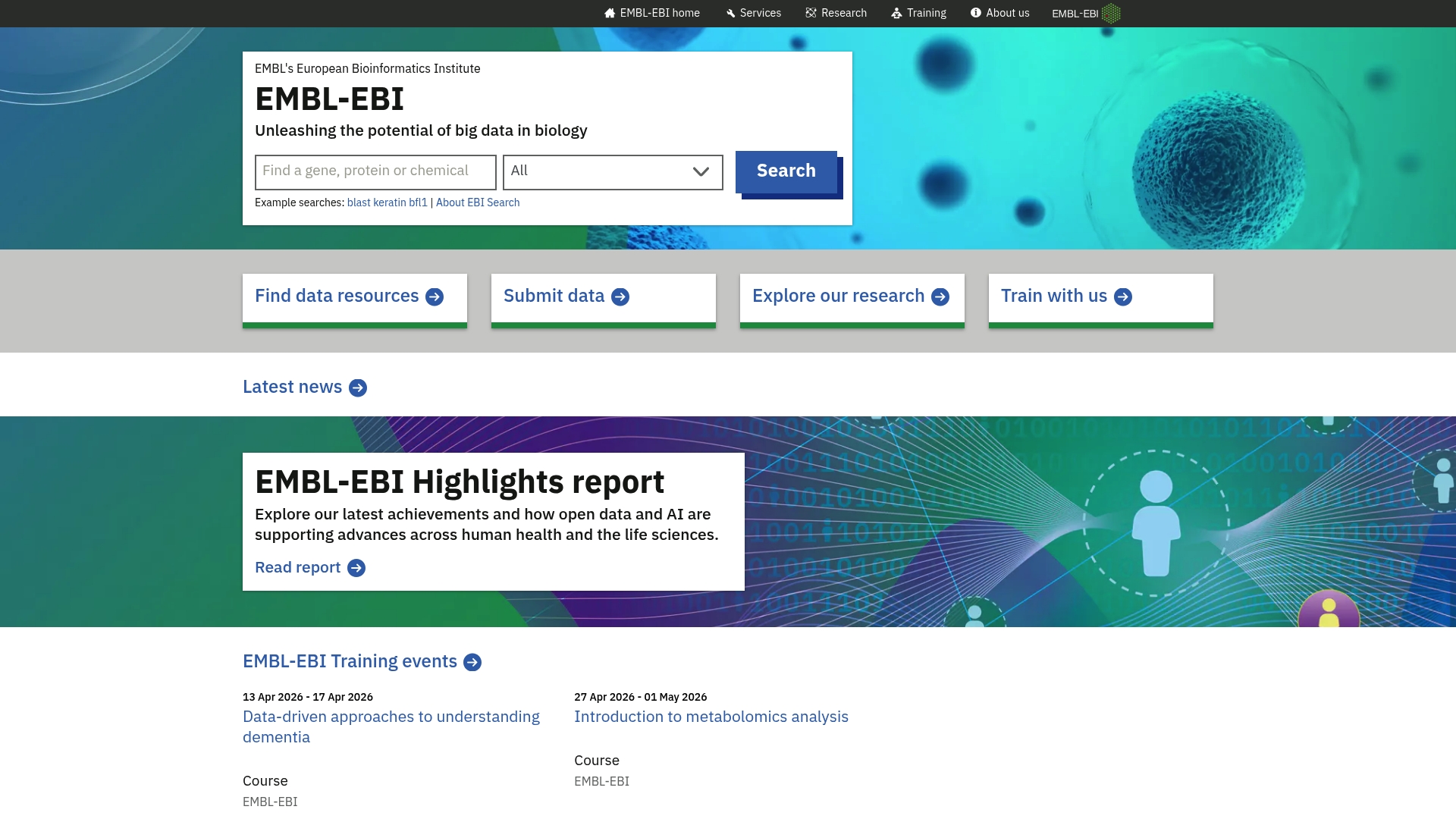
EMBL-EBI delivers a broad suite of open data resources and research services aimed at accelerating biological discovery across genomics, proteomics, and molecular interactions. The institute combines data sharing, research groups, and hands-on training programs to support investigators and institutions.
EMBL-EBI excels at large scale data provision and community engagement, but its offerings target researchers more than general consumers. If you need authoritative datasets and educational support, this is one of the most reliable public resources available.
Core Features
EMBL-EBI maintains extensive open data resources spanning genome sequences, protein databases, and interaction networks that integrate with analysis tools. The organization runs active research groups and postdoctoral schemes that advance bioinformatics methods and reproducible science.
In addition, EMBL-EBI provides practical training programs and workshops for data analysis, partners with industry on translational projects, and coordinates biological data provision across Europe to support collaborative science.
Pros
- Comprehensive bioinformatics data resources: The institute hosts reliable, curated datasets that support comparative genomics and large scale analyses for research projects.
- Strong research and training programs: Regular workshops and postdoctoral opportunities build local capacity in data analysis and computational biology.
- Global reputation and collaboration opportunities: EMBL-EBI’s standing facilitates cross institution collaborations and data sharing across academic and industry partners.
- Support for industry and translational research: The institute engages in projects that translate basic data into applied research outcomes for healthcare research.
- Part of an intergovernmental organization: EMBL affiliation provides stability, governance, and long term commitment to public data access.
Cons
- Primarily focused on scientific and research communities: The platform is not designed for casual consumers seeking packaged genetic interpretations for personal health decisions.
- Complexity of data resources: Effective use often requires bioinformatics skills and familiarity with command line tools or data formats.
- Limited consumer-facing products: There are few commercial tools or simplified consumer reports for patients or clinicians without bioinformatics support.
Who It's For
Researchers, scientists, bioinformaticians, and graduate students working on genomics, proteomics, or systems biology will find EMBL-EBI indispensable for data and training. Industry researchers and institutional data managers will also benefit from collaborative and translational project support.
Unique Value Proposition
EMBL-EBI uniquely combines curated, open datasets with active research groups and structured training, all within a stable intergovernmental framework. That mix makes it a go-to resource when reproducible, high quality biological data and community support matter.
Real World Use Case
A genomics researcher accesses EMBL-EBI genome sequences and protein annotations to perform comparative analysis across species, then applies training resources to learn new analysis pipelines, accelerating discovery on gene functions linked to a hereditary disease.
Pricing
Most data resources and many training materials are available free of charge, with the institute maintaining open access to key databases. Specific services or specialized support may carry fees that are not detailed on the homepage.
Website: https://ebi.ac.uk
UCSC Genome Browser
At a Glance
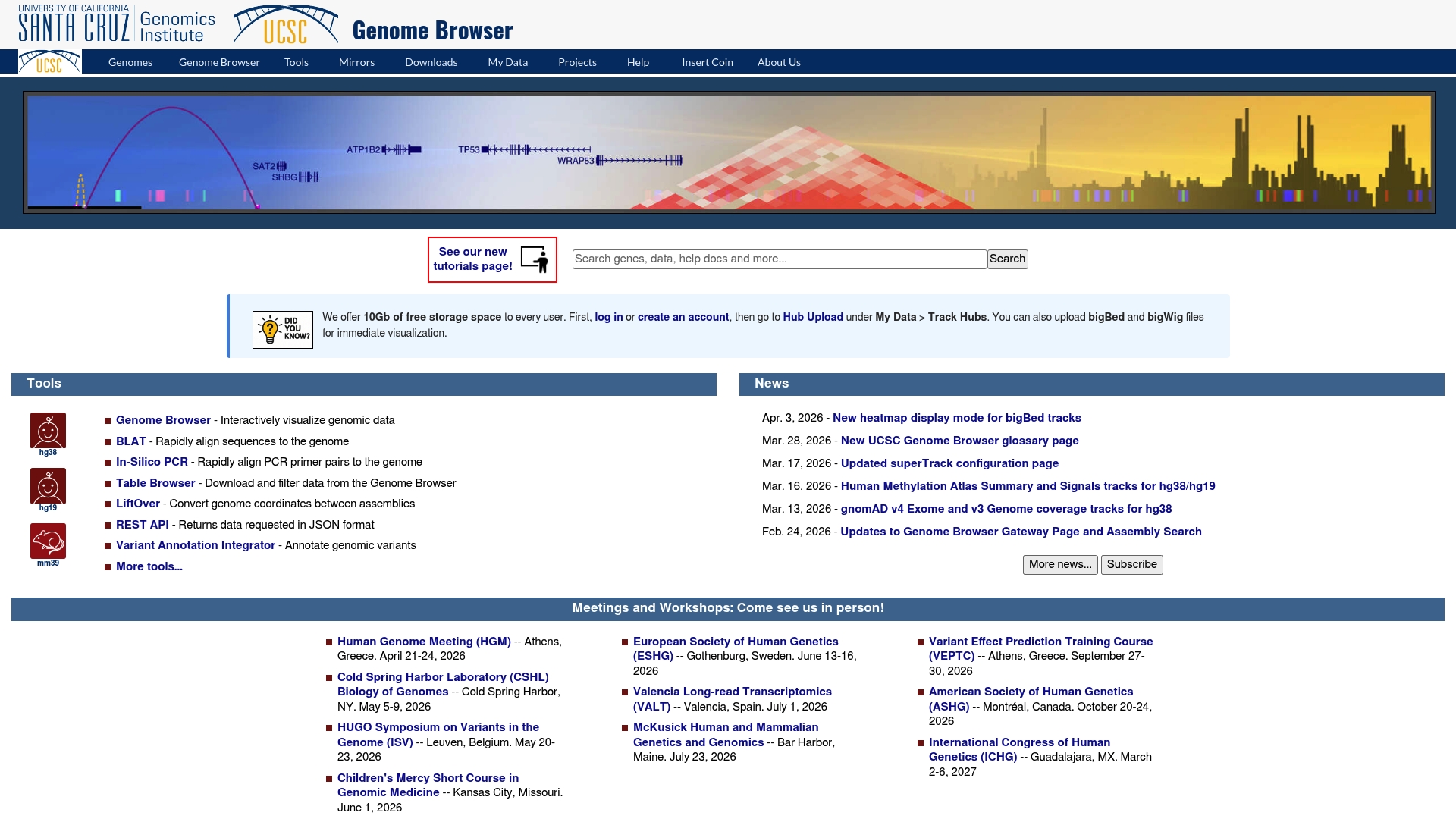
The UCSC Genome Browser is a long standing platform for exploring genomes with an emphasis on visual context and data layering. It works well for examining variants within annotated regions and for preparing shareable views for collaborators.
Core Features
The Browser provides interactive visualization of genomic regions with dense annotation tracks and zoomable views. It also offers tools for sequence alignment, primer analysis, coordinate conversion, and variant annotation to support analysis workflows.
Users can load custom tracks or connect track hubs to view private sequencing results alongside public annotations. The site supports multiple species and assembly versions and provides data download options in several formats for downstream analysis.
Pros
- Comprehensive data and tools: The platform combines extensive public annotations with utilities for alignment and variant annotation, so you can analyze context around a hereditary cancer variant in one place.
- Flexible data visualization: Custom tracks and track hubs let you display your sequencing results next to reference annotations for clear comparisons with existing gene models.
- Educational support: The Browser includes tutorials and workshops that help new users learn to navigate genome assemblies and use common analysis tools.
- Community and collaboration: Active support forums and the ability to share sessions make it easier to collaborate with clinicians and researchers when reviewing genetic findings.
- Multi species support: Human and mouse assemblies are available along with other species, which helps when comparing conserved regions across organisms.
Cons
- Complex interface for newcomers: The many menus and options create a steep learning curve for users without bioinformatics experience.
- Upload limits and account needs: Data upload and persistent customizations require registration and are subject to storage limits that may constrain large sequencing projects.
- Technical knowledge required: Effective use of some tools requires familiarity with genome coordinates, file formats, and sequence analysis concepts.
Who It's For
This tool fits genomic researchers, bioinformaticians, educators, and students who need detailed genome context and customizable visualization. Clinicians reviewing hereditary cancer test results will find the layered annotations useful when interpreting variant position and nearby gene features.
Unique Value Proposition
The Browser stands out for its integration of public annotations and user data visualization in a single interactive environment. Its support for track hubs and session sharing makes it especially useful for teams that must review and present genomic findings.
Real World Use Case
A research team uploads custom sequencing data to create a track showing variants found in a hereditary cancer panel. They compare those variants to public annotations, adjust display settings for clarity, and share a session link with clinical partners for joint interpretation.
Pricing
The UCSC Genome Browser is free to use with optional registration required for data upload and customization features.
Website: https://genome.ucsc.edu
National Cancer Institute (NCI) Website
At a Glance
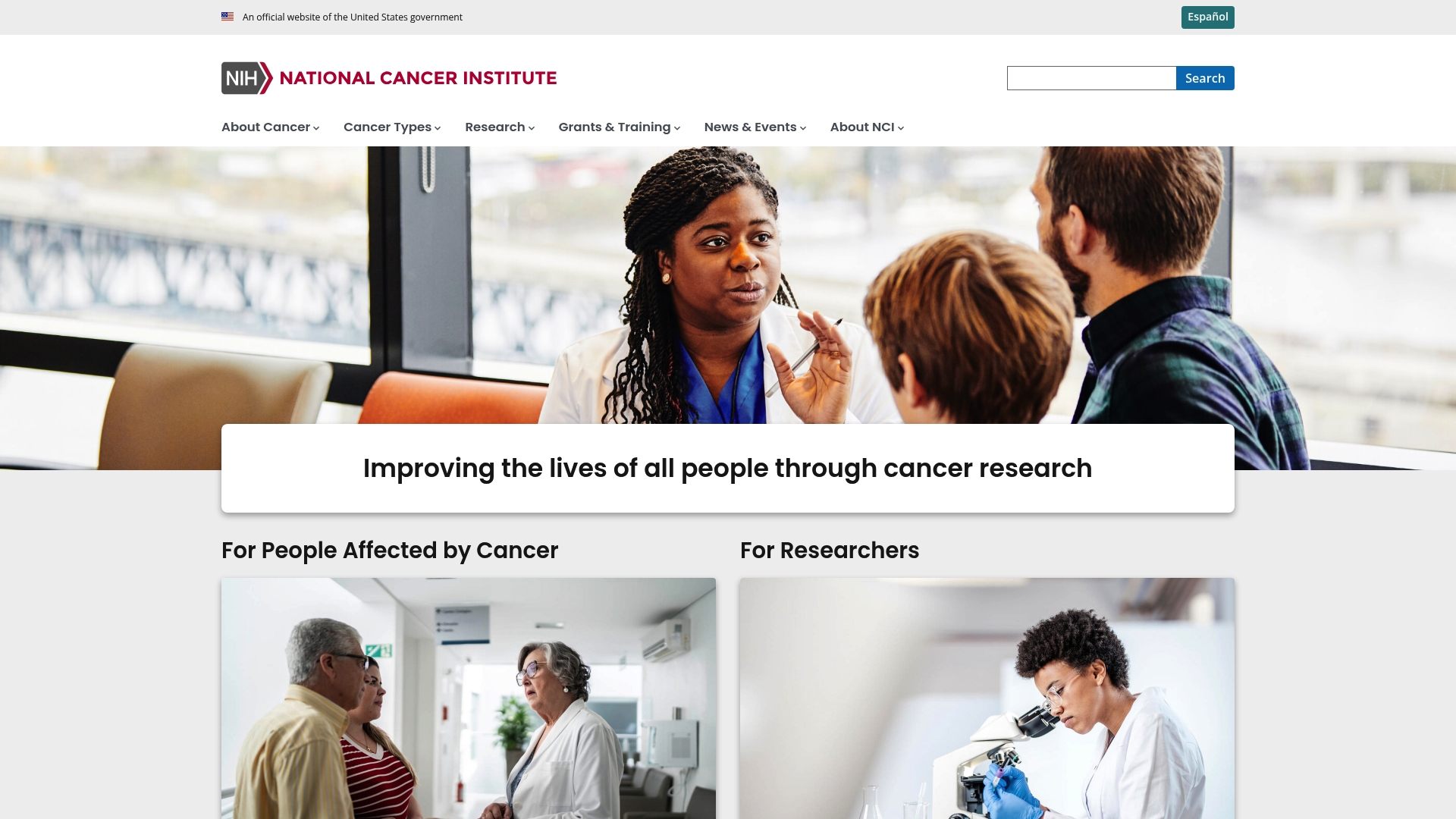
The National Cancer Institute website is the United States government's central hub for evidence based cancer information, research updates, and clinical trial access. It delivers deep, authoritative content for patients and professionals, though the volume of material can feel overwhelming when you need a quick answer.
Core Features
The site provides extensive information on cancer types, causes, prevention, symptoms, diagnosis, and treatment paired with resources tailored for patients, caregivers, and healthcare professionals. It also offers clinical trials listings, research support details including funding and grant guidance, and up to date scientific news.
Pros
- Trusted authoritative source: The site is run by the National Cancer Institute and links to government level research and guidelines that clinicians and patients can rely on.
- Comprehensive educational resources: The content covers practical care topics, survivorship, and prevention in formats suitable for patients and professionals.
- Research updates and news: Regularly published scientific breakthroughs and summaries help clinicians and researchers stay current with evolving evidence.
- Clinical trial access: The searchable listings make it easier for patients and investigators to find trials by location and eligibility.
- Support for researchers: The site lists funding opportunities, collaboration resources, and application guidance for grant seekers.
Cons
- High information density can slow answers: The depth of content creates navigation challenges for users seeking a single, quick fact.
- Limited personalized tools: The site focuses on static informational content and lacks interactive, individualized health management features.
- Not a replacement for clinical care: The resource emphasizes research and education and does not provide direct medical consultation or personalized treatment planning.
Who It's For
The NCI website is ideal for individuals affected by cancer, caregivers wanting reliable education, healthcare professionals seeking evidence based guidance, and researchers pursuing funding or collaboration. Students and the general public interested in science will also find structured, authoritative learning materials.
Unique Value Proposition
NCI provides unmatched government backed credibility and a single destination for research, clinical trial listings, and patient education. For anyone who needs source verified cancer data or grant and trial information, this site serves as a primary, citable resource.
Real World Use Case
A patient newly diagnosed with cancer can use the site to compare treatment options, search for nearby clinical trials, and download educational guides for caregivers. A researcher can find funding announcements and application instructions to support a study.
Pricing
Access to all content on the NCI website is free.
Website: https://cancer.gov
Genomic Research Platforms Comparison
This table provides a detailed overview of various genomic research platforms, highlighting their features, strengths, limitations, and ideal user base, enabling informed decisions.
| Platform | Core Features | Pros | Cons | Pricing | Ideal Users |
|---|---|---|---|---|---|
| NCBI | Access to biomedical and genomic data, sequence analysis tools, genome browsing, APIs for automation, tutorials | Trusted source, broad data availability, user-friendly tools, regular updates | Complex for new users, specialized skills needed | Free | Researchers, clinicians, graduate students |
| Ensembl | Access to over 4700 genomes, BLAST/BLAT, Variant Effect Predictor, BioMart for data extraction, programmatic interfaces | Extensive genome coverage, integrated tools, frequent updates, programmatic support | Steep learning curve, technical skills required | Free | Genomic researchers, bioinformaticians |
| EMBL-EBI | Open data resources, training workshops, research collaborations, curated genome sequences and proteomics databases | High-quality datasets, strong training programs, global reputation, support for collaborations | Primarily for scientists/researchers, complex data structures | Free | Bioinformatics researchers, students, industry teams |
| UCSC Genome Browser | Interactive genome visualization, custom tracks, sequence alignment, multilayer annotation previews | Flexible visualization, extensive annotations, tutorials available, suitable for multi-species analysis | Requires genome informatics knowledge, data upload limits | Free | Researchers, clinicians |
| NCI Website | Cancer information, clinical trial listings, education resources, funding opportunities | Authoritative source, wide resources for varied audiences, regularly updated | Dense with information, limited interactive personalization | Free | Patients, healthcare professionals, researchers |
Discover Precision Beyond Public Genomic Databases
Navigating complex genomic resources like NCBI can be overwhelming, especially when you need clear, actionable insights for hereditary cancer risk or medication optimization. The challenge often lies in translating vast, technical data into personalized health decisions that physicians and patients can trust. If you are seeking a solution focused on rapid, AI-driven hereditary cancer screening and pharmacogenomics to unlock precise patient care, there is a better path.

Gene Matrix LLC harnesses advanced AI technology trained on over 500,000 genetic profiles to deliver comprehensive, easy-to-understand genomic reports within 72 hours. Whether assessing cancer risk, uncovering drug-gene interactions, or personalizing wellness, their GeneMatrixAI platform moves beyond static databases to provide actionable, tailored results for clinicians and health systems. Explore how Gene Matrix is revolutionizing precision medicine today by visiting Gene Matrix and take the next step toward transformative healthcare insights.
Frequently Asked Questions
What are some good alternatives to www.ncbi.nlm.nih.gov for biomedical research?
Explore options such as Ensembl, EMBL-EBI, and UCSC Genome Browser. Each alternative offers distinct features like interactive genome visualization, extensive bioinformatics resources, and open access to genomic data.
How can I access genomic data from alternative sites to www.ncbi.nlm.nih.gov?
Visit the respective websites of alternatives like Ensembl or EMBL-EBI to navigate their databases. Most platforms offer comprehensive tutorials to guide first-time users through the data retrieval process.
Are there any free tools available for sequence analysis apart from www.ncbi.nlm.nih.gov?
Yes, several platforms such as EMBL-EBI and UCSC Genome Browser provide free access to sequence analysis tools. Utilize these tools to analyze DNA, RNA, and protein sequences efficiently.
How can I determine which alternative to www.ncbi.nlm.nih.gov is best for my research needs?
Evaluate each platform based on the specific features you require, such as the types of data available or analytical tools offered. Take a few minutes to read user reviews or check their documentation to see which site aligns with your research objectives.
What training resources are available for using alternatives to www.ncbi.nlm.nih.gov?
Most alternative platforms like EMBL-EBI and UCSC Genome Browser offer training materials, including tutorials and webinars. Sign up for these resources to enhance your understanding and skills in bioinformatics analysis.
Can I share my findings from alternative platforms like EMBL-EBI or Ensembl with my research team?
Absolutely! Many platforms allow users to create shareable sessions or download data for collaboration. Use these features to facilitate discussions and enhance your research projects.