

Finding a genetic testing provider with transparent pricing, clear test menus, and accessible sample collection methods is difficult for clinicians and procurement teams. Most providers lack published pricing, complete test menus, or rely on invasive sample collection that creates workflow barriers. This comparison outlines pricing, collection methods, and panel coverage so clinicians and procurement teams can select a provider that fits their operational needs.
Table of Contents
- Gene Matrix
- Ambry Genetics
- Myriad Genetics
- Advanced Molecular Diagnostics (ADMDiag)
- Comparison of alternatives
Gene Matrix

At a Glance
The company reports a CLIA and ISO 15189 certified laboratory and states 99.9% accuracy for its test processes. The vendor advertises results delivered within 5–7 days using a mail-in saliva collection kit. Gene Matrix pairs that lab infrastructure with subscription access to multiple genetic test panels.
Core Features
Gene Matrix combines AI-powered genetic analysis with multiple specialized test panels for cancer risk, pharmacogenomics, mental health, pediatric screening, and reproductive health. The platform uses secure, HIPAA-compliant data handling and delivers clinician-ready reports via a secure portal or PDF. The service supports mail-in saliva kits and international access with free shipping.
Key Differentiator
The single distinguishing feature is an all-in-one subscription model that gives ongoing access to a broad suite of clinically oriented genetic panels at a fixed monthly price. That model removes repeat per-test billing for clinicians and patients who need serial testing or family screening. It positions Gene Matrix as a comparison tool and service bundle for people who expect frequent or varied testing needs.
Pros
The test catalog covers diverse health domains, from hereditary cancer screening to pharmacogenomics and sports-related markers. The vendor advertises a fast turnaround time that helps clinicians act sooner on test findings. According to the company, accuracy has been validated against Sanger sequencing, which supports laboratory reliability claims. Subscription plans simplify repeated testing and lower marginal costs for families or clinics that order multiple panels.
Cons
- Public documentation lacks granular lists of specific genetic variants and exact gene coverage, so specialist consultation is recommended for deep clinical interpretation.
Who It's For
People seeking accessible genetic testing for cancer risk, medication response, family planning, or wellness will find this useful. Clinicians and health systems that require clinician-ready reports and faster repeat testing benefit from a subscription model. Families needing multiple related tests or follow-up screens will value the single monthly access option.
Unique Value Proposition
A fixed monthly subscription that covers a wide range of clinically focused panels changes how clinics budget for genetic testing. Instead of paying per specimen, a practice can place recurring orders and reduce per-case administrative work. That workflow saves time for clinicians who manage multiple patients with hereditary risk or medication optimization needs.
Real World Use Case
A woman with a family history of breast cancer orders a hereditary cancer panel through Gene Matrix using a mailed saliva kit. Her clinician receives a clinician-ready PDF and uses the results to discuss surveillance and preventive options. The subscription model lets the clinic run follow-up panels without new per-test billing paperwork.
Website: https://genematrix.io
Ambry Genetics

At a Glance
Ambry Genetics reports an average patient cost under $100 for many tests. That pricing claim stands out for clinical teams managing outpatient budgets. The company pairs combined DNA and RNA analysis with ongoing reanalysis and a digital CARE Program® to find at-risk patients and refine diagnoses.
Core Features
Ambry delivers DNA/RNA combined testing for hereditary cancer and offers exome testing for rare diseases with proactive reanalysis built into the workflow. The service includes the CARE Program® for patient identification and digital health outreach, plus educational webinars and research updates for clinicians. Labs receive reanalysis reports that may reveal newly interpretable variants as evidence evolves.
Key Differentiator
Ambry’s distinguishing feature is the integration of dual-molecule testing with continuous reanalysis and an active digital program for patient outreach. That combination aims to reduce unresolved variants and keep clinical teams informed when a variant’s interpretation changes.
Pros
The vendor states nearly 25 years in genetic testing, which implies long operational experience with clinical workflows and lab throughput. Its testing menu centers on combined DNA and RNA analysis and exome reanalysis, which helps clarify variants that single-molecule tests miss. The CARE Program® supports patient identification and follow-up, which helps clinicians close gaps in testing and reach patients who otherwise would not get screened.
Cons
- Pricing and billing options are not publicly disclosed. This makes budgeting and procurement slower for hospitals and health systems.
- The company does not list full feature detail or a complete test menu on the public site. Procurement teams may need direct contact to confirm test availability.
- Coverage for highly specialized or non-standard assays may be limited. Clinical labs that need bespoke panels should confirm feasibility before committing.
When It May Not Fit
If your organization needs transparent, published pricing and self-serve procurement, Ambry may not fit. Teams that require a fully documented public test catalog and technical specs for every assay will find the website sparse. Organizations that need custom assay development or routine access to nonstandard panels should evaluate alternate laboratory partners.
Who It's For
Clinical genetics teams, genetic counselors, and hospital molecular programs seeking a lab partner with combined DNA and RNA testing and a reanalysis workflow. The offering suits clinicians who need integrated patient identification and follow-up via a digital program rather than a plug-and-play SaaS product.
Real World Use Case
A genetic counselor orders Ambry’s hereditary cancer panel for a family with ambiguous results from a prior test. Ambry runs DNA and RNA analysis, flags a previously uncertain variant on reanalysis, and the counselor enrolls the patient in the CARE Program® for targeted follow-up and family outreach.
Pricing
Public pricing is not listed on Ambry’s site, though the company reports average patient costs under $100 for many tests. That figure is useful as a ballpark, but procurement teams should request formal quotes to compare reimbursements and contract terms.
Website: https://ambrygen.com
Myriad Genetics
At a Glance
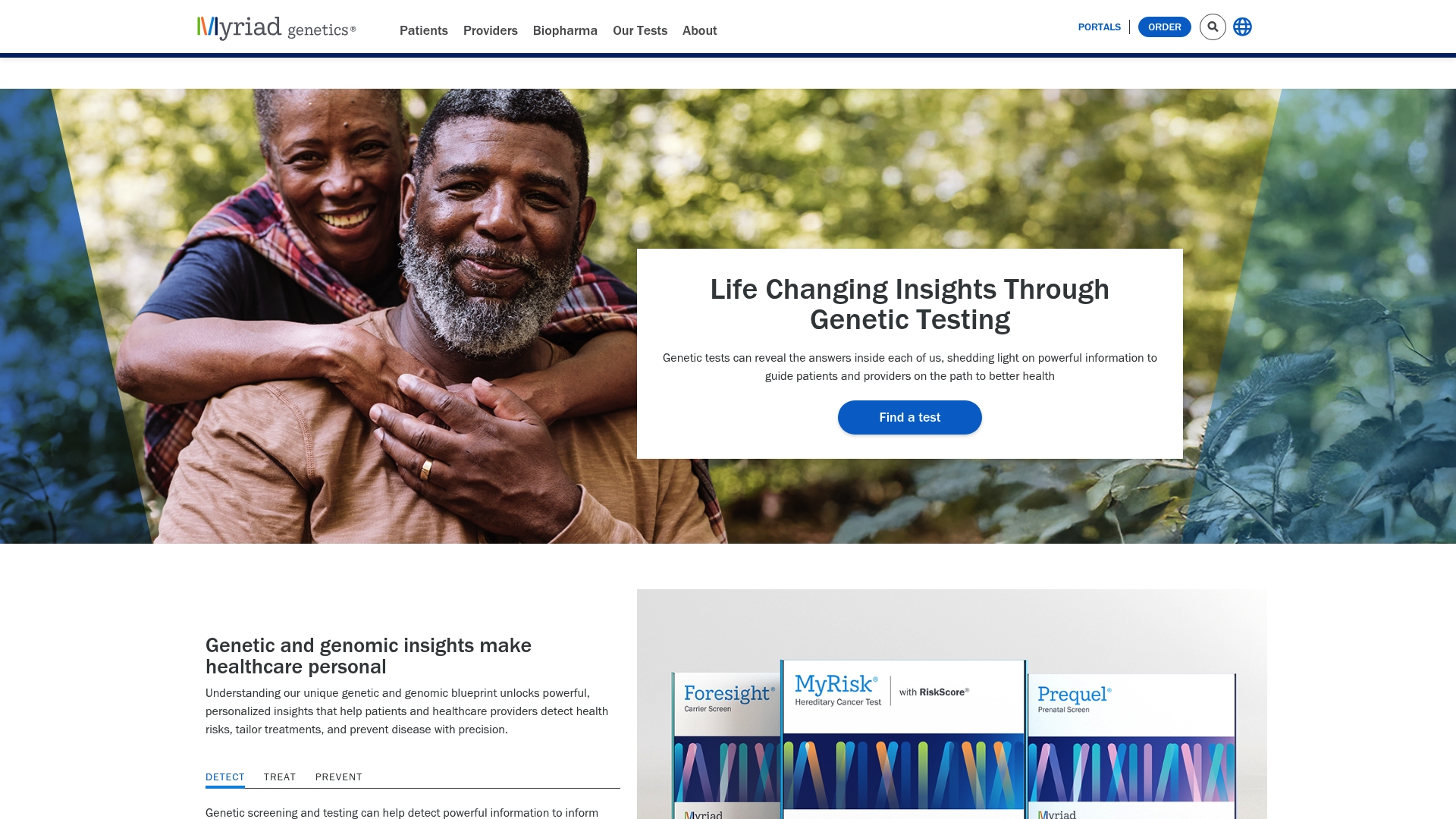
Myriad's marketing materials state it serves millions of patients and thousands of providers globally. That scale shows in a large test menu covering hereditary cancer, reproductive health, oncology, urology, and mental health. The company pairs lab testing with clinical support and clinician resources.
Core Features
Myriad offers tumor genomic testing alongside DNA tests for hereditary risk and reproductive screens, all intended to inform clinical decisions. The platform uses AI driven analyses to highlight genomic patterns and support pathology review. The company also maintains a large data repository and provider resources to help interpret results.
Key Differentiator
Myriad combines genomics and AI driven digital pathology for prostate cancer management. The vendor advertises this as a first of its kind capability for guiding treatment choice.
Pros
Decades of scientific work and a deep test menu let clinicians pick targeted assays for specific clinical questions. Results emphasize clarity, with reports designed for clinician review and for sharing with patients. Global operations and partnerships mean many hospitals and practices can order tests and access provider tools.
Cons
- Access and coverage can vary by region and insurer, which may limit who can get testing.
- The test selection process can feel complex for clinicians who order infrequently and may require guidance.
- Pricing and insurance rules differ across tests and payers, adding administrative overhead for billing teams.
When It May Not Fit
Clinics without reliable insurance reimbursement may face high out of pocket costs for patients. Smaller practices that lack lab ordering workflows may find setup and navigation burdensome. Health systems that need explicit regional availability guarantees should verify local access before committing.
Notable Integrations
Myriad connects with EMR systems to support orders and result transmission. Providers should confirm specific EMR compatibility with their system administrator or Myriad representative.
Who It's For
Hospitals, healthcare systems, and genetic counselors who need a broad set of clinical genomic tests will find this product relevant. Specialty clinics such as oncology and reproductive medicine teams benefit from the targeted assays. Large practices that already integrate labs with their EMR will use the provider resources most efficiently.
Real World Use Case
A urologist orders a Prolaris®+ AI test to evaluate prostate cancer aggressiveness. The report informs whether the clinician recommends active surveillance or more aggressive therapy. The combination of genomic score and pathology review changed the care plan in this scenario.
Pricing
Myriad lists pricing as not applicable for public reference. Tests are billed through clinical channels and by payer rules. Out of pocket costs vary by test and by insurance, so providers should contact Myriad or a lab representative for case specific estimates.
Website: https://myriad.com
Advanced Molecular Diagnostics (ADMDiag)
At a Glance
Noninvasive mouthwash collection pairs with dual platform sequencing to deliver genetic test samples that avoid blood draws. The test menu covers hereditary cancer panels, tumor profiling, and newborn carrier screening. The vendor states it adheres to CLIA and CMS standards.
Core Features
ADMDiag runs next generation sequencing across a wide set of panels while offering a mouthwash sample option that simplifies sample collection for patients. The lab performs full gene sequencing and a dual platform sequencing approach to reduce blind spots in variant detection. The service emphasizes speed and lower costs through platform efficiency.
Key Differentiator
ADMDiag combines a noninvasive mouthwash collection workflow with its dual platform sequencing to reduce sample barriers and broaden detectable variant types. That pairing targets clinics that want thorough sequencing without phlebotomy. The approach aims to balance clinical depth with easier sample logistics.
Pros
Noninvasive collection improves patient compliance and simplifies clinic workflows for screening and follow up. The dual platform sequencing and full gene analysis reduce the risk of missed variants compared with single method testing. The vendor reports CLIA and CMS adherence, which supports laboratory quality claims while keeping per-test costs lower through technology choices.
Cons
- Website pricing and feature pages return errors or are not detailed. This makes budget planning difficult for procurement teams.
- Technical integration options and lab workflow specifics are not published. IT teams must request documentation directly.
- The site does not list explicit turnaround times or result interpretation protocols. Clinical staff must contact the lab to confirm processing timeframes.
When It May Not Fit
If you need immediate public pricing and a clear online ordering flow, ADMDiag may not match that requirement. Laboratories and clinics that require detailed integration specs or published turnaround guarantees will need direct contact to verify those items. Consumer buyers who want retail style at home kits with transparent online pricing should look elsewhere.
Who It's For
Healthcare providers, genetic counselors, and medical clinics seeking thorough gene sequencing for hereditary conditions and cancer risk assessment will find ADMDiag relevant. Oncology clinics that need tumor profiling without blood collection can use the mouthwash option. Procurement leads at health systems should plan a direct technical and pricing conversation.
Real World Use Case
A genetic counselor orders ADMDiag full gene sequencing for a patient with a family history of breast cancer. The patient provides a mouthwash sample during the clinic visit. The counselor uses the report to discuss surveillance and family testing options after receiving results.
Pricing
Pricing is listed as not applicable and presented for informational purposes only on the website. Detailed per-test prices and contract tiers are not publicly available, so clinics should request a quote and written pricing schedule directly from ADMDiag.
Website: https://admdiag.com
Comparison of alternatives
Genetic testing solutions differ notably in aiding clinics and families, primarily in pricing models and breadth of services. Below, we examine their key differentiators to empower decision-making.
Pricing structures and accessibility
Gene Matrix provides a subscription model encompassing an all-inclusive testing suite with no repeat testing charges for continual research or multiple panels. Ambry Genetics offers a pricing framework under $100 on average per test, competitive but variable, suitable for outpatients. Advanced Molecular Diagnostics boasts simplified collection methods with unclear public pricing, adding potential procurement hurdles.
Testing depth and technology
Gene Matrix applies their AI-powered analytics for broad panel integration. Ambry Genetics focuses on combined DNA/RNA integration reaffirming variant predictability. Myriad Genetics emphasizes oncology genomics paired with AI aiding clinical interpretation. In contrast, Advanced Molecular Diagnostics integrates dual-platform methodologies for ensuring deeper genomic coverage.
Best fit
- Families needing cost-effective genetic screenings spanning multiple conditions will find Gene Matrix's unique subscription.
- Clinics focused on resolving cases with molecular complexity benefit from Ambry Genetics' dual-integrations.
- International hospitals relying on heavily supported global operating standards appreciate Myriad’s offering.
Our pick
Gene Matrix emerges as our recommended option, primarily for its affordable and predictable subscription model that appeals to families and clinicians desiring multi-panel, repeat testing without incremental cost. Nonetheless, cases necessitating advanced molecular integration or requiring extensive oncology resources should consider Ambry Genetics or Myriad for specialization.
Genematrix's subscription model simplifies repeat genetic testing for individuals and clinicians, making it a valuable choice for ongoing needs.
| Product | Core Feature | Key Differentiator | Best For | Pricing | Notable Limitation |
|---|---|---|---|---|---|
| Genematrix | AI-powered genetic analysis | Subscription access to multiple panels | Frequent and varied genetic testing | Price not published | Public documentation lacks specific genetic variant and gene coverage lists. |
| Ambry Genetics | Combined DNA/RNA testing | CARE Program for patient outreach | Continuous reanalysis needs | Average patient cost under $100 | Limited coverage for non-standard assays without prior confirmation. |
| Myriad Genetics | Tumor genomic testing | AI-driven prostate cancer pathology | Oncology and urology specialties | Price not published | Access and coverage vary by region and insurer, adding complexity. |
| Advanced Molecular Diagnostics | Mouthwash sample collection | Dual platform sequencing | Noninvasive hereditary cancer testing | Price not published | Pricing and turnaround time details are unavailable online; requires direct inquiry. |
How Can Genematrix Address Your Genetic Testing Challenges?
Choosing the right lab for genetic testing can feel confusing when comparing options like genocares.com alternatives. Key challenges include needing fast, accurate results and simplified billing for ongoing screenings. Genematrix meets these needs with AI-driven hereditary cancer screening and pharmacogenomics. It delivers reports within 72 hours, helping clinicians act quickly on cancer risk and medication guidance.
Genematrix offers specialized modules such as GeneCancer and GenePGx designed for hospitals, physicians, and health systems. Its subscription model simplifies repeated testing and lowers costs for families and clinics requiring continuous monitoring. Learn more about how Genematrix supports clinical workflows and personalized precision medicine at https://genematrix.io.

Explore Genematrix to reduce administrative work and foster proactive care. Visit Genematrix and see how AI-powered insights deliver actionable next steps for hereditary cancer and pharmacogenomics today.
FAQ
How does Genematrix compare in pricing for hereditary cancer testing?
Genematrix offers a subscription model that provides ongoing access to a wide suite of genetic panels at a fixed monthly price. This approach simplifies billing for clinicians and families needing serial testing or family screening. Consider choosing Genematrix for its predictable costs in an area where frequent testing is expected.
What is the difference between Ambry Genetics and Genematrix?
Ambry Genetics has nearly 25 years of experience in genetic testing, particularly excelling in dual-molecule testing with continuous reanalysis for clarity on unresolved variants. Genematrix serves users seeking a broader subscription model specifically designed for frequent testing needs without repeat billing, making it a suitable choice for ongoing management of hereditary conditions.
Which platform provides a quicker turnaround for results?
Genematrix states that it delivers results within 5–7 days using a mail-in saliva collection kit. This timeframe supports clinicians in acting sooner on test findings, making it a strong option for users needing timely genetic health information.
Can families benefit from Genematrix's testing model?
Genematrix is particularly valuable for families needing multiple related tests or follow-up screens due to its subscription structure that allows easy access to various genetic panels. This model reduces the marginal costs associated with extensive testing, making it easier for families to manage health screenings over time.
What are the limitations of Genematrix regarding clinical interpretation?
Public documentation for Genematrix lacks detailed listings of specific genetic variants and exact gene coverage, suggesting that specialist consultation may be prudent for deep clinical interpretation. Users seeking comprehensive insights might consider this when selecting Genematrix.