

TL;DR:
- Building genomics lab partnerships can now be implemented rapidly with validated workflows, benefiting patient care sooner than expected.
- Key standards include CLIA certification and CAP accreditation to ensure lab quality and regulatory compliance.
Most hospital administrators assume that building genomics lab partnerships takes years of negotiation, complex procurement cycles, and a dedicated bioinformatics team before a single patient benefits. That assumption is increasingly wrong. The genomics space has shifted dramatically, and today's genomics lab partnerships can be structured, validated, and integrated into clinical workflows faster than most institutions expect. This guide cuts through the operational complexity to show you exactly what makes these collaborations work, what can derail them, and how to select a partner that genuinely advances your cancer screening and genetic testing program.
Table of Contents
- Key takeaways
- Genomics lab partnerships and the precision oncology shift
- Regulatory and quality standards you cannot skip
- Common pitfalls in genomics partnerships
- Strategic factors for high-impact partnerships
- My take on what most institutions get wrong
- How Genematrix supports your genomics program
- FAQ
Key takeaways
| Point | Details |
|---|---|
| Distributed NGS models accelerate care | Local next-generation sequencing reduces turnaround times and expands biomarker access without requiring full in-house infrastructure. |
| CLIA and CAP are non-negotiable | Any genomics partner you evaluate must hold CLIA certification; CAP accreditation signals a higher standard of quality and peer-reviewed competency. |
| Bioinformatics is the hidden bottleneck | Most integration failures trace back to underestimating the bioinformatics pipeline, not the sequencing hardware itself. |
| Workflow embedding drives adoption | Partnerships that plug directly into existing pathology and oncology workflows deliver results faster and see far higher clinical utilization. |
| Equity is a strategic opportunity | Distributed genomics models let community and underserved hospitals access precision oncology testing that was previously out of reach. |
Genomics lab partnerships and the precision oncology shift
The model of sending specimens to a central reference lab and waiting a week for results is giving way to something more distributed and more responsive. Distributed IVD models now allow hospitals to perform next-generation sequencing locally, using FDA-authorized platforms that were previously available only to large academic centers. That shift matters enormously for community hospitals and regional cancer programs trying to compete on care quality.
What does this look like in practice? Consider comprehensive genomic profiling. When Illumina and Labcorp expanded their precision oncology testing collaboration, the goal was to bring validated NGS assays closer to the point of care. The clinical impact was measurable: CGP detected actionable mutations in over 72% of non-small cell lung cancer tumor samples across more than 7,600 cases. That detection rate only translates into patient benefit when results arrive fast enough to inform treatment decisions.
The benefits of well-structured genomics research collaborations extend beyond speed:
- Biomarker access: Partnerships give your oncology team access to validated assays for BRCA1/BRCA2, Lynch syndrome, and tumor mutational burden without building each test from scratch.
- Clinical trial matching: When genomic data is available quickly and in structured formats, patients can be matched to trials they would otherwise miss.
- Community hospital support: Distributed testing models help overcome geographic and reimbursement barriers that have historically kept precision oncology concentrated in academic centers.
- Research integration: Collaborative genomics research creates a feedback loop where clinical data informs assay refinement and vice versa.
For hospital administrators, the practical question is not whether to pursue these partnerships but how to structure them so the clinical benefit actually reaches patients.
Regulatory and quality standards you cannot skip
Before you evaluate a single genomics partner's technology, you need a clear picture of what certifications actually mean and which ones should be mandatory in your selection criteria.
CLIA certification is the legal floor. The Clinical Laboratory Improvement Amendments require any laboratory performing testing on human specimens to hold a current CLIA certificate. No CLIA certification means no legal basis for reporting clinical results. Full stop.
CAP accreditation is where quality differentiation begins. The College of American Pathologists accreditation program is voluntary, but it represents a gold standard for lab quality that goes well beyond the CLIA baseline. CAP involves rigorous peer inspections covering personnel qualifications, proficiency testing, equipment calibration, and documentation standards. A lab that has passed a CAP inspection has been reviewed by practicing laboratory professionals, not just regulatory auditors.
When evaluating potential biotech lab partnerships, your checklist should include:
- Current CLIA certificate (confirm active status, not just historical)
- CAP accreditation or equivalent state licensure where applicable
- Documented proficiency testing records for each assay category
- Validation studies for the specific panels you intend to use
- Clear chain of custody protocols for specimen handling
- Turnaround time guarantees with defined escalation procedures
Pro Tip: Ask prospective partners for their most recent CAP inspection report summary. A confident, quality-focused lab will share it without hesitation. Reluctance to provide it is a signal worth taking seriously.
One area that catches institutions off guard is the difference between a lab's general CLIA certification and the specific test categories covered. A lab certified for high-complexity testing in hematology is not automatically qualified to report hereditary cancer panel results. Confirm that the partner's certification scope matches your intended test menu before any contract discussion begins. You can review how Genematrix approaches lab certifications and technology as a reference point for what a validated genomics partner's quality framework looks like.
Common pitfalls in genomics partnerships
The most expensive mistakes in healthcare genomics alliances are not made at the contract table. They happen six months after go-live, when the clinical team realizes the genomic data is not flowing into the EHR the way anyone expected.
Here are the four most common failure points, ranked by how often they derail programs:
-
Underestimating bioinformatics complexity. Sequencing the DNA is the easy part. Operationalizing NGS in-house requires maintaining validated bioinformatics pipelines that are entirely separate from wet-lab operations, with dedicated infrastructure for variant filtering, annotation, and clinical reporting. Tools like DRAGEN or Flype can help, but they require planning, expertise, and ongoing validation. If your partner cannot clearly explain their bioinformatics stack and how it connects to your reporting environment, that is a problem.
-
Workflow integration treated as an IT project. Genomics data does not become clinical value until it appears in the right place at the right time for the right clinician. The GenomOncology and OHSU Knight Diagnostics Lab partnership demonstrated that embedding solutions into existing workflows can cut clinical trial matching time from hours to minutes, with integration achievable in weeks rather than months. That only happens when integration is treated as a clinical workflow problem, not a software installation.
-
Misaligned turnaround time expectations. A 10-day turnaround for a hereditary cancer panel might be acceptable for germline risk assessment. It is not acceptable for treatment-guiding somatic profiling in an active oncology case. Define turnaround time requirements by clinical use case before selecting a partner, not after.
-
Cross-disciplinary alignment gaps. Genomics partnerships touch pathology, oncology, genetic counseling, IT, and compliance simultaneously. When these groups are not aligned on goals and workflows from the start, the partnership stalls at the seams between departments.
Pro Tip: Run a tabletop simulation before launch. Walk a mock patient case through the entire workflow, from specimen collection to result delivery to clinical action. You will find the gaps before patients do.
For a deeper look at how to structure these decisions from a clinical perspective, the clinician's guide to lab partnerships covers the operational specifics in useful detail.
Strategic factors for high-impact partnerships
Choosing the right genomics partner is not just a procurement decision. It is a clinical strategy decision that will shape your cancer program's capabilities for years.
| Selection factor | What to look for | Red flag |
|---|---|---|
| Technical validation | Published or documented assay validation studies | Validation data available only on request |
| Bioinformatics depth | Dedicated pipeline team, not outsourced | Single bioinformatician covering all assays |
| Clinical responsiveness | Named clinical contacts with defined SLAs | Generic support ticketing only |
| Research integration | Active participation in collaborative genomics research | Testing only, no research infrastructure |
| Scalability | Distributed model options for volume growth | Single-site processing with no redundancy |
Beyond the table, three strategic considerations deserve more attention than they typically receive in partnership discussions.
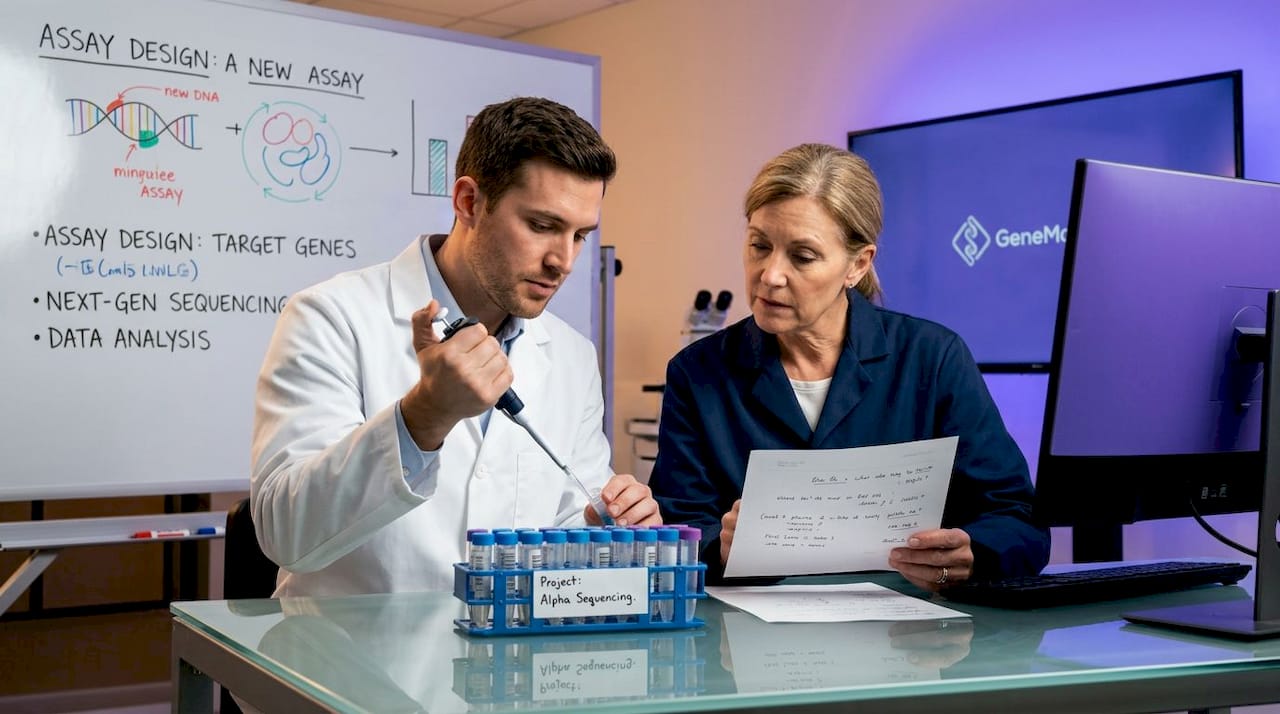
Co-development of assays. The most productive academic genomics partnerships do not just license existing tests. They co-develop assays that address specific clinical gaps. Fox Chase Cancer Center's collaboration with Arima Genomics is a strong example: the partnership focused on integrating Hi-C based assays into standard clinical diagnostics, bringing 3D genomics technology from research into patient care. That kind of collaboration creates institutional differentiation that a reference lab contract cannot replicate.
Equity as a design principle. Genomics innovation networks that build distributed testing capacity are not just operationally efficient. They are a mechanism for closing the gap between academic medical centers and community hospitals in access to precision oncology. If your institution serves underserved populations, a partner with a distributed model is not just convenient. It is the right clinical choice.
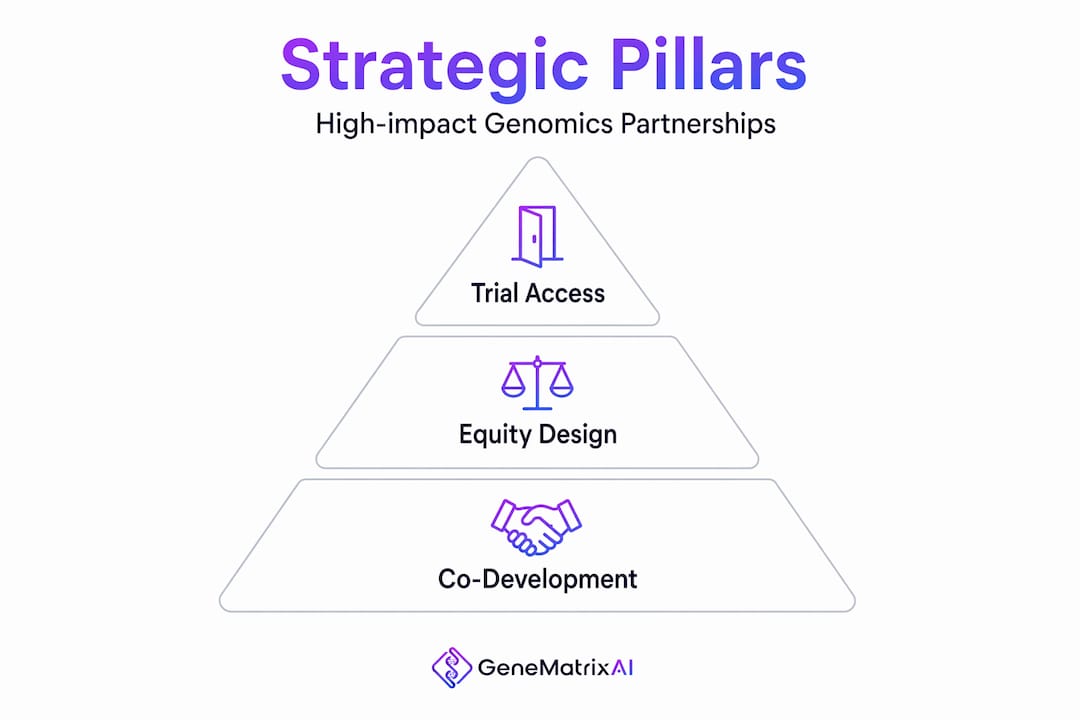
Companion diagnostics and trial access. The most forward-looking genomics research collaborations are structured to support companion diagnostic development and clinical trial enrollment simultaneously. When your genomic partner's data infrastructure connects to trial matching tools, patients with actionable mutations get enrolled in trials faster. That is a direct patient outcome benefit that belongs in your partnership evaluation criteria. For practical guidance on evaluating these criteria, choosing a clinical genomics provider walks through the decision framework in detail.
My take on what most institutions get wrong
I have watched a lot of genomics partnerships get announced with real enthusiasm and then quietly underperform for years. In my experience, the problem almost never comes down to the science. The science is usually solid. The problem is that institutions treat the partnership as a procurement event rather than a sustained clinical program.
What I have found is that the organizations seeing the best outcomes from collaborative genomics research are the ones that assigned a clinical champion before the contract was signed. Not an IT lead. Not a procurement officer. A physician or pathologist who owns the clinical outcome and has the authority to push for workflow changes when the integration hits friction.
The other thing I would push back on is the assumption that speed-to-launch is the primary success metric. I have seen programs go live in 90 days and deliver almost no clinical value because the result reports were not usable by the oncology team in their actual workflow. Successful genomics partnerships focus on embedding solutions directly into existing clinical workflows, and that takes deliberate design time upfront.
The future of precision oncology will be built on partnerships integrating clinical diagnostics and emerging genomic technologies. But the institutions that will lead are the ones investing in the operational infrastructure to make those partnerships actually function at the point of care, not just on paper.
— Tarek
How Genematrix supports your genomics program
If you are evaluating genomics lab partnerships to expand hereditary cancer screening or pharmacogenomics capabilities, Genematrix offers a model built specifically for hospitals and health systems that want validated results without building a full in-house genomics infrastructure.

Genematrix is CLIA-certified and delivers AI-powered genomic insights through the GeneMatrixAI platform, trained on over 500,000 genetic profiles. Their GeneCancer panel covers BRCA1/BRCA2, Lynch syndrome, and a broad range of hereditary cancer markers, with reports delivered within 72 hours. For institutions looking to add pharmacogenomics or expand into nutrigenomics and pediatric testing, the modular panel structure scales with your program's needs. Explore Genematrix's hereditary cancer testing services to see how their partnership model integrates with hospital workflows and supports precision medicine at scale.
FAQ
What makes a genomics lab partnership successful?
Successful genomics lab partnerships combine validated assay technology with deep workflow integration into existing clinical systems. The most critical factor is assigning a clinical champion who owns the outcome and drives adoption across pathology, oncology, and IT.
What certifications should a genomics lab partner hold?
At minimum, any genomics partner must hold a current CLIA certificate covering the specific test categories you need. CAP accreditation is the voluntary gold standard and signals rigorous peer-reviewed quality controls beyond the regulatory baseline.
How long does it take to integrate a genomics lab partnership?
Integration timelines vary, but well-structured partnerships using purpose-built workflow tools can achieve clinical integration in weeks rather than months. The GenomOncology and OHSU collaboration demonstrated that automated trial matching can be embedded into pathology workflows in weeks when the technology is designed for that purpose.
Can community hospitals benefit from genomics lab partnerships?
Yes. Distributed NGS models are specifically designed to extend precision oncology access beyond academic medical centers. These models help community hospitals overcome geographic and reimbursement barriers that have historically limited their genomic testing capabilities.
What is the biggest risk in genomics lab partnerships?
The biggest risk is underestimating bioinformatics complexity. Operationalizing NGS requires a validated bioinformatics pipeline separate from wet-lab operations, and institutions that treat it as a software add-on rather than a core infrastructure investment consistently struggle to deliver clinically useful reports.