

TL;DR:
- Genomics studies an individual's complete DNA, forming the foundation of modern personalized medicine. It enhances healthcare by enabling early diagnosis, tailored treatments, and improved disease risk assessment based on genetic information. Successful integration depends on overcoming systemic barriers like data silos and clinician education, with proper interpretation and patient support being essential.
Genomics is defined as the study of a person's complete DNA, and it is the foundation of modern precision medicine. Understanding why genomics matters in healthcare means recognizing that your genetic makeup directly shapes your disease risks, your body's response to medications, and the prevention strategies most likely to protect you. The impact of genomics on health reaches every corner of medicine, from diagnosing rare childhood diseases to predicting cancer risk decades before symptoms appear. This guide explains what genomic medicine means for you and your family, backed by 2026 research.
Why genomics matters in healthcare: the core case
Genomic medicine is defined by the National Human Genome Research Institute as the use of genomic information to maximize health benefits while minimizing patient harm through personalized strategies. That definition carries enormous practical weight. It means your doctor can move away from prescribing based on population averages and toward decisions calibrated to your specific biology.
The importance of genomics becomes clearest when you consider what it replaces. Traditional medicine diagnoses disease after symptoms appear, then applies standard treatments and adjusts based on response. Genomic medicine identifies risk before symptoms develop, selects treatments most likely to work for your genetic profile, and avoids drugs your body is likely to process poorly. This is not a future promise. It is happening in clinics today.
Three advances drive this shift. First, whole genome and exome sequencing can now identify the genetic cause of rare diseases that previously went undiagnosed for years. Second, pharmacogenomics uses your DNA to predict how you will respond to hundreds of medications. Third, polygenic risk scores aggregate thousands of small genetic variants to estimate your lifetime risk for conditions like heart disease, type 2 diabetes, and certain cancers. Each of these tools depends on genomic data in healthcare being collected, interpreted, and acted upon by trained professionals.
How does genomics improve diagnosis and disease risk assessment?
Genomic sequencing has transformed the diagnostic process for both rare and common diseases. For families with children who have undiagnosed conditions, genome sequencing often delivers answers after years of inconclusive testing. For adults, it identifies inherited risk for conditions like Lynch syndrome, BRCA1 and BRCA2-related cancers, and hereditary cardiomyopathies before any clinical sign appears.

The scale of genetic findings in healthy people is striking. Nearly 99% of healthy individuals who underwent predictive genome sequencing in the PREDICT study received at least one genetic finding. This means virtually no one walks away from a full genome screen with a completely blank result. The implication is not that everyone is sick. It means that genetic information requires expert interpretation to distinguish findings that demand action from those that are benign or uncertain.
Key conditions where genomic diagnosis changes outcomes include:
- Hereditary cancers: BRCA1, BRCA2, and Lynch syndrome mutations significantly raise lifetime cancer risk, and knowing your status enables earlier screening and preventive surgery.
- Cardiomyopathies: Genetic variants in genes like MYH7 and MYBPC3 cause hypertrophic cardiomyopathy, which can be fatal without early intervention.
- Metabolic diseases: Conditions like familial hypercholesterolemia are often missed by standard lipid panels but are detectable through genetic testing.
- Carrier status: Couples planning a family can learn whether they carry recessive disease variants before pregnancy.
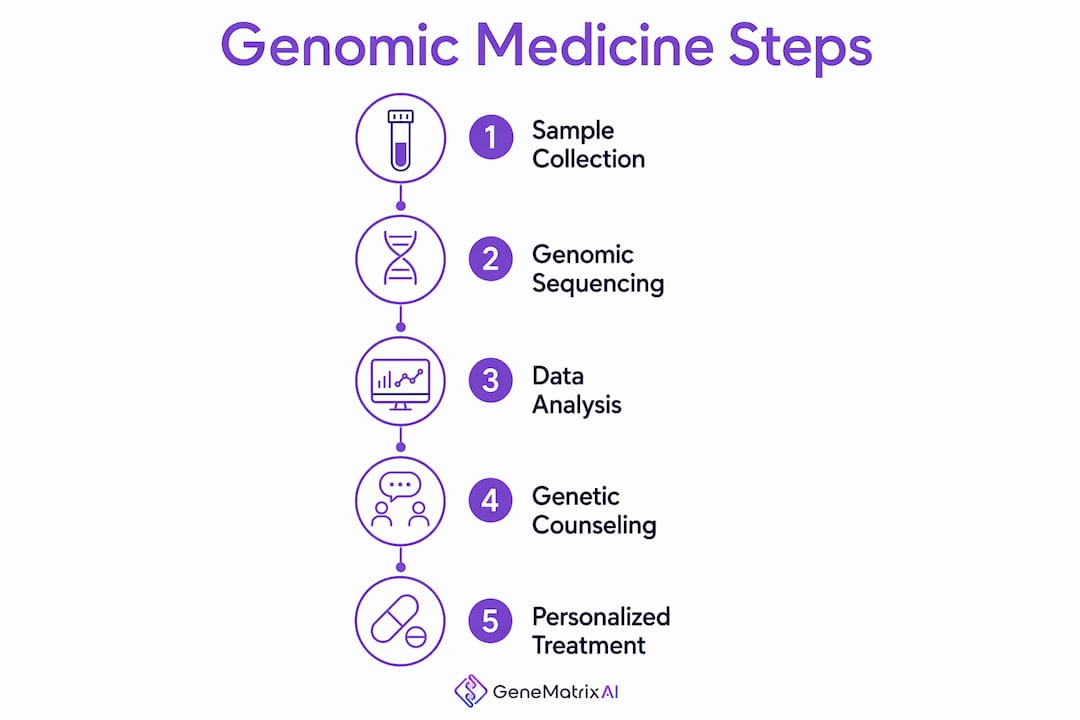
Genetic counseling is labor-intensive but critical to helping patients understand and act on these results appropriately. A positive BRCA2 result, for example, carries very different implications depending on your sex, age, and family history. A genetic counselor translates that complexity into a plan you can actually follow.
Pro Tip: If you receive a genomic test result that includes a "variant of uncertain significance," do not panic and do not ignore it. Ask your provider to re-evaluate it in 12 to 18 months, as reclassification rates are high as research databases grow.
Pharmacogenomics: how does your DNA affect your medications?
Pharmacogenomics is the science of using your genetic profile to determine which drugs will work best for you, at what dose, and which ones carry serious risk. It is one of the most immediately practical applications of genomics in medicine, and it is already embedded in prescribing guidelines for hundreds of drugs.
Over 250 FDA-approved drugs carry labels that reference patient genomics, covering medications for cancer, psychiatry, cardiology, and infectious disease. This figure represents a fundamental shift in how drug safety is communicated. When a drug label says "test before prescribing," that instruction exists because genomic variation predicts who will benefit and who will be harmed.
Here is how pharmacogenomics works in practice for a patient:
- A DNA sample is collected, typically via a cheek swab or blood draw, and analyzed for variants in genes that control drug metabolism, such as CYP2D6, CYP2C19, and TPMT.
- Results classify you as a poor, intermediate, normal, or ultra-rapid metabolizer for specific drug classes.
- Your prescriber receives a report showing which medications to avoid, which require dose adjustments, and which are safe at standard doses.
- The report stays in your record, informing every future prescription decision without requiring repeat testing.
Pharmacogenomics allows clinicians to move away from trial-and-error prescribing, which is the standard approach that costs patients weeks of ineffective treatment and sometimes serious side effects. For antidepressants, antipsychotics, and blood thinners like warfarin, getting the dose wrong based on genetic variation can be life-threatening. Understanding your pharmacogenomic markers before starting these medications is one of the highest-value applications of genomic data in healthcare.
Pro Tip: Before starting any new psychiatric medication, ask your prescriber whether a pharmacogenomic panel has been run. GenePGx panels from providers like Genematrix can identify CYP2D6 and CYP2C19 variants that affect how you process most antidepressants and antipsychotics.
Integrating genomics into healthcare systems: what are the real barriers?
The science of genomics is ahead of the systems designed to deliver it. Successful genomics implementation depends on trustworthy service delivery, clinician capability, and sustainable digital infrastructure. These are organizational and cultural challenges, not purely technical ones.
The table below summarizes the key barriers and the solutions being deployed in 2026:
| Barrier | Impact on care | Current solution |
|---|---|---|
| Genomic data siloed in separate systems | Results not visible at point of care | EHR integration projects and FHIR-based data standards |
| Low clinician genomic literacy | Misinterpretation or avoidance of results | Medical school curriculum updates and specialist referral pathways |
| Poorly designed clinical decision support | Workflow disruption and alert fatigue | User-centered CDS design built with frontline clinicians |
| Patient anxiety about uncertain findings | Unnecessary worry and over-testing | Structured counseling protocols and personalized result letters |
| Inequitable access to testing | Genomic benefits concentrated in wealthy populations | National screening programs and insurance coverage expansion |
Genomic data is often siloed and not fully integrated across providers, which limits its practical use at the point of care. A cardiologist who orders a genetic panel may not have those results visible when the patient sees their primary care physician six months later. This fragmentation is one reason why the NHS 10-Year Plan in England has made genomics central to routine care, using polygenic risk scores alongside standard clinical markers for disease prevention and personalized prescribing. National-level commitment is what moves genomics from specialty clinics into everyday medicine.
Patient trust is equally non-negotiable. Research confirms that trust in genomic services depends on equitable access, transparency about how data is used, and a clear link between testing and clinical outcomes. Families who feel that testing is being done to them rather than for them disengage. Providers who explain what a test can and cannot tell you, and what happens next, retain patient confidence and generate better health outcomes.
What should families know before pursuing genomic testing?
Genomic testing is not a single product. It is a spectrum of tools with different purposes, different levels of evidence, and different implications for your family. Knowing which type of test fits your situation is the first step toward using genomic information well.
The main categories of tests available today include whole genome sequencing, whole exome sequencing, targeted gene panels for specific conditions, pharmacogenomic panels, and direct-to-consumer ancestry tests that include limited health data. Each serves a different purpose. A targeted BRCA panel answers a specific question about hereditary breast and ovarian cancer risk. A whole genome sequence casts a much wider net and will return findings you did not specifically ask about.
The value of knowing your genomic status extends beyond clinical outcomes. Research confirms that personal utility, meaning the ability to make informed decisions about your life, is a real and measurable benefit of genomic testing even when no immediate medical action is required. A parent who learns they carry a Lynch syndrome variant can inform adult children who then pursue earlier colonoscopy screening. That chain of benefit is hard to quantify in a clinical trial but is very real in family health management.
Before you pursue testing, consider these factors:
- Purpose: Are you testing for a known family history of a specific condition, or exploring broadly? The answer determines which test type is appropriate.
- Interpretation: Who will explain your results? A report without professional interpretation is data without meaning.
- Emotional readiness: Some findings, particularly variants of uncertain significance, can cause anxiety without providing clear direction. Discuss this with a genetic counselor beforehand.
- Privacy: Understand how your genomic data will be stored, shared, and protected. Ask about HIPAA compliance and data retention policies.
- Follow-up: Genomic findings often require ongoing surveillance. Make sure you have a care team prepared to act on results.
Families navigating this process benefit from a step-by-step approach to precision medicine that connects testing to a clear clinical plan rather than treating a result as an endpoint.
Key takeaways
Genomics matters in healthcare because it replaces population-average medicine with decisions built on your specific biology, covering diagnosis, drug safety, and disease prevention.
| Point | Details |
|---|---|
| Genomics enables earlier diagnosis | Genetic sequencing identifies disease risk and rare conditions before symptoms appear. |
| Pharmacogenomics prevents drug harm | Over 250 FDA-approved drugs have genomic prescribing labels that guide safer dosing. |
| Nearly all people have genetic findings | 99% of healthy individuals carry at least one genetic variant requiring expert interpretation. |
| System integration remains the key barrier | Siloed data and low clinician literacy limit genomics' real-world impact more than technology gaps. |
| Professional interpretation is non-negotiable | Genomic results without counseling can cause unnecessary anxiety or missed clinical action. |
Genomics is powerful, but only with the right support
I have spent years watching families receive genomic test results and then struggle to know what to do with them. The most common mistake is not getting tested. It is getting tested without a plan for what comes next.
The science is genuinely extraordinary. The ability to look at someone's DNA and identify a 70% lifetime risk for a specific cancer, or predict that a standard antidepressant dose will cause toxicity, is a medical capability that did not exist at scale a decade ago. But that capability is only useful when it is connected to a clinician who understands the result, a counselor who can explain it clearly, and a patient who knows what questions to ask.
What I tell families is this: genomic information is one piece of your health picture, not the whole story. Your environment, your lifestyle, and your access to care all interact with your genetic profile. A BRCA2 variant does not guarantee cancer. It raises risk, and knowing that risk gives you options. That is the real value of genomics in medicine. Not certainty, but informed choice.
The families who benefit most are those who approach genomic testing as the beginning of a conversation with their healthcare team, not a one-time transaction. If your provider cannot explain what your results mean or what to do next, find one who can.
— Tarek
Take the next step with Genematrix
Genematrix is a CLIA-certified, Chicago-based genomics company that delivers AI-powered genetic insights within 72 hours, trained on over 500,000 genetic profiles. Their hereditary cancer testing services cover BRCA1, BRCA2, Lynch syndrome, and dozens of other high-risk variants, with reports designed for both patients and their clinical teams.

Whether you are concerned about a family history of cancer, looking to optimize your medications through pharmacogenomics, or exploring what your DNA can tell you about your long-term health, Genematrix offers specialized modules including GeneCancer, GenePGx, and GeneMind. Their precision medicine research and technology is built to move you from questions to a clear, personalized health plan. Start with a conversation, not a guess.
FAQ
What is genomics in medicine?
Genomics in medicine is the use of a person's complete DNA sequence to guide diagnosis, treatment selection, and disease prevention. It differs from traditional genetics by analyzing the entire genome rather than individual genes.
How does genomic data improve patient care?
Genomic data allows clinicians to identify disease risk before symptoms appear, select medications matched to a patient's metabolism, and personalize prevention strategies. This shifts care from reactive treatment to proactive health management.
Are genomic test results always actionable?
Not always. Nearly 99% of healthy individuals receive at least one genetic finding through predictive sequencing, but many findings require professional interpretation to determine whether clinical action is warranted.
What is pharmacogenomics and why does it matter?
Pharmacogenomics uses your genetic profile to predict how you will respond to specific medications, including whether a standard dose will be too high, too low, or potentially harmful. It is especially relevant for psychiatric, cardiac, and oncology medications.
How do I know which genomic test is right for my family?
The right test depends on your specific concern, whether that is a known family history of cancer, an undiagnosed condition, or medication safety. A genetic counselor or a provider like Genematrix can match your situation to the appropriate genomic testing option.