

TL;DR:
- Genetic data underpins modern precision medicine, enabling personalized risk assessment and treatment choices across healthcare. Families benefit most when tests are interpreted with counseling and integrated into electronic health records, reducing misinterpretation and health disparities. The future of personalized care relies on expanding access, improving infrastructure, and ethically applying genomic insights for equitable health outcomes worldwide.
Genetic data is the molecular foundation of modern precision medicine, giving clinicians and families the specific biological information needed to predict disease risk, confirm diagnoses, and choose treatments that match an individual's biology. The role of genetic data in healthcare has expanded from rare disease diagnosis into everyday clinical decisions, from cancer screening to medication dosing. Precision medicine now uses clinical, molecular, and genomic data together with ethical safeguards to inform prevention and treatment across every life stage. Understanding what genetic data can and cannot tell you is the first step toward using it well.
How genetic data is used to assess disease risk and guide diagnosis
Genetic testing identifies changes in DNA, chromosomes, or proteins that signal elevated risk for specific conditions. The most familiar example is BRCA1 and BRCA2 testing, which reveals whether a person carries variants that significantly raise the lifetime risk of breast and ovarian cancer. Hereditary cancer panels, Lynch syndrome screening, and newborn metabolic screening all rely on the same principle: read the genome, find the signal, act before disease progresses.
Predictive and screening tests work differently depending on the clinical question:
- Predictive testing identifies variants in healthy individuals with a family history of a condition, such as BRCA1/BRCA2 mutations or Lynch syndrome gene changes, before any symptoms appear.
- Diagnostic testing confirms or rules out a suspected condition when symptoms are already present, including rare diseases that can take years to identify through conventional methods.
- Prenatal and newborn screening detects chromosomal abnormalities and metabolic disorders early enough for intervention, using tests like amniocentesis or expanded newborn panels.
- Pharmacogenomic testing identifies gene variants that affect how a person metabolizes specific medications, which directly shapes prescribing decisions.
One concept families often encounter but rarely understand is the variant of uncertain significance, or VUS. A VUS is a genetic change whose clinical impact is not yet established. VUS findings are more common in non-European ancestries because reference databases are built predominantly from European genomic data. This is not a minor footnote. It means a significant portion of the population receives ambiguous results that can cause anxiety and, in some cases, lead to unnecessary procedures.
Mayo Clinic is direct on this point: a positive BRCA result does not guarantee cancer will develop, and a negative result does not guarantee it will not. Genetic counseling is the bridge between a test result and a decision. Without it, numbers become fears rather than plans.
Pro Tip: Before ordering any hereditary cancer panel, ask your provider whether a board-certified genetic counselor will review the results with you. This single step prevents the most common source of misinterpretation.
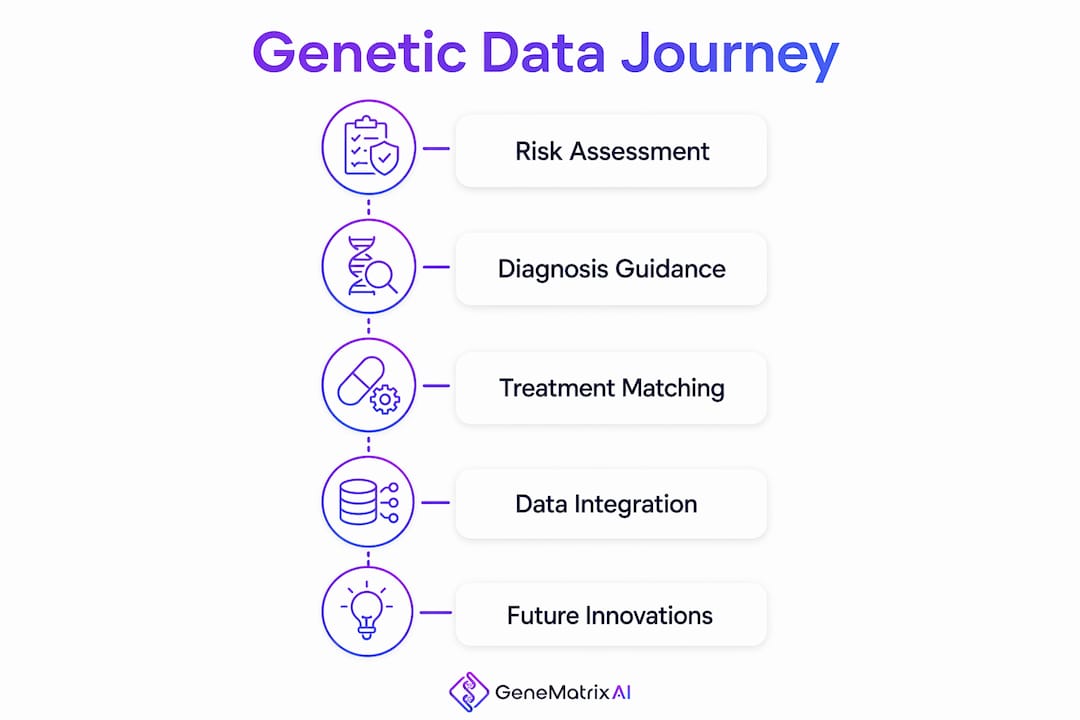
What benefits does genetic data bring to personalized treatment?
The clearest benefit of genetic data in medicine is the ability to match treatment to biology rather than to population averages. This is where genomics moves from interesting to life-changing.
- Pharmacogenomics and medication safety. Genotype-based dose adjustments are now recommended for drugs including tricyclic antidepressants, where CYP2D6 and CYP2C19 variants determine whether a standard dose will be therapeutic, toxic, or ineffective. The Dutch Pharmacogenetics Working Group provides specific dose reductions and alternative drug selections based on metabolizer phenotype. This is not theoretical. It is a published clinical guideline that changes prescriptions today.
- Targeted cancer therapies. FDA companion diagnostics use genetic tests to determine whether a patient is eligible for specific targeted therapies. Companion diagnostic accuracy is critical because misclassification can mean a patient receives a therapy that will not work or misses one that would.
- Rare disease diagnosis. Next-generation sequencing has cut the diagnostic odyssey for rare disease patients from an average of several years to months in many cases. NGS now guides diagnosis, therapy selection, and disease prevention strategies across oncology, rare diseases, and reproductive genomics.
- Reproductive planning. Carrier screening identifies couples at risk of passing on recessive conditions like cystic fibrosis or spinal muscular atrophy, giving families the information they need before conception or early in pregnancy.
| Application | What genetic data enables |
|---|---|
| Cancer treatment | Matches targeted therapy to tumor-specific gene variants |
| Medication dosing | Adjusts dose or drug choice based on metabolizer phenotype |
| Rare disease | Confirms diagnosis that clinical symptoms alone cannot |
| Reproductive health | Identifies carrier status before or during pregnancy |
Embedding this information into clinical workflows is the next frontier. When genetic data lives in a patient's electronic health record alongside lab results and imaging, every provider who sees that patient can act on it. Without that integration, the data sits in a PDF that never gets read at the point of care.

Pro Tip: Ask your healthcare provider whether your genetic test results have been added to your electronic health record. If they have not, request it. Integrated records mean every specialist you see has access to your genomic profile without you having to carry paper copies.
What are the limitations and challenges of using genetic data?
Genetic data is powerful, but it is not infallible. Families who approach it with unchecked optimism often encounter frustration. The limitations are real and worth knowing before you test.
"Genetic data should be considered alongside clinical and environmental factors with ethical safeguards, not as definitive standalone answers." — WHO 2026 precision medicine framework
The most significant practical challenges include:
- Interpretation ambiguity. VUS results are common, particularly in hereditary cancer panels. Periodic reclassification of variants is necessary as evidence accumulates, which means a result labeled uncertain today may be reclassified as pathogenic or benign in two years. Patients need follow-up workflows to capture these updates.
- Equity gaps. Genomic reference databases are built primarily from European ancestry populations. Non-European patients receive more VUS findings and fewer actionable results, which means the benefits of genetic testing are not distributed equally. The WHO's equity call specifically addresses this risk of widening health disparities.
- Workforce shortages. There are not enough genetic counselors and medical geneticists to meet current demand. A 2026 systematic review describes the "mainstreaming" of genetics, where nurses, oncologists, and primary care physicians take on expanded roles in ordering and interpreting genetic tests. This increases access but also increases the risk of misinterpretation without proper training.
- Workflow integration. Genomic data embedded in electronic health records requires interpretive decision support tools so that non-genetics providers can act on results appropriately. Without those tools, data is present but not usable.
- Regulatory complexity. FDA companion diagnostics require rigorous accuracy standards. Errors in genetic classification can result in patients receiving the wrong therapy or being excluded from a therapy that would help them.
Understanding these limitations does not diminish the value of genetic testing. It makes you a more informed participant in your own care. You can explore the practical steps for genetic screening to understand what to expect before, during, and after testing.
How genetic data is shaping the future of personalized healthcare
The trajectory of genetic data in medicine points toward broader access, greater precision, and more equitable outcomes, but only if the right infrastructure is built now.
The WHO's 2026 World Health Assembly resolution on precision medicine is the clearest signal yet that genetic data has moved from research tool to global health priority. The resolution calls for national policies, sustainable infrastructure, and workforce education to make precision medicine available beyond high-income countries. This matters for families because it signals that genetic testing will become a standard part of healthcare rather than a specialty service.
| Trend | What it means for patients |
|---|---|
| AI-driven genomic analysis | Faster, more accurate variant interpretation at scale |
| Multiomic integration | Combines genomic, proteomic, and metabolomic data for fuller clinical picture |
| Ancestry-informed databases | Reduces VUS burden for non-European populations |
| EHR-embedded decision support | Enables non-specialist providers to act on genetic data safely |
| Global equity initiatives | Expands access to precision medicine in lower-resource settings |
Large-scale genomic projects, including national biobanks and population health studies, are linking genetic variants to real-world health outcomes across millions of individuals. This data feeds back into reference databases, which gradually reduces the VUS problem and improves the accuracy of risk predictions for everyone. The 2026 precision medicine trends show how AI is accelerating this cycle by processing genomic data at a scale no human team could match.
For families, the most meaningful near-term development is pharmacogenomics becoming routine. Knowing how your body processes medications before a prescription is written prevents adverse drug reactions, reduces trial-and-error prescribing, and can be especially significant in psychiatric care, oncology, and pain management. Genematrix's GenePGx module is one example of how this is already being delivered outside academic medical centers. The impact on medication outcomes is measurable and immediate for patients who act on the results.
Key takeaways
Genetic data improves healthcare outcomes when it is interpreted in context, supported by counseling, and integrated into clinical workflows alongside clinical and environmental information.
| Point | Details |
|---|---|
| Risk assessment, not certainty | Genetic results indicate probability, not destiny; counseling is required to interpret them correctly. |
| Pharmacogenomics is actionable now | CYP2D6 and CYP2C19 variants already guide antidepressant and other drug dosing through published guidelines. |
| VUS requires follow-up | Variants of uncertain significance can be reclassified; patients need systems to capture updates over time. |
| Equity gaps are real | Non-European populations receive more ambiguous results due to underrepresentation in genomic databases. |
| Integration determines utility | Genetic data embedded in electronic health records with decision support tools delivers the most clinical value. |
Why families should engage with genetic data carefully and confidently
I have spent years watching families approach genetic testing with two opposite reactions: either they expect it to tell them everything, or they are so afraid of what it might reveal that they avoid it entirely. Both responses miss the point.
Genetic data is not a crystal ball. It is a probability map. A BRCA2 variant tells you that your risk is elevated, not that cancer is inevitable. A pharmacogenomic result tells you that a standard antidepressant dose may not work for you, which is information your prescriber needs before the first pill, not after six months of ineffective treatment. The families I have seen benefit most from genetic testing are the ones who treat results as a starting point for a conversation with their care team, not as a verdict.
What concerns me more than the science is the infrastructure gap. The mainstreaming of genetics means more people are ordering tests through primary care providers who may not have the training to interpret a VUS or explain why a negative result on a hereditary cancer panel does not eliminate all risk. The technology is ahead of the workforce, and that gap creates real harm when results are misread.
My honest advice: test with purpose, not curiosity. Know what question you are trying to answer before you order a panel. Work with a provider who will connect you to genetic counseling. And if you receive a VUS, do not act on it until it has been reviewed by someone qualified to interpret it. The science is genuinely remarkable. The responsibility to use it well belongs to all of us.
— Tarek
How Genematrix helps families act on genetic insights
Genematrix is a Chicago-based, CLIA-certified biotechnology company that delivers AI-powered hereditary cancer screening and pharmacogenomics through its GeneMatrixAI platform, trained on more than 500,000 genetic profiles. Reports are delivered within 72 hours and cover BRCA1/BRCA2, Lynch syndrome, drug-gene interactions, and specialized modules including GeneMind for psychiatric care and GeneDiet for nutrigenomics.

For families who want to move from uncertainty to clarity, Genematrix provides the validated science and clinical-grade reporting that makes genetic data usable. You can review Genematrix's precision medicine solutions or explore the research and certifications behind the platform to understand exactly how results are generated and validated before they reach you.
FAQ
What is the role of genetic data in healthcare?
Genetic data informs disease risk assessment, diagnosis, and treatment planning by identifying DNA variants linked to specific conditions or drug responses. It is used alongside clinical and environmental information, not as a standalone answer.
How does pharmacogenomics use genetic data to improve medication choices?
Pharmacogenomics maps gene variants, particularly CYP2D6 and CYP2C19, to predict how a patient metabolizes specific drugs. Published guidelines from groups like the Dutch Pharmacogenetics Working Group use this data to recommend dose adjustments or alternative medications.
What is a variant of uncertain significance?
A variant of uncertain significance, or VUS, is a genetic change whose clinical impact has not yet been established. VUS findings are more common in non-European populations and require periodic reinterpretation as new evidence becomes available.
Is genetic testing covered by insurance?
Coverage depends on the test type, clinical indication, and insurer. Diagnostic tests ordered for a specific medical reason are more likely to be covered than general wellness panels. Confirming coverage before testing prevents unexpected costs.
Do I need a genetic counselor to interpret my results?
Genetic counseling is strongly recommended, particularly for hereditary cancer panels and any result that includes a VUS. Counselors contextualize risk, explain limitations, and help you decide whether and how to act on findings.