
The main screening test for Turner syndrome risk is NIPT (cell-free fetal DNA analysis from a maternal blood draw), while the diagnostic tests that actually confirm it are CVS or amniocentesis followed by karyotype, chromosomal microarray, or FISH. A screen only estimates probability. A diagnosis requires fetal cells.
If you've gotten a positive NIPT result or an ultrasound flagged something unusual, here's what typically happens next:
- A detailed ultrasound to look for nuchal translucency, cystic hygroma, fluid buildup, or heart defects
- A referral to genetic counseling before you decide on anything further
- The option (not the requirement) of invasive diagnostic testing to confirm or rule out the finding
One more thing worth knowing upfront: if Turner syndrome is confirmed, or if there are signs of virilization, providers will usually check for Y-chromosome material using a targeted test called DYZ3 FISH, since that finding changes the gonadoblastoma risk conversation.
Key Takeaways
Genetic testing for Turner syndrome risk follows a screen-then-confirm pathway, and no positive NIPT result should be treated as a final diagnosis without follow-up testing.
| Point | Details |
|---|---|
| NIPT screens, it doesn't diagnose | Positive predictive value for monosomy X averages around 26 percent, far lower than for trisomy 21. |
| Amniocentesis often preferred for confirmation | It carries lower procedure-related loss risk than CVS and avoids most placental mosaicism confusion. |
| Karyotype needs enough metaphases | Guidelines recommend counting at least 30 metaphases to catch low-level mosaicism. |
| Y-chromosome testing changes management | DYZ3 FISH detects cryptic Y material tied to gonadoblastoma risk and possible gonadectomy referral. |
| Genematrix supports broader follow-up | Clinician-validated panels for hereditary risk and pediatric genetics complement, but don't replace, prenatal diagnostic testing. |
Table of Contents
- What Tests Assess Turner Syndrome Risk During Pregnancy?
- How Do the Screening and Diagnostic Tests Actually Work?
- How Accurate Is Genetic Testing for Turner Syndrome Risk?
- When Are These Tests Done and What Are the Risks?
- What Do the Results Mean and What Happens Next?
- What Do Clinical Guidelines Say About Turner Syndrome Testing?
- What Should You Ask Your Provider or Genetic Counselor?
- Where Genematrix Fits Into Broader Family Genetic Planning
- Frequently Asked Questions
- Sources
What Tests Assess Turner Syndrome Risk During Pregnancy?
Genetic testing for Turner syndrome risk happens in stages, not one single test. Screening comes first, imaging adds detail, and diagnostic testing gives you the answer. Here's the lineup you're likely to encounter, in roughly the order they show up in pregnancy:
- NIPT (cell-free DNA screening): blood draw from the mother, done from about 10 weeks; screens for monosomy X but doesn't confirm it
- First-trimester ultrasound (nuchal translucency scan): performed between 11 and 14 weeks; looks for fluid buildup at the back of the fetal neck
- Detailed anatomy scan and echocardiogram: usually 18 to 22 weeks; checks heart structure and other physical markers tied to Turner syndrome
- CVS (chorionic villus sampling): placental tissue sample, available at 10 to 13 weeks; diagnostic, but can be muddied by placental mosaicism
- Amniocentesis: amniotic fluid sample, available from 15 weeks onward; diagnostic and generally more reliable for confirming monosomy X
- Postnatal karyotype or chromosomal microarray: blood sample from the infant after birth, used when prenatal testing wasn't done or needs confirmation
- FISH for Y-chromosome material (DYZ3 probe): run on existing samples when karyotype shows 45,X or a mosaic pattern
NIPT results usually come back within one to two weeks. CVS and amniocentesis samples take longer to process, typically 7 to 14 days for a full karyotype, faster if the lab runs a rapid FISH panel first. If an ultrasound shows something concerning, most maternal fetal medicine specialists will move straight to discussing diagnostic testing rather than waiting on a screening result.
How Do the Screening and Diagnostic Tests Actually Work?
Each test in this sequence does a different job, and knowing what each one can and can't tell you changes how you interpret a result.
NIPT and why monosomy X is trickier than trisomy 21
NIPT analyzes small fragments of placental DNA circulating in the mother's blood. It's accurate and useful, but here's the part that surprises a lot of people: its performance for monosomy X is nowhere near as strong as its performance for Down syndrome. The positive predictive value for cfDNA screening of monosomy X averages around 26 percent in pooled studies, compared to well over 90 percent for trisomy 21. That gap exists because monosomy X screening is vulnerable to biological noise that trisomy 21 screening mostly isn't: maternal mosaicism (the mother herself carries a low-level X chromosome loss in some cells), confined placental mosaicism (the placenta has the abnormality but the fetus doesn't), or a vanishing twin that briefly contributed DNA to the sample.
Ultrasound markers that raise suspicion
Certain findings on ultrasound push providers toward diagnostic testing faster than a screening result alone would. These include increased nuchal translucency, cystic hygroma, hydrops, and left-sided cardiac defects like coarctation of the aorta. When ultrasound findings and a positive NIPT line up, the odds of an actual Turner syndrome diagnosis go up substantially. When ultrasound is normal despite a positive NIPT, the picture gets murkier, and that's exactly when the choice between CVS and amniocentesis starts to matter.

CVS vs. amniocentesis: why timing and tissue source matter
CVS samples placental tissue and can be done earlier, at 10 to 13 weeks. Amniocentesis samples the fluid surrounding the fetus and isn't available until 15 weeks or later. The tradeoff: because CVS tests placental cells, it's more susceptible to confined placental mosaicism, meaning it can flag monosomy X that the fetus doesn't actually have. When ultrasound findings are normal and there's time to wait, many specialists prefer deferring confirmatory testing to amniocentesis rather than acting on an early CVS result alone.
The cytogenetic methods that deliver a final answer
- Karyotype: the traditional gold standard; guidelines recommend counting at least 30 metaphases rather than the older standard of 20, because low-level mosaicism is easy to miss with a smaller count
- Chromosomal microarray (CMA): detects chromosome gains and losses at higher resolution than karyotype, but can miss balanced rearrangements and isn't always the best tool for detecting mosaicism percentages
- FISH for the Y-centromere (DYZ3 probe): the preferred method for detecting cryptic Y-chromosome material, since PCR-based SRY testing carries a real risk of contamination and false results
Pro Tip: If your karyotype comes back normal but your care team still suspects Turner syndrome based on ultrasound findings, ask whether testing a second tissue source, such as skin fibroblasts or buccal cells, makes sense. Blood alone sometimes misses tissue-specific mosaicism.
How Accurate Is Genetic Testing for Turner Syndrome Risk?
Accuracy depends entirely on which test you're talking about, and that distinction matters more here than with most other chromosomal conditions.
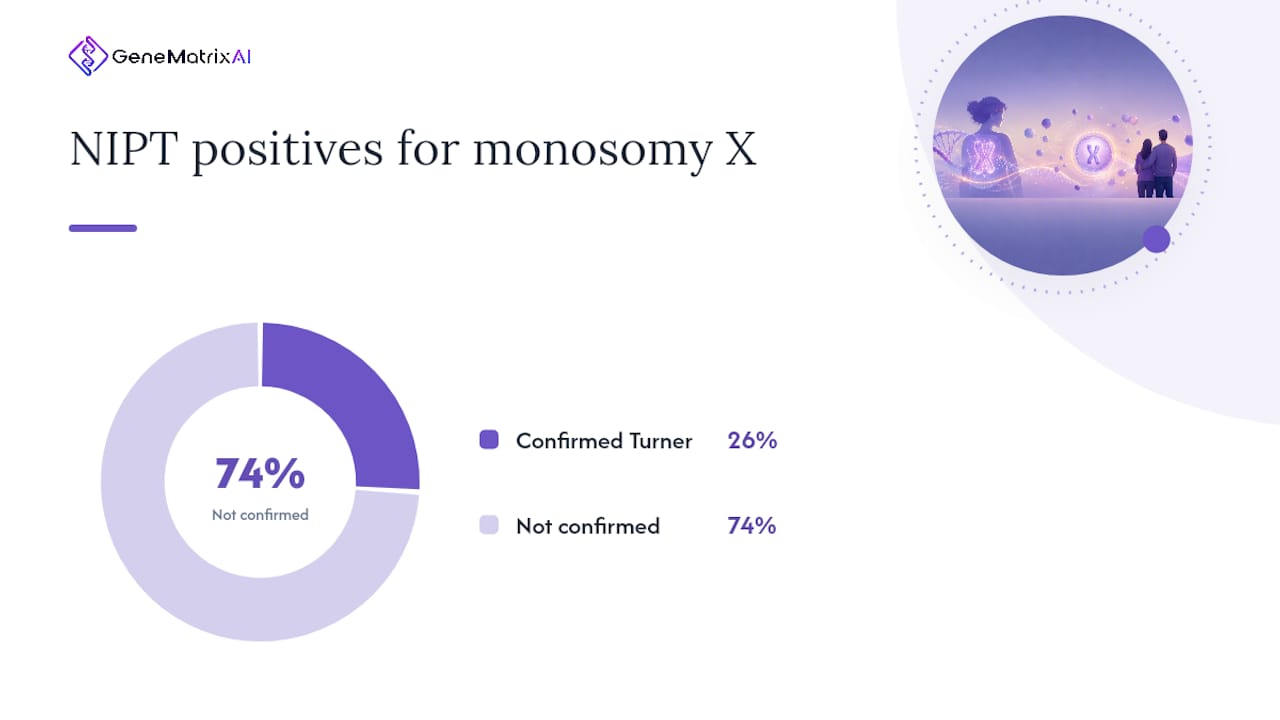
NIPT's low positive predictive value for monosomy X, again, around 26 percent on average, means roughly three out of four positive screens will not turn out to be a true fetal Turner syndrome diagnosis once you run diagnostic testing. That's a strikingly different picture than trisomy 21 screening, where a positive result is far more likely to hold up.
The mismatch traces back to a handful of well-documented biological causes:
- Confined placental mosaicism: the placenta carries the chromosomal abnormality, the fetus doesn't
- Maternal mosaicism: the mother has a low-level population of cells missing an X chromosome, which shows up in her own cell-free DNA and gets misattributed to the fetus
- Vanishing twin: DNA from a co-twin that didn't survive can linger in maternal blood long enough to skew the result
Diagnostic testing has its own limits. A karyotype run on only 20 metaphases can miss mosaicism that a 30-metaphase count would catch, and CMA, while excellent at detecting whole-chromosome loss, isn't always precise about quantifying what percentage of cells are affected. On the procedural side, invasive testing carries its own small but real risk: amniocentesis is generally associated with a lower procedure-related pregnancy loss rate than CVS, which is one more reason many providers lean toward amnio when there's no urgency to test earlier.
When Are These Tests Done and What Are the Risks?
The testing sequence generally follows this order:
- First-trimester ultrasound with nuchal translucency measurement (11 to 14 weeks) sets a baseline and flags early markers.
- NIPT (from about 10 weeks) screens maternal blood for chromosomal risk, including monosomy X.
- CVS (10 to 13 weeks) offers earlier diagnostic answers via placental tissue, with the tradeoff of higher mosaicism-related false positives.
- Amniocentesis (15 weeks and beyond) samples amniotic fluid and is often the preferred confirmatory test when ultrasound findings are normal.
- Detailed anatomy scan and fetal echocardiogram (18 to 22 weeks) checks for structural findings, particularly cardiac defects, tied to Turner syndrome.
Procedurally, NIPT only requires a standard blood draw. CVS and amniocentesis both use ultrasound guidance to collect a tissue or fluid sample with a thin needle or catheter, and results typically take one to two weeks depending on whether the lab runs a rapid FISH panel alongside the full karyotype.
Risk matters here, and it should be part of the conversation before you consent to anything invasive:
- CVS and amniocentesis both carry a small procedure-related miscarriage risk, with amniocentesis generally considered the lower-risk option of the two
- Infection and bleeding are uncommon but possible complications of either procedure
- If ultrasound findings are reassuring, deferring invasive testing until amniocentesis is a reasonable, medically supported choice rather than a delay tactic
You can access this testing sequence through your OB provider, a maternal fetal medicine specialist, or a direct referral to a genetic counselor, and most insurance plans cover diagnostic testing when there's a screening or ultrasound indication.
What Do the Results Mean and What Happens Next?
A result is only useful if you know what to do with it. Here's how the decision tree typically plays out.
If NIPT comes back positive for monosomy X:
- Get a detailed ultrasound right away to check for structural markers.
- Meet with a genetic counselor before deciding on invasive testing, so you understand the odds involved.
- Consider amniocentesis over early CVS if ultrasound findings are normal, since it lowers the risk of a placental mosaicism false alarm.
If diagnostic testing confirms Turner syndrome:
- Genetic counseling to walk through what a prenatal Turner diagnosis does and doesn't predict about the child's future
- Fetal echocardiography to check for cardiac involvement, since heart defects are common in Turner syndrome
- Referral to pediatric genetics for coordinated care planning before delivery
- Multidisciplinary input from maternal fetal medicine, cardiology, and endocrinology as the pregnancy progresses
If diagnostic testing comes back normal despite a positive NIPT:
- Maternal karyotype can be worth pursuing to check for maternal X-chromosome mosaicism, which sometimes explains the discordant result
- Confined placental mosaicism remains a plausible explanation even without a diagnosis in the fetus
- Postnatal testing is occasionally recommended if any residual concern remains after birth
If maternal mosaicism turns out to be the source of a discordant NIPT, that's worth flagging to your own physician too. It can have implications for maternal cardiovascular risk in pregnancy that go beyond the current pregnancy.
What Do Clinical Guidelines Say About Turner Syndrome Testing?
Consensus guidance is direct on this point: a positive NIPT for monosomy X is a screening result, not a diagnosis, and it should never be treated as one. Pre- and post-test genetic counseling is considered essential, not optional, at every stage of this workup.
The ESE/PES guideline and related peer-reviewed reviews converge on a few concrete recommendations that shape how this testing should be handled:
- Chromosome analysis should count a minimum of 30 metaphases, not the older 20-metaphase standard, to catch low-level mosaicism
- A high-risk NIPT result should trigger a detailed ultrasound and an offer of invasive diagnostic testing, not a wait-and-see approach
- Y-chromosome material should be checked with DYZ3 FISH when karyotype shows 45,X or a mosaic pattern, since a positive finding changes the conversation around gonadoblastoma risk and possible gonadectomy
- Fetal echocardiography should happen whenever Turner syndrome is suspected or confirmed, given the elevated rate of cardiac anomalies
These aren't arbitrary thresholds. The metaphase count recommendation in particular came directly out of documented cases where a 20-metaphase karyotype missed mosaicism that a larger count caught.
What Should You Ask Your Provider or Genetic Counselor?
Bring a short list to your next appointment. It keeps the conversation focused and makes sure nothing important gets skipped in a fifteen-minute visit.
- What is the positive predictive value for this specific result, and does the lab report detection rate and specificity alongside it?
- Does a positive screen tell us anything about my own chromosomes, or only about the fetus?
- Why are you recommending CVS or amniocentesis specifically, and what's the procedure-related risk for each?
- How long will results take, and will you run a rapid FISH panel before the full karyotype comes back?
- Will you test for Y-chromosome material, and what would a positive result mean for future care?
- What imaging or specialist referrals will you arrange if this comes back confirmed?
Genetic counselors exist specifically to walk through these questions without steering you toward one decision or another, and asking for lab performance metrics upfront, rather than after a result arrives, tends to make the whole process feel less like guesswork.
A note on getting through this
Prenatal testing has a way of turning a routine appointment into a source of dread, and if you're sitting with a positive screen right now, that unease is entirely reasonable. But a screening result is a probability, not a verdict. Confirmatory testing, paired with genetic counseling, exists precisely to turn that uncertainty into a clear answer, one way or the other, so you can plan from solid ground instead of guesswork.
Where Genematrix Fits Into Broader Family Genetic Planning
Prenatal screening and diagnostic testing for Turner syndrome go through your OB provider or maternal fetal medicine team. That part doesn't change. But a lot of families come out of that process wanting a wider picture, whether that's understanding hereditary risk before a future pregnancy, checking medication compatibility, or getting pediatric genetic screening after birth. That's where Genematrix's testing panels and counseling services come in, built for exactly the kind of follow-up questions a Turner syndrome workup tends to raise.

Genematrix offers clinician-validated reports across hereditary cancer screening, pharmacogenomics, and pediatric genetics, backed by lab processes detailed on our science page. At-home testing is a useful complement to, never a substitute for, prenatal diagnostic testing ordered by your obstetric provider. If you're weighing next steps for a future pregnancy or want broader genetic insight for your family, talk to your care team first, then explore which Genematrix panel fits your situation on our service area page.
Frequently Asked Questions
Can genetic testing for Turner syndrome risk be done without an invasive procedure? Yes, NIPT screens using only a maternal blood draw. It cannot diagnose Turner syndrome on its own, though, since its positive predictive value for monosomy X is limited.
How early can Turner syndrome be detected in pregnancy? NIPT can screen from around 10 weeks, and CVS can diagnostically confirm findings as early as 10 to 13 weeks, though amniocentesis after 15 weeks is often preferred for confirmation.
Does a positive NIPT always mean the baby has Turner syndrome? No. Given the average 26 percent positive predictive value for monosomy X, most positive screens do not hold up as a true fetal diagnosis once confirmatory testing is done.
Why would a doctor recommend amniocentesis instead of CVS? Amniocentesis is less affected by confined placental mosaicism and carries a lower procedure-related loss risk, making it the preferred confirmatory test when ultrasound findings are normal.
What happens if Y-chromosome material is found during testing? A positive DYZ3 FISH result for Y-chromosome material typically prompts referral for gonadoblastoma risk counseling and a discussion about future gonadectomy.
Is genetic counseling required before or after these tests? Guidelines recommend nondirective genetic counseling both before testing, to explain what a result can and can't tell you, and after, to interpret confirmed or discordant results.
This article is general information, not a substitute for advice from a qualified doctor. Consult a qualified healthcare professional about your own circumstances before acting on anything here.
Sources
- Current controversies in Turner syndrome: Genetic testing, assisted reproduction, and cardiovascular risks
- Turner syndrome: New insights from prenatal genomics and transcriptomics
- Maternal cardiovascular morbidity and mortality associated with pregnancy in individuals with Turner syndrome: a committee opinion (ASRM, 2024)
For technical background on how cytogenetic labs process karyotype samples, Mayflower Bioscience's karyotyping overview breaks down the workflow behind metaphase analysis.