

Pharmacogenomic (PGx) testing analyzes a patient's DNA to predict how they will metabolize and respond to cardiovascular medications, and the clinical case for it is stronger than most providers realize. Over 98% of people carry at least one genomic variant that affects their response to commonly prescribed drugs. For heart patients on warfarin, clopidogrel, or statins, that variant can mean the difference between a therapeutic dose and a dangerous one. PGx testing for cardiovascular medications shifts prescribing from population averages to individual biology, and the FDA, the American Heart Association (AHA), and the Clinical Pharmacogenomics Implementation Consortium (CPIC) have all weighed in with guidance supporting its use.
The core benefits of cardiovascular pharmacogenomics testing include:
- Reduced adverse drug reactions by identifying poor or rapid metabolizers before a harmful event occurs
- Improved dosing accuracy for narrow-therapeutic-index drugs like warfarin, where genetic variants in VKORC1 and CYP2C9 account for about 55% of dose variability
- Better antiplatelet therapy through CYP2C19 genotyping before clopidogrel prescribing
- Statin safety screening via SLCO1B1 testing to reduce myopathy risk
- Healthcare cost savings from fewer hospitalizations and ineffective treatment cycles
- Proactive, not reactive, care by anticipating drug response before the first prescription is written
How genetic variants shape cardiovascular drug metabolism
The pharmacogenetics of cardiovascular drugs centers on a small number of genes with outsized clinical consequences. Understanding which variants matter and why is the foundation of any PGx program in cardiology.
VKORC1 and CYP2C9: the warfarin equation
Warfarin remains one of the most widely prescribed anticoagulants in the US, and it also carries one of the highest rates of serious adverse drug events. Two genes drive most of the dosing complexity. CYP2C9 encodes the liver enzyme responsible for metabolizing warfarin; patients with reduced-function variants (CYP2C9*2 or *3) clear the drug more slowly, meaning standard doses accumulate to toxic levels. VKORC1 encodes the enzyme warfarin actually targets in the clotting cascade. The VKORC1 "A" haplotype group is associated with a lower required dose, while patients with "B" haplotypes need higher doses to achieve anticoagulation. Together, CYP2C9 and VKORC1 variants explain a substantial portion of why two patients of the same weight and age can require dramatically different warfarin doses. The FDA updated the warfarin drug label in 2007 and again in 2010 to include dose ranges based on these genotypes, though testing is not yet universally mandated.
CYP2C19 and clopidogrel: a well-documented failure mode
Clopidogrel is a prodrug. It does nothing until the liver converts it into its active form, and CYP2C19 is the enzyme that does that conversion. Patients who carry loss-of-function CYP2C19 variants (most commonly *2 and *3) are poor metabolizers; they generate less active drug, leaving platelets insufficiently inhibited. For a patient who just received a coronary stent, that is a serious problem. The FDA added a boxed warning to clopidogrel in 2010 noting that poor metabolizers may not receive full benefit from the drug. CPIC guidelines recommend that providers consider alternative antiplatelet agents, such as prasugrel or ticagrelor, for patients identified as CYP2C19 poor or intermediate metabolizers.

SLCO1B1 and statin-induced myopathy
Statins must be transported into liver cells to work. The SLCO1B1 gene encodes the transporter protein that handles that job. A common variant in SLCO1B1 reduces transporter activity, causing simvastatin to build up in the bloodstream rather than reaching the liver. At higher doses, that buildup causes muscle problems including weakness and pain, a condition called statin-induced myopathy. Providers who screen for SLCO1B1 variants before prescribing high-dose simvastatin can either choose a different statin or adjust the dose to stay within a safe range.

Gene-drug interaction summary
| Gene | Drug(s) Affected | Clinical Impact |
|---|---|---|
| CYP2C9 | Warfarin | Reduced metabolism; increased bleeding risk at standard doses |
| VKORC1 | Warfarin | Altered drug target sensitivity; drives dose variability |
| CYP2C19 | Clopidogrel, some statins | Poor conversion of prodrug; reduced antiplatelet effect |
| SLCO1B1 | Simvastatin, other statins | Reduced hepatic uptake; myopathy risk at high doses |
| — | Some beta-blockers, antiarrhythmics | Variable metabolism affecting efficacy and side effects |
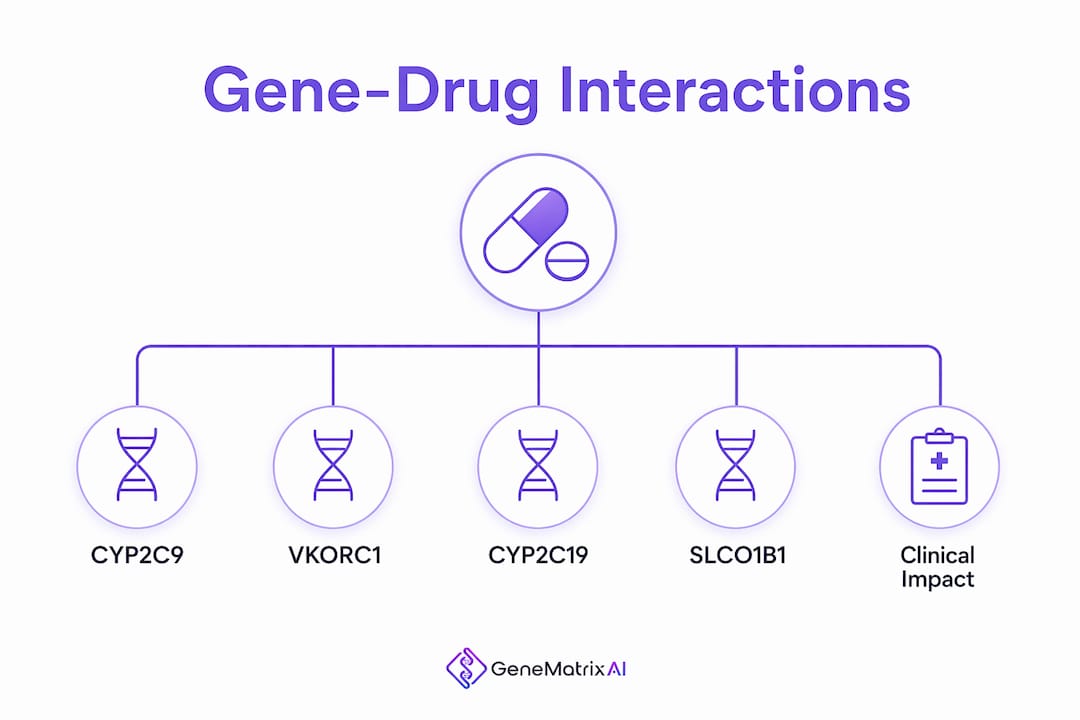
Pro Tip: When ordering PGx panels for cardiac patients, confirm the panel covers all five genes above. A panel that tests only CYP2C19 misses the warfarin and statin interactions that are equally common in a cardiology population.
What clinical trials actually show about PGx-guided cardiovascular care
The evidence base for cardiovascular pharmacogenomics is real, but it is not uniform. Providers deserve an honest read of what trials have demonstrated and where the gaps remain.
Warfarin dosing trials: promising signals, not yet definitive proof
The International Warfarin Pharmacogenetics Consortium (IWPC) developed a dosing algorithm combining CYP2C9 and VKORC1 genotypes with clinical factors. The IWPC found that a pharmacogenetic algorithm produced a more accurate starting dose than clinical factors alone, with the largest benefit seen in patients requiring high doses (above 49 mg per week) or low doses (below 21 mg per week). Two randomized controlled trials added nuance. Anderson et al. found no statistically significant difference in time that INR was in therapeutic range between genotype-guided and standard dosing groups, though there was a trend toward benefit in certain subgroups. Caraco et al. reported a shorter time to first therapeutic INR with CYP2C9-guided dosing, though differences in follow-up periods between groups complicated the interpretation. Neither trial was conclusive on its own.
Clopidogrel and CYP2C19: stronger real-world evidence
The evidence for CYP2C19 testing before clopidogrel therapy is more consistent. Multiple observational studies and meta-analyses have linked CYP2C19 loss-of-function variants to higher rates of major adverse cardiovascular events (MACE) in patients treated with clopidogrel after acute coronary syndrome or percutaneous coronary intervention (PCI). The AHA and ACC have incorporated CYP2C19 genotyping into their guidance for post-PCI antiplatelet therapy, particularly for patients at high thrombotic risk.
Where the evidence gets complicated
- Preemptive vs. reactive testing: Some trials show no clear statistical difference in MACE between patients who received preemptive PGx testing and those tested only after a problem emerged. The benefit appears most concentrated in specific high-risk subgroups.
- CPIC guidelines: CPIC provides the most granular gene-drug recommendations, with Level A evidence for CYP2C19/clopidogrel and CYP2C9/VKORC1/warfarin interactions. These are the strongest guideline endorsements currently available.
- AHA and ACC positions: Both organizations support consideration of PGx testing for key cardiovascular drugs, though neither mandates it universally. Their guidance reflects the evidence: strong enough to act on in high-risk patients, not yet definitive enough to require in every case.
- CMS coverage: The Centers for Medicare and Medicaid Services covers warfarin PGx testing only when the patient has not been previously tested, has received fewer than five days of warfarin, and is enrolled in a qualifying prospective randomized controlled trial. That coverage restriction reflects CMS's view that clinical utility evidence for warfarin genotyping in Medicare beneficiaries still needs development.
- Ongoing research needs: Trials in diverse patient populations, longer follow-up periods, and outcomes beyond INR stability (such as stroke and major bleeding rates) are still needed to fully establish the clinical utility of PGx-guided anticoagulation.
Why PGx testing improves patient safety and reduces healthcare costs
The practical case for integrating genetic testing for heart medications comes down to three things: fewer adverse events, better drug effectiveness, and lower total cost of care.
Adverse drug reaction reduction
Patients may carry variants that affect drug metabolism for their entire lives without knowing it, until an adverse event reveals the problem. A patient with CYP2C9*3/*3 genotype placed on standard warfarin dosing faces a meaningfully elevated bleeding risk from day one. PGx testing surfaces that risk before the first prescription is written. The preventive value of this approach is clearest in drugs with narrow therapeutic windows, where the gap between a therapeutic dose and a toxic one is small.
Personalized dosing and therapeutic effectiveness
For a CYP2C19 poor metabolizer prescribed clopidogrel after a stent placement, the drug may provide little antiplatelet protection at standard doses. Switching that patient to prasugrel or ticagrelor based on genotype results can restore the intended therapeutic effect. The same logic applies to warfarin: a patient with VKORC1 "A" haplotype who receives a standard starting dose may be over-anticoagulated within days. Genotype-guided dosing algorithms reduce the time needed to reach a stable, therapeutic INR, which means fewer follow-up INR checks and less time in a dangerous dose range.
Economic impact
Reducing hospitalizations and avoiding ineffective treatment cycles produces measurable economic benefit. Adverse drug reactions are among the most expensive preventable causes of hospitalization in the US. When a single PGx test can redirect a patient away from a drug they cannot metabolize effectively, the downstream savings in emergency care, extended hospital stays, and repeat procedures can substantially outweigh the test cost. Health systems that have implemented preemptive PGx programs report improvements in prescribing concordance with guidelines, which translates to fewer drug-related complications over time.
Patient and provider acceptance
Provider acceptance of PGx testing has grown steadily as clinical decision support tools have improved. Embedding PGx results directly into electronic health record (EHR) systems, with real-time alerts flagging gene-drug interactions at the point of prescribing, has been the single most effective driver of adoption. Patients, for their part, tend to respond positively to the idea that their medication is chosen based on their own biology rather than a population average. The clinical role of PGx in shifting care from reactive to proactive resonates with patients who have experienced adverse drug reactions or treatment failures in the past.
Statistic callout: Over 98% of people carry at least one genomic variant that could affect their response to commonly prescribed medications, yet most patients are never tested before a cardiovascular drug is prescribed.
Challenges providers face when implementing PGx testing in cardiology
PGx testing for cardiovascular medications is clinically supported, but widespread adoption in US cardiology practices has been slower than the evidence warrants. The barriers are real and worth addressing directly.
- Cost-effectiveness debates: Payers and health systems continue to debate whether the upfront cost of PGx testing is justified by downstream savings. The evidence is strongest for high-risk patients on narrow-therapeutic-index drugs, but coverage policies vary widely among insurers.
- Provider education gaps: Many cardiologists and primary care providers received little or no formal training in pharmacogenomics. Uneven adoption persists because providers who order tests infrequently often lack confidence in interpreting results or translating them into dosing decisions.
- Ethnic diversity in genetic data: Most PGx reference databases have been built predominantly from European ancestry populations. Variant frequencies and their clinical significance can differ across ethnic groups, meaning that a result interpreted using European-derived reference ranges may not apply equally to a patient of African, Asian, or Hispanic ancestry. This is an active area of research and a genuine limitation of current PGx knowledge.
- Interpreting complex results: A PGx report does not hand the provider a single correct answer. It provides probabilistic guidance that must be integrated with the patient's age, weight, kidney function, concurrent medications, and clinical history. Effective interpretation requires combining genetic data with the full clinical picture, not reading the genotype in isolation.
- Test timing: For warfarin specifically, benefits are greatest during the first two weeks of therapy. A test ordered after a patient has already been stabilized on a dose provides far less clinical utility than one ordered before or at initiation.
- EHR integration: Without direct integration of PGx results into the prescribing workflow, results may sit in a lab report that never gets reviewed at the moment a prescribing decision is made.
- Guideline compliance: CPIC guidelines are updated regularly as new evidence emerges. Keeping clinical decision support tools current with the latest CPIC and AHA recommendations requires ongoing maintenance that many health systems have not yet prioritized.
Pro Tip: Order PGx testing at the time of anticoagulant initiation, not after the first INR check. For warfarin, the window where genotype-guided dosing has the greatest impact on time to stable INR is the first two weeks of therapy. Waiting until a patient is already showing signs of over- or under-anticoagulation misses the point of testing.
How Genematrix brings AI-powered PGx testing to cardiovascular care
Genematrix is a Chicago-based, CLIA-certified biotechnology company built specifically around the gap between what PGx science can do and what most clinical settings actually deliver. Their GeneMatrixAI platform uses AI trained on over 500,000 genetic profiles to generate actionable pharmacogenomic reports within 72 hours, a turnaround that makes preemptive testing practical in real clinical workflows rather than a theoretical ideal.
The GenePGx module covers the cardiovascular-relevant gene variants that matter most: CYP2C19 for antiplatelet therapy, CYP2C9 and VKORC1 for warfarin dosing, and SLCO1B1 for statin safety. Results are structured to support direct EHR integration, addressing one of the most persistent barriers to PGx adoption in clinical cardiology. Genematrix targets hospitals and health systems, not just individual patients, which means their platform is built for the volume and workflow demands of institutional prescribing environments.
The broader Genematrix platform also includes GeneCancer (hereditary cancer screening), GeneMind (psychiatric pharmacogenomics), GeneBaby (pediatric genomics), and GeneDiet (nutrigenomics), making it possible for a health system to deploy a single genomic infrastructure across multiple clinical specialties. For cardiovascular programs specifically, the 72-hour result window and AI-assisted interpretation support the kind of medication optimization based on genetics that CPIC and AHA guidelines recommend but that most practices have struggled to operationalize.
Genematrix's CLIA certification means their laboratory results meet the federal standards required for clinical decision-making, not just research use. For providers considering a PGx program, that certification is the baseline requirement for using test results to guide actual prescribing.

Providers and health systems ready to move from population-based prescribing to patient-specific cardiovascular pharmacogenomics can explore Genematrix's testing platform and certifications to see how the GenePGx module fits their clinical workflow.
Key Takeaways
PGx testing for cardiovascular medications gives providers the genetic data needed to personalize drug selection and dosing before adverse events occur, with the strongest evidence concentrated in CYP2C19/clopidogrel and CYP2C9/VKORC1/warfarin interactions.
| Point | Details |
|---|---|
| Genetic variants drive dosing variability | CYP2C9 and VKORC1 variants account for about 55% of warfarin dose variability, per FDA-referenced data. |
| CYP2C19 testing changes antiplatelet decisions | Poor metabolizers of clopidogrel benefit from alternative agents; CPIC and ACC guidelines support genotype-guided selection. |
| Test timing determines clinical value | For warfarin, PGx testing is most useful in the first two weeks of therapy, before dose stabilization. |
| Interpretation requires clinical context | PGx results must be combined with age, weight, kidney function, and concurrent medications for accurate dosing guidance. |
| Genematrix delivers results within 72 hours | The GeneMatrixAI platform, trained on 500,000+ profiles, provides actionable cardiovascular PGx reports for clinical use. |