

TL;DR:
- Pharmacogenomics uses DNA analysis to predict how individuals process medications, enabling tailored drug selection and dosing. Clinical guidelines like CPIC assist in applying genetic data to reduce adverse reactions by up to 30 percent, improving safety and effectiveness. Accurate testing, interpretation, and collaboration with healthcare providers are essential for maximizing the benefits of personalized medication management.
Pharmacogenomics is the science of using your DNA to predict how your body processes and responds to medications. Learning how to optimize medication based on genetics means matching drug selection and dosing to your unique genetic profile, not a population average. The Clinical Pharmacogenetics Implementation Consortium (CPIC) has published actionable clinical guidelines covering more than 25 drug-gene pairs and 70+ medications as of 2026. Pharmacogenomic-guided prescribing reduces adverse drug reactions by up to 30%. That number represents real patients who avoided dangerous side effects, failed treatments, and months of guesswork.
How to optimize medication based on genetics: the testing basics
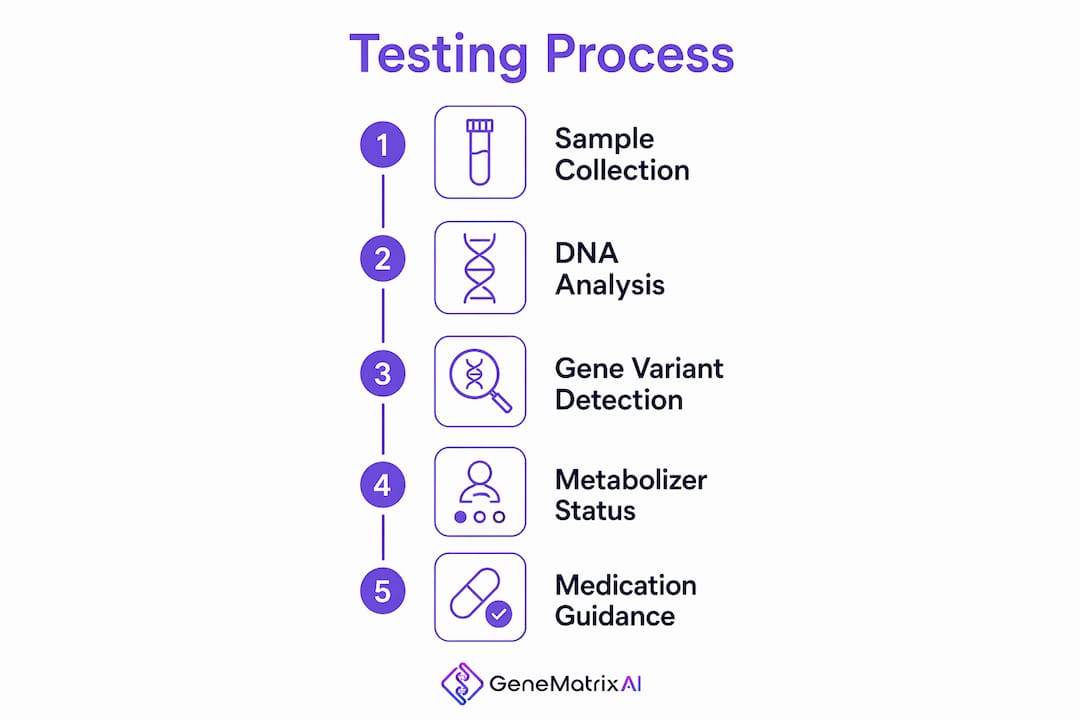
Pharmacogenomic testing analyzes specific gene variants that control how your liver enzymes break down drugs. The most clinically relevant enzymes are CYP2D6 and CYP2C19, which together metabolize a large share of commonly prescribed medications including antidepressants, antipsychotics, blood thinners, and pain relievers.
Three main testing approaches exist. Single-gene tests focus on one drug-gene pair and are ordered when a specific medication is already planned. Panel-based testing screens multiple genes at once and is the most practical option for patients managing several medications. Whole-genome or whole-exome sequencing goes deeper but is rarely needed for routine pharmacogenomic purposes.
The table below shows the most clinically tested genes, the drug categories they affect, and what happens when your variant changes enzyme activity.
| Gene | Drug Categories Affected | Metabolic Consequence |
|---|---|---|
| CYP2D6 | Antidepressants, opioids, antipsychotics | Poor metabolizers accumulate drug; ultrarapid metabolizers clear it too fast |
| CYP2C19 | SSRIs, clopidogrel, PPIs | Reduced activation of prodrugs like clopidogrel in poor metabolizers |
| CYP2C9 | Warfarin, NSAIDs, some diabetes drugs | Slower clearance raises bleeding or toxicity risk |
| TPMT | Thiopurine chemotherapy agents | Low activity increases risk of severe bone marrow suppression |
| SLCO1B1 | Statins (e.g., simvastatin) | Reduced transport raises statin concentration and muscle toxicity risk |
One critical distinction: consumer ancestry tests from companies like 23andMe use SNP chip technology, which differs significantly from the high-depth sequencing used in clinical-grade pharmacogenomic panels. Raw data from a consumer test is not a substitute for a validated clinical test. The technology gap matters because clinical decisions require confirmed, high-accuracy genotyping.
What do your results actually mean?
Pharmacogenomic results assign you a metabolizer phenotype for each tested gene. The five categories are poor, intermediate, normal (also called extensive), rapid, and ultrarapid. Each category tells your doctor something specific about how a drug will behave in your body.

A poor metabolizer of CYP2D6, for example, cannot break down codeine efficiently. Codeine is a prodrug that must convert to morphine to work. Without that conversion, the drug provides no pain relief and may still cause side effects. An ultrarapid metabolizer of the same gene converts codeine so fast that morphine builds up to dangerous levels. Both outcomes are preventable with a simple genetic test.
CPIC guidelines translate these phenotypes into specific dose adjustments or alternative drug recommendations, not vague warnings. That specificity is what makes pharmacogenomics clinically useful rather than just interesting.
Steps to apply your results with your doctor
Bringing your pharmacogenomic report to a medical appointment works best when you prepare in advance. Follow these steps to make the conversation productive:
- Print or download your full report and highlight the genes relevant to your current medications.
- Bring a complete, updated list of every medication you take, including supplements and over-the-counter drugs.
- Ask your doctor or pharmacist to cross-reference your metabolizer status against each drug using CPIC guidelines.
- Request that your results be added to your electronic health record so future prescribers can see them automatically.
- Ask specifically about dose adjustments or alternative medications, not just whether a drug is "safe."
- Follow up at 4–6 weeks to assess whether the adjusted treatment is producing the expected response.
For antidepressants, genotype-guided SSRI prescribing shows improved remission rates at six months compared to standard prescribing. The benefit takes time to appear, which means patience is part of the process.
Pro Tip: Keep a one-page genetic summary card in your wallet or saved on your phone. List your key metabolizer statuses for CYP2D6, CYP2C19, and CYP2C9. Share it with every prescriber, including urgent care physicians and dentists who may prescribe pain medications or antibiotics.
How do you get pharmacogenomic testing?
Getting tested is more straightforward than most patients expect. The steps below walk you through the full process from start to finish.
- Talk to your primary care doctor or a clinical pharmacist. Ask whether pharmacogenomic testing is appropriate given your current medications. Bring a list of any drugs that have not worked well or caused side effects in the past.
- Choose a clinically validated test. Look for CLIA-certified labs that offer panel-based pharmacogenomic testing. Avoid relying on consumer genetic data for clinical decisions.
- Complete the test. Most clinical pharmacogenomic tests use a simple cheek swab. Some labs offer blood-based testing. Turnaround time at quality labs runs approximately 72 hours to a few days.
- Review results with a qualified provider. A clinical pharmacist or physician trained in pharmacogenomics should walk you through your report. Do not interpret results alone.
- Update your health records. Ask your provider to enter your pharmacogenomic data into your electronic health record. Many hospital systems now use genetic prescribing alerts that flag drug-gene conflicts at the point of prescribing.
- Revisit as your medications change. Your genetics do not change, but your medication list will. Re-evaluate your pharmacogenomic profile whenever a new drug is added or a dose is significantly changed.
Cost is a real concern for many patients. Panel-based pharmacogenetic testing is estimated to save approximately €103.6 per patient in a multinational cost-utility analysis. That figure reflects avoided adverse events, fewer hospitalizations, and reduced trial-and-error prescribing. Insurance coverage varies widely, so check with your plan before ordering. Many insurers cover testing when a specific clinical indication is documented.
Pro Tip: Ask your pharmacist, not just your doctor, about pharmacogenomics. Clinical pharmacists often have deeper training in drug-gene interactions and can translate your report into specific, practical medication recommendations.
What are the limits and pitfalls of genetic testing?
Pharmacogenomics is a powerful tool, but it does not operate in a vacuum. The most underappreciated challenge is phenoconversion. This occurs when other drugs or foods alter your enzyme activity, effectively changing your functional metabolizer status regardless of your genetics.
A patient who is genetically a normal CYP2D6 metabolizer can become a functional poor metabolizer if they take fluoxetine, a strong CYP2D6 inhibitor. The genetic test result is still accurate. The real-world drug behavior has changed. Phenoconversion is why pharmacogenomic results must always be interpreted alongside a full medication review, not in isolation.
Pharmacogenomics also must be combined with clinical judgment and other patient data. Kidney function, liver health, age, body weight, and disease state all influence how a drug behaves. A genetic result is one input in a larger clinical picture.
Consumer genetic tests present a separate problem. They use SNP chip technology designed for ancestry analysis, not pharmacogenomic precision. The variant coverage is incomplete, and the genotyping accuracy for clinically relevant alleles is not validated for medical use. Using raw consumer data to make medication decisions is not recommended by any major clinical guideline body.
Finally, not every gene or drug has a CPIC guideline yet. The field is expanding rapidly, but some drug-gene relationships remain in the research phase. Your provider should distinguish between what is clinically actionable today and what is still investigational.
Pro Tip: If you have a consumer genetic test like 23andMe, do not use its raw data to draw conclusions about your medication metabolism. Ask your doctor for a clinical-grade pharmacogenomic panel instead. The difference in accuracy and clinical validity is substantial.
Key takeaways
Pharmacogenomics gives you and your doctor a precise, evidence-based framework to select and dose medications based on how your body actually processes them, not how an average patient does.
| Point | Details |
|---|---|
| Use clinical-grade testing | Consumer ancestry tests lack the accuracy needed for medication decisions; use CLIA-certified panels. |
| Know your metabolizer status | CYP2D6 and CYP2C19 phenotypes directly determine safe dosing for dozens of common drugs. |
| Apply CPIC guidelines | CPIC provides specific dose and drug alternatives per genotype, not just general warnings. |
| Watch for phenoconversion | Other drugs and foods can override your genetic metabolizer status and change how a drug behaves. |
| Partner with your provider | Pharmacogenomic results require clinical context; always interpret them with a qualified prescriber or pharmacist. |
Pharmacogenomics is the seat belt, not the driver
I have spent years watching patients cycle through three or four antidepressants before landing on one that works. Most of that trial-and-error is avoidable. The UCSF pharmacogenomics program describes PGx testing as a safety seat belt in prescribing. That framing is exactly right. It does not replace clinical skill. It prevents the most predictable crashes.
What I find most compelling about this field is not the technology. It is the shift in mindset it demands. Patients who understand their metabolizer status stop being passive recipients of prescriptions. They become informed partners who can ask the right questions at every appointment. That dynamic change produces better outcomes on its own, separate from the genetics.
The honest limitation I always acknowledge: pharmacogenomics tells you about metabolism and receptor sensitivity. It does not tell you everything about whether a drug will work for your specific condition. Two patients with identical CYP2C19 profiles can still respond differently to the same antidepressant because disease biology, life circumstances, and other genetic factors all play a role.
My advice is to pursue testing proactively, especially if you are managing a chronic condition or have had unexplained side effects or treatment failures. The personalized medicine strategies available today are far more accessible than most patients realize. The cost savings are real. The safety benefits are documented. The only thing standing between most patients and a better medication experience is the conversation they have not yet had with their doctor.
— Tarek
Get your genetic medication profile with Genematrix
Genematrix is a Chicago-based, CLIA-certified precision medicine company built specifically for this kind of work. Their GenePGx module delivers pharmacogenomic testing with AI-driven analysis trained on more than 500,000 genetic profiles, returning actionable reports within 72 hours.

Every Genematrix report translates your metabolizer status into specific, clinically grounded guidance your doctor can act on immediately. The platform integrates drug-gene interaction data with your health intake to flag conflicts before they become problems. If you are currently managing multiple medications or have experienced unexplained side effects, Genematrix's health intake process is the clearest starting point for building a medication plan that fits your biology.
FAQ
What is pharmacogenomic testing?
Pharmacogenomic testing analyzes specific gene variants to predict how your body metabolizes and responds to medications. Clinical panels typically cover genes like CYP2D6 and CYP2C19, which affect dozens of commonly prescribed drugs.
How does genetics influence drug efficacy?
Your metabolizer status determines how fast your liver enzymes break down a drug. Poor metabolizers accumulate higher drug levels, raising side effect risk, while ultrarapid metabolizers clear drugs too quickly for them to work.
Are consumer DNA tests useful for medication optimization?
Consumer tests like 23andMe use SNP chip technology that lacks the clinical accuracy needed for pharmacogenomic decisions. A CLIA-certified clinical panel is required for medically valid results.
Does insurance cover pharmacogenomic testing?
Coverage varies by insurer and clinical indication. Many plans cover testing when a documented medical reason exists, such as a history of adverse drug reactions or treatment failure.
How long does it take to see benefits from genetic-guided prescribing?
For antidepressants, research shows that improved remission rates from genotype-guided prescribing appear at six months. Some medication adjustments produce faster results, but patience is part of the process.