

TL;DR:
- Pharmacogenomic testing analyzes genetic enzyme variants to predict individual drug responses and prevent adverse reactions. It involves simple sample collection, guides safer prescribing, and is especially recommended for high-risk medications and chronic therapies. Access to comprehensive panel tests enhances personalized medicine, ultimately reducing drug-related hospitalizations and improving treatment outcomes.
You took your new prescription exactly as directed. Within days, you developed a rash, felt dizzy, or worse — the medication simply stopped working. This isn't just bad luck. Pharmacogenomic testing analyzes genetic variants in enzymes like cytochrome P450 to predict how your body processes a drug before you ever take it. For patients managing chronic conditions or complex medication regimens, this science turns a guessing game into a precision strategy.
Table of Contents
- Understanding drug reactions and the genetics behind them
- What you need for genetic testing: Tools and prerequisites
- Step-by-step: How to get and use pharmacogenomic testing
- Verifying results and managing medication changes
- Common barriers and making PGx work for you
- Why proactive genetic screening is the future of safe medication
- Start your journey to safer medications with Gene Matrix
- Frequently asked questions
Key Takeaways
| Point | Details |
|---|---|
| Genetics affect drug safety | Understanding your genes helps prevent unexpected and dangerous medication reactions. |
| Testing guides better choices | Pharmacogenomic tests inform dosing and drug selection to improve results. |
| Act before you react | Testing before starting new or chronic medications reduces unnecessary risks. |
| Partner with your provider | Share test results with health professionals for the safest possible treatment plan. |
| Overcome barriers proactively | Awareness and advocacy help navigate insurance, provider knowledge, and evolving standards. |
Understanding drug reactions and the genetics behind them
To understand how genetic testing can help, it's important to know why drug reactions happen in the first place.
An adverse drug reaction (ADR) is any harmful or unintended response to a medication taken at a normal dose. These are not simply overdose effects. They can include everything from a mild rash to life-threatening toxicity or treatment failure. ADRs account for hundreds of thousands of hospitalizations in the United States every year, and a significant portion of them are entirely predictable given the right genetic information.
Here's the core issue: your liver uses specialized enzymes to break down medications. The most studied of these are the cytochrome P450 enzymes, including CYP2D6, CYP2C19, and CYP3A4. If your genes code for a less active version of one of these enzymes, you may accumulate dangerous drug levels. If your genes code for an overactive version, your body might clear the drug too fast for it to work.
Several important PGx markers are particularly high-impact. The genes most associated with ADRs include:
- CYP2D6 and CYP2C19 — heavily influence antidepressants, antipsychotics, and antiplatelet drugs like clopidogrel
- TPMT and NUDT15 — determine safe dosing for thiopurine chemotherapy drugs used in leukemia treatment
- DPYD — controls how your body processes fluorouracil, a common cancer drug that can become toxic without the right enzyme function
- HLA-B*57:01 — triggers a severe hypersensitivity reaction to the HIV drug abacavir in carriers
- HLA-B*15:02 — associated with a life-threatening skin reaction to carbamazepine, an anticonvulsant
"Your DNA doesn't change, but the medications prescribed to you absolutely should based on what your DNA reveals. Testing once means benefiting for a lifetime of safer prescribing."
Many patients don't think about testing for better wellness as a proactive step. They wait until a reaction happens. But given that certain gene variants are present in 30 to 50 percent of the general population, the odds are not in your favor if you skip testing before starting high-risk medications.
What you need for genetic testing: Tools and prerequisites
Once you understand the basics of drug reactions and genetics, you're ready to explore what's needed for testing.

Getting a pharmacogenomic test is far simpler than most patients expect. In most cases, it involves a saliva swab or a blood draw, and the sample is sent to a certified laboratory for genotyping. PGx testing via saliva or blood produces results that guide drug selection and dosing, often with turnaround times ranging from 24 to 72 hours at advanced facilities.
Who should consider PGx testing?
- Anyone starting a psychiatric medication (antidepressants, mood stabilizers, antipsychotics)
- Cancer patients beginning chemotherapy, especially fluorouracil or thiopurine-based regimens
- Patients on anticoagulants like warfarin or antiplatelet agents like clopidogrel
- Anyone with a history of unexplained drug reactions or treatment failures
- Chronic pain patients being prescribed opioids metabolized by CYP2D6
Panel testing vs. single-gene testing:
| Feature | Panel testing | Single-gene testing |
|---|---|---|
| Genes covered | 10 to 50+ genes | 1 to 2 specific genes |
| Best for | New or complex medication plans | One specific known risk |
| Cost estimate | $200 to $500 | $100 to $200 |
| Insurance coverage | Increasingly covered | Often covered if clinical need documented |
| Lifetime utility | High — informs future prescribing | Limited to one drug class |
| Turnaround time | 24 to 72 hours (AI-enabled labs) | Variable |
Panel testing wins for most patients because your results are stored and can be referenced every time a new medication is considered. A single test becomes a permanent reference guide for every prescriber you work with.
What about cost? Insurance coverage is improving. Medicare Part D plans, commercial insurers, and many Medicaid programs now reimburse PGx testing for documented high-risk cases. If you're being prescribed chemotherapy, anticoagulants, or psychiatric drugs, your provider can often get the test authorized. Always ask your provider to document the clinical indication before submitting a claim.
Pro Tip: Request a pre-emptive panel test rather than a reactive single-gene test. Pre-emptive testing means your genetic results sit in your chart and are referenced automatically every time a new drug is prescribed, even years later.
Step-by-step: How to get and use pharmacogenomic testing
With the basics in mind and the requirements ready, here's exactly how to take action and get tested.
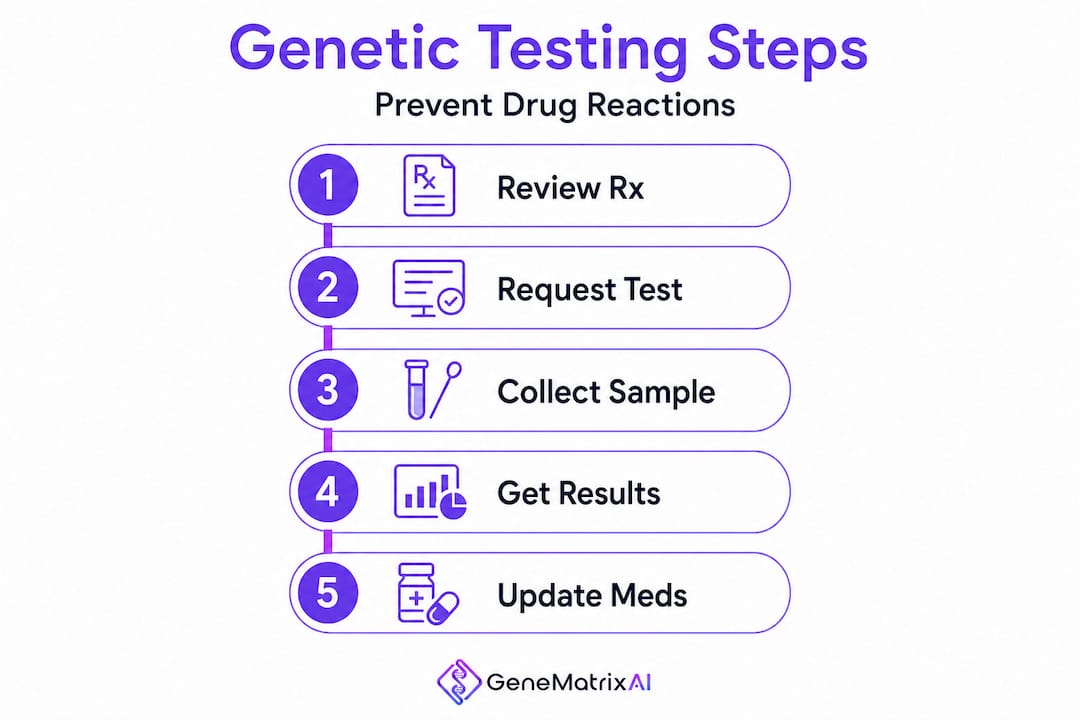
Step 1: Identify your medication risk. Look at your current or upcoming prescriptions. Are any of them antidepressants, antipsychotics, blood thinners, chemotherapy agents, or opioids? These are the highest-priority drug classes where drug-gene interaction testing delivers the clearest benefit.
Step 2: Request the test. Speak with your prescribing physician, oncologist, or primary care provider. Ask specifically for a "pharmacogenomic panel" or reference specific genes like CYP2D6 and CYP2C19. If your provider is unfamiliar, ask for a referral to a clinical pharmacist or a precision medicine specialist.
Step 3: Collect your sample. Most testing involves a simple cheek swab or blood draw done at a clinic or sometimes at home. The sample is sealed and mailed to the testing lab with a chain of custody form.
Step 4: Receive your results. Turnaround is typically 24 to 72 hours with advanced platforms. Your report will map your genetic variants to specific drug recommendations.
Step 5: Review results with your provider. Take your PGx report to your prescriber or pharmacist. Ask them to cross-reference it with your current medication list. This is where reading PGx reports becomes a critical skill for better decisions.
Here's a practical comparison of what your results might reveal:
| Gene variant | Metabolism status | Impact on medication |
|---|---|---|
| CYP2D6 poor metabolizer | Slow breakdown | Opioids or antidepressants may accumulate to toxic levels |
| CYP2C19 ultrarapid metabolizer | Fast breakdown | Clopidogrel may not reach therapeutic levels |
| DPYD deficiency | Enzyme absent or reduced | Fluorouracil becomes life-threatening |
| HLA-B*57:01 positive | Immune hypersensitivity | Abacavir must be completely avoided |
The FDA recognizes approximately 300 drug-gene pairs with actionable biomarkers documented directly in drug labeling. That means the guidance isn't experimental. It's written into the official prescribing information.
And the results are measurable. Panels covering high-impact genes have been shown to reduce ADRs by around 30 percent compared to standard prescribing without genetic data.
Pro Tip: After receiving your PGx results, ask your pharmacist to run a drug-gene interaction check on every current medication, not just the ones you're starting. You may discover existing prescriptions that need adjustment.
Verifying results and managing medication changes
After you receive your results, knowing how to act on them is the key to better health outcomes.
A PGx report is structured around gene-drug pairs. For each relevant gene, you'll receive a classification — typically labeled as poor metabolizer, intermediate metabolizer, normal metabolizer, or ultrarapid metabolizer. Each classification comes with drug-specific action recommendations: proceed as normal, adjust dose, choose an alternative, or avoid the drug entirely.
What to look for in your report:
- Your diplotype (the combination of two gene variants you inherited)
- Your metabolizer classification for each gene tested
- Drug-specific recommendations for each classified gene
- Any high-priority safety alerts, particularly for HLA-B alleles
- References to CPIC or FDA guidelines supporting each recommendation
CPIC Level A and B guidelines cover the highest-evidence gene-drug pairs, including CYP2C19-clopidogrel and TPMT-thiopurines. These are not theoretical recommendations. They are clinical-grade guidelines backed by systematic evidence reviews, and your prescriber is expected to act on them.
When reviewing your results with your doctor, ask these specific questions:
- "Are any of my current medications affected by these findings?"
- "Do any of my results require an immediate dose change?"
- "Should I share this report with other providers, including my dentist or urgent care team?"
- "Will these results be added to my electronic health record?"
"A PGx report isn't just for today's prescription. It's a safety document that should follow you through every clinical encounter for the rest of your life."
Serious red flags to act on immediately include a positive HLA-B*57:01 result if you're prescribed abacavir, or a DPYD deficiency if you're starting any fluorouracil-based chemotherapy. These aren't dose adjustments. They require complete drug substitution, and the consequences of ignoring them can be severe.
Look into interpreting your test reports in detail so you can be an active participant in the conversation with your prescriber rather than a passive recipient of a document you don't fully understand.
Common barriers and making PGx work for you
Even with a PGx result in hand, patients may face practical roadblocks. Here's how to overcome them.
The reality is that PGx isn't yet standard practice everywhere. Implementation challenges include physician familiarity gaps, inconsistent insurance reimbursement, limited electronic health record integration, and varying standards of evidence across institutions. These barriers are real, but they're not insurmountable.
Strategies for patients and caregivers:
- If your doctor is unfamiliar with PGx, ask for a referral to a clinical pharmacist or precision medicine clinic
- Print out CPIC guidelines relevant to your medications and bring them to your appointment
- For insurance denials, request a peer-to-peer review between your insurer and your physician
- Keep a personal copy of your PGx report and share it with every new provider, including specialists and emergency physicians
- Ask your pharmacy if they offer medication therapy management (MTM) services that incorporate genetic data
The prevention potential is significant. Testing for just three genes — CYP2D6, CYP2C19, and DPYD — could prevent approximately 75 percent of avoidable ADRs. That number should be in every conversation about whether testing is "worth it."
Pro Tip: If you're facing insurance pushback, ask your provider to document your personal or family history of drug reactions in the prior authorization request. Real clinical history dramatically improves approval rates.
Staying current also matters. New gene-drug relationships are added to clinical guidelines regularly. Check for updates at least once a year if you're on long-term medications, especially as new drugs are introduced to your regimen. The resources for transforming outcomes with DNA testing are expanding rapidly, and what wasn't actionable two years ago may be today.
Why proactive genetic screening is the future of safe medication
The standard model of drug prescribing still operates on a trial-and-error basis for most patients. A prescriber picks the most commonly effective drug, writes the prescription, and waits to see what happens. If the patient has a bad reaction or doesn't improve, they try something else. This approach isn't negligent. It's simply built on the assumption that we can't know in advance how a specific person will respond.
Pharmacogenomics destroys that assumption. We can know in advance. We have the science, the validated guidelines, and the technology to act before harm occurs. Waiting for a reaction to happen before checking a patient's genetic profile is starting to look less like clinical caution and more like avoidable delay.
The shift we're advocating for isn't radical. It's similar to how medicine moved from treating infections reactively to preventing them through vaccines. Nobody argues that vaccination is too proactive. The same logic applies here. Identifying your genetic risk profile before starting a high-stakes medication is not over-treatment. It's responsible preparation.
Patient empowerment is the engine driving this change. When you walk into a prescribing appointment with your PGx report already in hand, the conversation changes. You're no longer passive. You're a participant who brings relevant data that directly affects treatment decisions. That shift changes outcomes.
We also recognize that not every provider is ready for this conversation. Some will be unfamiliar with PGx terminology. Others will be skeptical about its clinical value. That's why we believe patient advocacy is inseparable from precision medicine adoption. Understanding your own genetic profile, knowing what it means, and asking the right questions puts the momentum where it belongs: with the person whose health is at stake.
The global impact of precision medicine is measurable, and it grows every year as testing becomes more accessible and guidelines become more comprehensive.
Start your journey to safer medications with Gene Matrix
If the science behind pharmacogenomics excites you, Gene Matrix makes it actionable within 72 hours.

Gene Matrix is a CLIA-certified, Chicago-based biotechnology company whose GeneMatrixAI platform has been trained on more than 500,000 genetic profiles. Their GenePGx module delivers comprehensive pharmacogenomic panel testing with AI-driven analysis, connecting patients and providers to clear, clinically grounded recommendations. From hereditary cancer screening to precision medicine testing, their services are built for patients who want answers before problems arise. Explore the science behind their tests and take a proactive step toward safer, smarter medication management today.
Frequently asked questions
How much does genetic testing for drug reactions cost?
Costs typically range from $150 to $500, and insurance coverage is expanding for patients with documented clinical need or high-risk prescriptions.
Which medications can be matched to my genetics?
The FDA identifies approximately 300 drug-gene pairs with actionable guidance in official drug labeling, covering antidepressants, blood thinners, chemotherapy agents, and more.
Should I get tested before starting new medication?
For chronic therapies or narrow-therapeutic-index drugs, pre-emptive panel testing is strongly recommended so your prescriber can factor in your genetics from day one.
Can genetic testing prevent all side effects?
No test eliminates all risk, but panels covering CPIC-identified genes reduce ADRs by approximately 30 percent by flagging your highest genetic vulnerabilities.
Is ancestry important in PGx testing?
Yes. The frequency of high-risk gene variants differs significantly across ancestral populations, so both testing protocols and clinical guidelines account for ancestry when interpreting your results.