

TL;DR:
- Pharmacogenomics tests predict individual drug responses using stable DNA analysis, reducing adverse reactions.
- PGx testing lowers hospitalization risks by guiding personalized medication choices in high-risk treatments.
- It is especially valuable when starting high-risk drugs, experiencing adverse reactions, or managing multiple medications.
Roughly 7% of hospitalized patients experience a serious adverse drug reaction, and genetics influence how your body processes many of the most commonly prescribed medications. That number isn't just a statistic — it represents real people who suffered complications that might have been avoided with a simple DNA test. Pharmacogenomics (PGx) is the science of understanding how your unique genetic makeup affects your response to medications. For patients starting new treatments, managing chronic conditions, or caring for someone who has struggled to find the right drug, this guide breaks down what PGx testing can realistically do, when it matters most, and what the science actually supports.
Table of Contents
- Understanding pharmacogenomic DNA testing
- Key benefits: Reducing risks and optimizing outcomes
- When is DNA testing for medication most valuable?
- Limitations and challenges: What PGx can and cannot do
- The future of PGx: Emerging tools and global standards
- Our take: How to make the most of DNA medication testing
- Take the next step with Gene Matrix and personalized medicine
- Frequently asked questions
Key Takeaways
| Point | Details |
|---|---|
| Personalization matters | DNA testing helps ensure your medications work better and cause fewer side effects. |
| Stronger safety | Pharmacogenomics can reduce your risk of severe reactions by up to 30 percent. |
| Best for high-risk cases | Testing is most valuable for people on multiple medications or with complex conditions. |
| Know the limits | Genetic testing isn’t infallible and works best when integrated with expert medical advice. |
| The future is bright | Advances in technology and global standards will make personalized medication choices easier soon. |
Understanding pharmacogenomic DNA testing
Pharmacogenomic DNA testing is exactly what it sounds like: using your genetic information to predict how your body will respond to specific medications. Unlike a standard lab test that measures what's in your blood right now, a PGx test looks at your DNA to understand how you're built to process drugs. That distinction is important because it means results are stable over time. You test once, and the information stays relevant throughout your life.
The key genetic players here are enzymes. Many medications are broken down in the liver by proteins called cytochrome P450 (CYP450) enzymes, and the genes encoding these enzymes vary significantly from person to person. If your CYP2D6 gene produces an enzyme that works too slowly, a standard dose of certain antidepressants or pain medications may build up in your system to toxic levels. If it works too fast, the drug may clear before it has any effect. Neither scenario is what your prescriber intended.
Here's a quick look at some of the most clinically relevant genes and what they influence:
| Gene | Drug categories affected | Clinical relevance |
|---|---|---|
| CYP2D6 | Antidepressants, opioids, antipsychotics | Altered metabolism can cause toxicity or treatment failure |
| CYP2C19 | Blood thinners, proton pump inhibitors | Impacts efficacy of clopidogrel and omeprazole |
| CYP2C9 | Warfarin, NSAIDs | Poor metabolizers at higher bleeding risk |
| SLCO1B1 | Statins (cholesterol drugs) | Variant linked to muscle-related side effects |
| TPMT/NUDT15 | Chemotherapy (thiopurines) | Reduced activity raises toxicity risk |
When you receive your PGx results, you'll typically see your "metabolizer status" for each relevant gene. This status falls into categories: poor metabolizer, intermediate metabolizer, normal metabolizer, or rapid/ultrarapid metabolizer. Each status tells your healthcare provider how your body is likely to handle specific medications, which feeds directly into personalized medicine explained as a clinical practice.
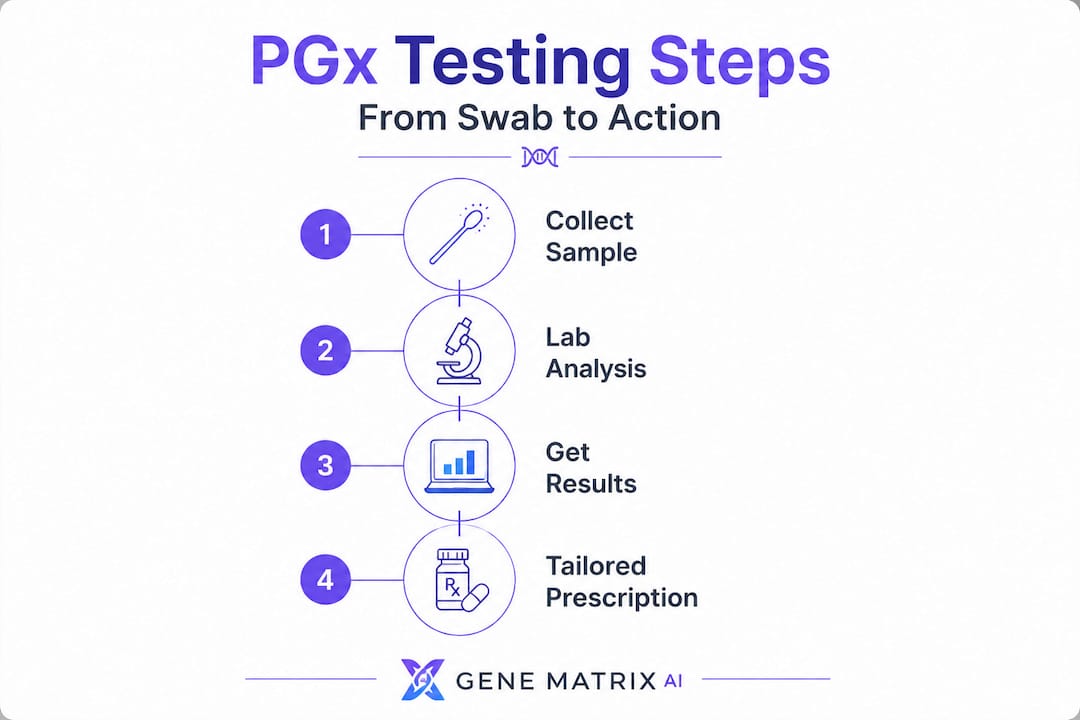
The testing process itself is straightforward. A saliva swab or blood draw collects your DNA sample. The lab then analyzes specific positions in your genome known as actionable variants, meaning variants with documented clinical significance. Results typically include a report organized by drug category, flagging which medications carry heightened risk or reduced benefit based on your genetic profile. Understanding genetic testing for health outcomes starts with recognizing that not all variants are created equal — some have strong clinical evidence behind them, while others require more interpretation.
Key benefits: Reducing risks and optimizing outcomes
The most compelling reason to consider PGx testing is the hard evidence behind it. PGx-guided prescribing reduces adverse drug reactions (ADRs) by up to 30%, cuts hospitalizations, and lowers overall treatment costs. Those aren't marginal improvements. For a patient who has already experienced a serious drug reaction or watched a loved one cycle through multiple failed medications, that reduction is meaningful.
Key statistic: Patients with major depressive disorder who received PGx-guided treatment showed a hazard ratio of 1.27 for achieving remission compared to those on standard care, according to published clinical data.
In mental health treatment specifically, where finding the right antidepressant often involves months of trial and error, PGx testing offers something genuinely valuable: a starting point grounded in biology rather than guesswork. Antidepressants that are metabolized by CYP2D6 or CYP2C19 are among the most studied, and prescribers who factor in genetic data from day one tend to land on effective medications faster.
Other areas where PGx clearly earns its place:
- Warfarin dosing: Variants in CYP2C9 and VKORC1 directly affect how quickly warfarin is metabolized and how sensitive someone is to its effects. PGx-guided dosing reduces time to stable INR (the clotting measurement used to monitor warfarin therapy) and lowers bleeding events.
- Chemotherapy selection: Genes like DPYD affect how the body handles fluorouracil-based cancer drugs. Patients with certain DPYD variants face serious, even life-threatening toxicity at standard doses. Testing before treatment starts isn't optional in leading cancer centers — it's the standard.
- Opioid therapy: CYP2D6 ultrarapid metabolizers who are prescribed codeine can convert it to morphine so rapidly that it becomes dangerous. The FDA has issued warnings about this exact risk in specific populations.
The wellness benefits of genetic testing extend beyond avoiding harm. When medications work as intended from the first prescription, patients experience fewer disruptions to daily life, maintain better adherence (they keep taking drugs that aren't making them feel terrible), and build more trust with their care team. From a caregiver's perspective, rapid genetic testing benefits include fewer emergency situations and clearer conversations with providers about what options make biological sense for the person they're supporting.

When is DNA testing for medication most valuable?
PGx testing isn't something every patient needs before every prescription. But there are specific situations where it moves from helpful to arguably essential. Knowing when to ask for it is one of the most practical things a patient or caregiver can do.
The most important scenarios for seeking PGx testing include:
- Starting a high-risk medication. Cancer chemotherapy, warfarin, antidepressants, antipsychotics, and certain opioids all have documented genetic drug interactions that can significantly affect safety and effectiveness.
- History of adverse drug reactions. If you or the person you care for has previously had an unexpected or severe reaction to a medication, there's a real chance a genetic factor was involved.
- Multiple failed treatment attempts. Cycling through three or four antidepressants without success isn't just discouraging — it's often a signal that metabolizer status should be investigated.
- Polypharmacy (taking multiple medications). The more drugs someone takes, the higher the chance of gene-drug and drug-drug interactions compounding each other in unpredictable ways.
- Ancestry-related genetic risk. Some actionable variants are more common in specific populations. For example, the HLA-B variant HLA-B*15:02 is found predominantly in people of Southeast Asian ancestry and dramatically increases the risk of a severe skin reaction called Stevens-Johnson syndrome when certain epilepsy drugs are used.
"Genetic testing is most powerful when it informs a proactive conversation with your healthcare provider rather than replacing clinical judgment entirely."
As a practical step, consider following a step-by-step precision medicine guide when approaching these conversations with your care team. The right gene panel testing can identify multiple relevant variants in a single test, making it efficient rather than piecemeal.
Pro Tip: Before any appointment where PGx testing might come up, bring a complete and current list of every medication, supplement, and over-the-counter drug you take. It gives your provider the full picture needed to act on genetic findings right away.
Limitations and challenges: What PGx can and cannot do
Honesty matters here. PGx testing is genuinely powerful, but it isn't a replacement for comprehensive medical care, and it doesn't work equally well for every drug or condition.
Some important limitations to understand:
- Not every drug has an actionable genetic marker. Many medications are not primarily metabolized through genetically variable pathways, which means PGx data adds little predictive value for those specific drugs.
- Evidence quality varies by drug class. The evidence base for warfarin, clopidogrel, and chemotherapy drugs is strong. For some antidepressants or pain medications in certain settings, guidelines remain inconsistent across major bodies like the FDA and CPIC (Clinical Pharmacogenetics Implementation Consortium).
- Provider education gaps are real. Even when test results are in hand, many prescribers haven't received formal training on how to interpret PGx reports or how to adjust dosing based on metabolizer status. This isn't a criticism — it reflects how new this field still is in clinical practice.
- Reimbursement is inconsistent. Insurance coverage for PGx testing varies widely, which creates access barriers for patients who could genuinely benefit.
- Environment and other factors still matter. Genetics explains part of your drug response, but not all of it. Age, kidney function, liver health, other medications, and even diet can all modify how a drug behaves in your body.
Some randomized controlled trials examining PGx-guided analgesia in multimodal pain settings have shown no statistically significant benefit over standard care, which is a reminder that context determines value. AI in genomics is helping bridge some of these interpretation gaps, but clinician education remains a bottleneck.
Pro Tip: Use your PGx results as a living document in your ongoing care. Bring them to every new specialist you see, update your care team if new drugs are added, and revisit the report whenever your medication regimen changes significantly.
The future of PGx: Emerging tools and global standards
The next several years will likely bring faster, more accurate, and more affordable PGx testing to more patients. The technology underpinning the science is advancing quickly.
| Technology | Current status | Future potential |
|---|---|---|
| Short-read sequencing | Standard for most PGx panels today | Lower cost, wide availability |
| Long-read NGS | Emerging; better for complex gene regions | Uncovers variants missed by current methods |
| AI interpretation | Actively deployed in leading platforms | Consistent, scalable report interpretation |
| Harmonized global guidelines | In progress via CPIC, PharmGKB, EUGT | Consistent clinical recommendations worldwide |
Long-read next-generation sequencing (NGS) is particularly exciting because it can accurately read through complex gene regions that short-read methods sometimes miss. Genes like CYP2D6 have structural variations that are technically difficult to sequence and interpret. Better sequencing technology means fewer missed variants and more accurate metabolizer classifications.
On the global standards front, organizations like CPIC are working with international counterparts to harmonize guidelines so that a patient in Chicago gets the same evidence-based dosing recommendation as a patient in London or Tokyo. The global impact of genetic testing grows every time a new guideline is established and adopted by a health system.
"AI-powered interpretation platforms are narrowing the gap between the genetic data that exists and the clinical decisions that actually get made."
For patients and caregivers, the practical takeaway is that the field is moving fast in your favor. Testing that's complex and expensive today will be routine and accessible within this decade.
Our take: How to make the most of DNA medication testing
We've seen a lot of patients arrive with PGx results in hand, having already done the test, but struggling to make sense of what to do next. That gap between data and action is the real challenge in this field, not the science.
The most common mistake? Treating a PGx test as a one-time transaction rather than the beginning of an ongoing conversation. Genetics doesn't change, but your medications, your health conditions, and the guidelines that inform clinical decisions do change. A result that was acted on appropriately two years ago might need revisiting if you've been prescribed a new drug that interacts with the same metabolic pathway.
The uncomfortable truth we share with patients and caregivers is that PGx is most valuable in the hands of a provider who understands how to use it. That means the test alone isn't enough. Pursuing a personalized medicine journey means advocating for yourself within a care team, not outsourcing decisions to a report.
For caregivers especially, storing and sharing results matters more than most people realize. When an elderly parent is brought to an emergency room, or when a child with a complex condition sees a new specialist, having genetic data readily available can shorten the time to safe prescribing decisions significantly. Before preparing for DNA testing, think about how you'll store and organize results for long-term use, not just the immediate appointment.
Pro Tip: Keep a digital and printed copy of your PGx report in your medical records folder and share it with every prescriber you see, including urgent care and emergency providers. It's one of the most actionable things you can do to protect yourself.
Take the next step with Gene Matrix and personalized medicine
If you're ready to move from uncertainty to clarity about how your genetics affect your medications, Gene Matrix makes that transition straightforward. As a CLIA-certified, AI-powered precision medicine company based in Chicago, Gene Matrix delivers cutting-edge PGx solutions with actionable reports available within 72 hours. The GeneMatrixAI platform is trained on over 500,000 genetic profiles, giving patients and providers the kind of depth and context that makes results genuinely usable.

Gene Matrix's GenePGx module is designed specifically for medication optimization, covering the most clinically relevant drug-gene interactions across psychiatry, oncology, cardiology, pain management, and more. Their innovations in genetic testing are built to support both individual patients and the healthcare providers who serve them. With nationwide genetic testing access, distance isn't a barrier to getting started. Reach out to learn how one test can inform safer, smarter medication decisions for years to come.
Frequently asked questions
Will insurance cover DNA testing for medication?
Some insurers cover PGx testing when it's deemed medically necessary, particularly for high-risk medications or documented treatment failures, but coverage varies widely by plan and provider. Always verify with your insurer before testing.
Can PGx testing guarantee the best medication for me?
No test can guarantee a perfect match, but PGx-guided prescribing reduces adverse drug reactions by up to 30% and helps prescribers eliminate options that are biologically unlikely to work for you. It significantly narrows the field in your favor.
How long does it take to get pharmacogenomic DNA test results?
Most PGx results are available within a few days to two weeks depending on the provider and test complexity. Gene Matrix delivers actionable reports within 72 hours through its AI-powered platform.
Are there risks to taking a DNA test for medications?
The physical process of DNA collection carries essentially no medical risk. However, test results can have psychological and privacy implications, so it's worth asking your provider how your genetic data is stored, used, and protected before you submit a sample.
Which medications benefit most from DNA testing?
Drugs affecting metabolism in cancer treatment, depression, heart disease, blood clotting, and pain management have the strongest evidence linking genetic variants to clinical outcomes. Warfarin, clopidogrel, fluorouracil-based chemotherapy, SSRIs, and certain opioids are among the most studied.