

TL;DR:
- Genetic disorders affect up to 10% of children and are a key factor in pediatric health. Early diagnosis through genetic testing improves outcomes, enables targeted treatments, and informs family planning. Advances in genomics are shifting pediatric care towards proactive, personalized, and genotype-informed management.
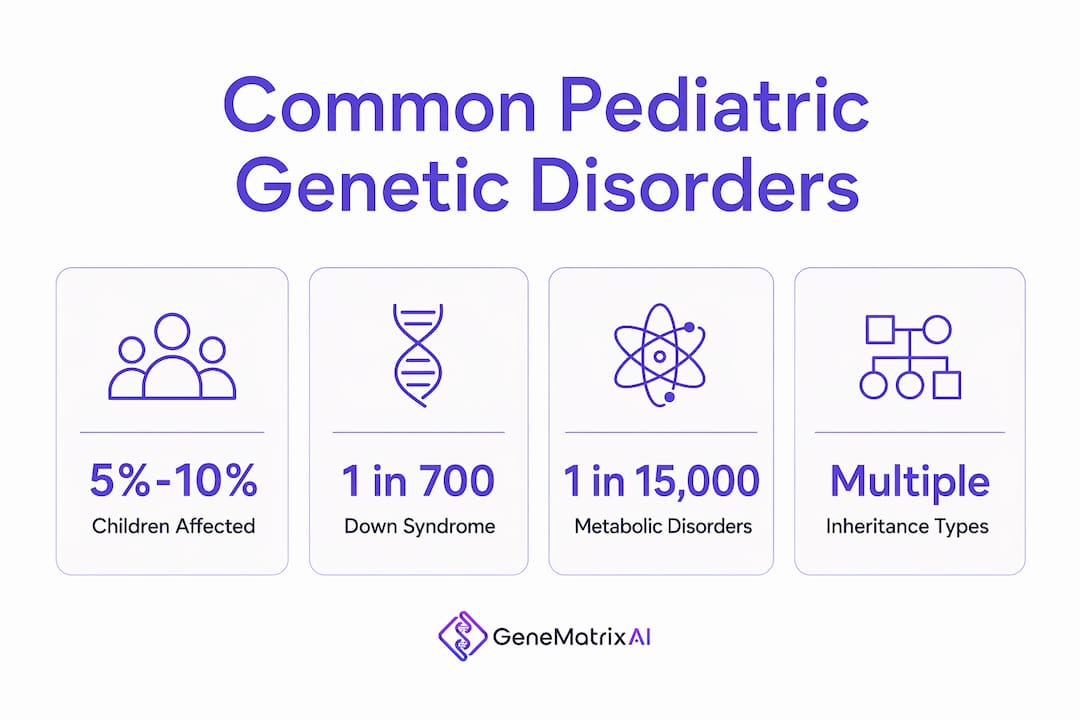
Pediatric genetics is the study and clinical application of genetic information to diagnose, manage, and counsel families about health conditions in children. The role of genetics in pediatrics reaches far beyond rare diseases. Genetic disorders affect 5%–10% of all children and contribute disproportionately to pediatric hospitalizations and deaths. That figure means in a classroom of 30 kids, up to three may carry a condition with a genetic root. For parents and caregivers, understanding how DNA shapes your child's health is not a niche concern. It is a practical tool for earlier diagnosis, smarter treatment decisions, and better long-term outcomes.
What is the role of genetics in pediatrics?
Genetics sits at the center of how pediatricians explain why some children develop certain conditions and others do not. The field covers diagnosis, treatment planning, genetic counseling, and increasingly, proactive health management. Pediatric geneticists work alongside neurologists, cardiologists, and metabolic specialists to coordinate care for children whose conditions have a hereditary or chromosomal basis.
The scope is broader than most parents realize. Genetic factors in child health include everything from single-gene disorders like cystic fibrosis to chromosomal conditions like Down syndrome to complex multifactorial conditions like congenital heart defects. Each category requires a different diagnostic approach and a different conversation with your child's care team.
Early diagnosis changes outcomes. A child identified at birth with phenylketonuria (PKU) through newborn screening can begin a modified diet immediately, preventing intellectual disability entirely. That is the power of applying genetic knowledge early, before symptoms become irreversible.
What are common genetic disorders in children?
Pediatric genetic disorders span a wide spectrum of severity, frequency, and body systems affected. Some are present at birth and obvious on examination. Others emerge months or years later as the child develops.
The most recognized conditions include:
- Down syndrome (Trisomy 21): Caused by an extra copy of chromosome 21, affecting cognitive development, heart structure, and immune function.
- Cystic fibrosis: A single-gene disorder affecting the lungs and digestive system, caused by mutations in the CFTR gene.
- Sickle cell disease: An autosomal recessive condition causing abnormal red blood cells, leading to pain crises and organ damage.
- Fragile X syndrome: The most common inherited cause of intellectual disability, linked to a mutation on the X chromosome.
- Inborn errors of metabolism (IEM): A broad category of disorders where enzyme deficiencies disrupt normal metabolic processes.
Inborn errors of metabolism occur in 1 in 15,000 to 1 in 2 million live births, depending on the specific condition. That wide range reflects how diverse this category is. Some IEMs are caught on newborn screening panels; others are not detected until a child shows symptoms months or years later.
| Condition | Genetic Cause | Primary Health Impact |
|---|---|---|
| Down syndrome | Chromosomal (Trisomy 21) | Cognitive delays, heart defects |
| Cystic fibrosis | Single gene (CFTR) | Lung and digestive disease |
| Sickle cell disease | Autosomal recessive | Blood and organ damage |
| Fragile X syndrome | X-linked mutation | Intellectual disability |
| PKU | Autosomal recessive | Metabolic and neurological |
Pro Tip: If your child has unexplained developmental delays, recurring infections, or symptoms that do not fit a standard diagnosis, ask your pediatrician specifically about a genetics referral. Many families wait years before reaching a geneticist.
Multifactorial conditions add another layer of complexity. Conditions like autism spectrum disorder, congenital heart defects, and neural tube defects involve both genetic predisposition and environmental triggers. No single gene causes them. That makes prediction harder but also means lifestyle and environmental factors can sometimes modify risk.
How do inheritance patterns affect your child's risk?
Inheritance patterns in pediatrics follow several distinct models, and knowing which one applies to your family changes how you think about risk for future children and other relatives.

Mendelian inheritance covers three main patterns. Autosomal dominant conditions require only one altered copy of a gene to cause disease. Autosomal recessive conditions require two altered copies, one from each parent. X-linked conditions are carried on the X chromosome, which is why they often affect boys more severely than girls.
Non-Mendelian patterns complicate the picture further. Genomic imprinting is one striking example. Angelman syndrome and Prader-Willi syndrome are both caused by abnormalities in the same region of chromosome 15. The condition a child develops depends entirely on whether the affected chromosome came from the mother or the father. Same location, different parent, completely different disease.
| Inheritance Type | Example Condition | Recurrence Risk for Siblings |
|---|---|---|
| Autosomal dominant | Marfan syndrome | 50% |
| Autosomal recessive | Cystic fibrosis | 25% |
| X-linked recessive | Hemophilia A | 50% of sons |
| Chromosomal | Down syndrome (translocation) | Varies by type |
| Multifactorial | Congenital heart defect | 2%–5% |
Inheritance can also be multifactorial, reflecting the interplay of multiple genes and environmental exposures. This makes risk assessment more nuanced and less predictable than single-gene conditions. A genetic counselor can help you interpret recurrence risks specific to your family's history and test results.
Pro Tip: Before a second pregnancy, consider meeting with a certified genetic counselor if your first child has a diagnosed genetic condition. Understanding the recurrence risk is one of the most useful things you can do for your family planning.
If you are thinking about pregnancy and want to understand your carrier status before conception, preconception genetic screening can identify whether you or your partner carry recessive mutations that could affect future children.
What genetic tests are used in pediatric diagnosis?
Genetic testing in pediatrics ranges from the universal newborn screening every baby receives at birth to highly specialized whole exome sequencing ordered years later for a child with an undiagnosed condition.
The main testing approaches include:
- Newborn screening: A blood spot test performed within 24–48 hours of birth, screening for dozens of treatable metabolic, hormonal, and genetic conditions. The specific panel varies by state.
- Chromosomal microarray: Detects deletions or duplications across the genome. Often the first-line test for children with developmental delays or birth defects.
- Gene panels: Test a defined set of genes associated with a specific condition or symptom cluster, such as an epilepsy panel or a cardiomyopathy panel.
- Whole exome sequencing (WES): Reads the protein-coding regions of all genes. Used when standard tests have not provided a diagnosis.
- Whole genome sequencing (WGS): The most comprehensive option, covering coding and non-coding DNA. Still primarily used in research or complex undiagnosed cases.
Genomic sequencing in children is mainly diagnostic, triggered when symptoms remain unexplained by standard tests. This is an important distinction. Most children do not need whole exome or genome sequencing. Testing is matched to clinical need, not ordered as a routine screen.
Parents should also understand the limits of testing. A negative genetic test result does not conclusively rule out a genetic disorder due to technological and variant limitations. Some mutations fall outside the regions a test covers. Others are variants of uncertain significance, meaning science has not yet determined whether they cause disease.
Cost is a real barrier. 85% of pediatric clinicians recognize the importance of genomic screening, yet 87% cite cost as the primary barrier to routine use. That gap between clinical awareness and practical access is one of the defining challenges in pediatric genetic care today.
One more consideration worth knowing: the Genetic Information Nondiscrimination Act (GINA) protects against health insurance and employment discrimination based on genetic information. However, GINA does not cover life insurance or disability insurance. Discuss these implications with a genetic counselor before pursuing testing if coverage concerns apply to your family.
For a practical walkthrough of the testing process, the step-by-step genetic screening guide from Genematrix breaks down what to expect at each stage.
How is genetics shaping the future of pediatric care?
Pediatric genetic care is shifting toward genotype-informed proactive management, requiring integrated health systems that connect genetics with primary care, specialty care, and family support. This is a meaningful departure from the traditional model, where genetics was consulted only after a diagnosis was already suspected.
Here is how that shift is playing out in practice:
- Precision medicine: Genomic data now guides drug selection and dosing in pediatric oncology, epilepsy, and rare metabolic disease. A child with a specific BRAF mutation in their tumor receives a targeted therapy rather than standard chemotherapy.
- Gene therapy: Conditions like spinal muscular atrophy (SMA) now have approved gene therapies. Zolgensma, approved by the FDA, delivers a functional copy of the SMN1 gene and has transformed outcomes for infants diagnosed early.
- Pharmacogenomics in children: Genetic variants affect how children metabolize medications. A child who is a poor metabolizer of codeine, for example, faces serious safety risks from a standard dose.
- Proactive screening discussions: Genomic sequencing is currently symptom-driven, but researchers and clinicians are actively debating whether earlier, broader sequencing could prevent harm before symptoms appear.
"Multidisciplinary management of genetic disorders is essential for effective care beyond initial diagnosis." — JAMA, Rethinking Pediatric Genetic Care
As a parent, you can advocate for genetics-informed care by asking your child's pediatrician whether a genetics referral is appropriate, requesting that genetic test results be shared across your child's care team, and staying informed about new therapies relevant to your child's diagnosis. The genomics and proactive health guide from Genematrix offers a practical framework for making that shift from reactive to proactive care.
Key takeaways
Genetics is not a specialty reserved for rare disease clinics. It is a foundational layer of pediatric health that affects diagnosis, treatment, and family planning across every area of medicine.
| Point | Details |
|---|---|
| Prevalence is higher than expected | Genetic disorders affect 5%–10% of children, making genetics relevant to most families. |
| Inheritance patterns determine risk | Knowing whether a condition is dominant, recessive, or multifactorial shapes recurrence risk for siblings. |
| Testing has real limits | A negative result does not rule out a genetic disorder; clinical context always matters. |
| Cost remains a barrier | 87% of pediatric clinicians cite cost as the top obstacle to routine genomic screening. |
| Proactive care is the direction | Gene therapy and precision medicine are moving pediatric genetics from diagnosis to prevention. |
What i have learned working at the intersection of genetics and pediatric care
The biggest misconception I encounter is that genetic testing gives you certainty. Parents often come in expecting a clear yes or no. The reality is that genomics delivers probabilities, not verdicts. A variant of uncertain significance on a report is not a diagnosis. It is a data point that needs clinical interpretation, family history context, and sometimes years of follow-up before its meaning becomes clear.
The second thing I have learned is that families who engage early do better. Not because early testing always changes the treatment plan, but because it gives parents time to build a care team, connect with disease-specific communities, and make informed decisions before a crisis forces their hand. Waiting for a child to deteriorate before pursuing genetic evaluation is a pattern I have seen too often, and it is almost always avoidable.
My honest advice: do not wait for your child's pediatrician to bring up genetics. Ask about it. If your family history includes early-onset cancer, metabolic disease, or unexplained neurological conditions, that history is clinically relevant to your child right now. Bring it to every appointment. Genetic counselors are trained to help you interpret that history and decide whether testing makes sense. They are one of the most underused resources in pediatric care.
— Tarek
How Genematrix supports pediatric genetic health
Genematrix is a Chicago-based, CLIA-certified biotechnology company built around one goal: moving families from reactive treatment to proactive, genetics-informed care. Their GeneBaby module is designed specifically for pediatric genetic evaluation, delivering AI-powered genomic analysis trained on 500,000+ genetic profiles. Reports are returned within 72 hours, giving families and clinicians the information they need without long wait times.

Whether you are navigating a new diagnosis, planning a future pregnancy, or simply want to understand your child's genetic health baseline, Genematrix offers comprehensive genetic testing services accessible nationwide. Their team connects families with actionable genomic insights and personalized wellness reports that go beyond a lab result. Start with a health intake or innovation program to find the right testing path for your child.
FAQ
What does a pediatric geneticist do?
A pediatric geneticist diagnoses and manages genetic conditions in children, coordinates multidisciplinary care, and provides genetic counseling to families. They are typically consulted when a child has unexplained developmental delays, birth defects, or a suspected hereditary condition.
When should a child be referred for genetic testing?
A child should be referred when standard diagnostic tests do not explain their symptoms, when a family history of a genetic condition exists, or when a pediatrician suspects a chromosomal or single-gene disorder. Early referral generally leads to faster diagnosis and better outcomes.
Can genetic testing in infants detect all conditions?
No. Newborn screening covers dozens of conditions but does not capture every genetic disorder. Many metabolic disorders present after the neonatal period, requiring ongoing clinical vigilance even when initial screening results are normal.
Is my child's genetic information protected by law?
GINA protects against discrimination in health insurance and employment based on genetic information, but it does not cover life insurance or disability insurance. Discuss privacy implications with a genetic counselor before testing if these coverage areas are a concern for your family.
What is the difference between gene therapy and genetic testing?
Genetic testing identifies mutations or variants in a child's DNA to guide diagnosis and treatment decisions. Gene therapy is a treatment that introduces, alters, or replaces genetic material inside a patient's cells to treat or prevent disease. Zolgensma for spinal muscular atrophy is one approved example in pediatrics.