

TL;DR:
- Genomics helps families proactively understand hereditary cancer risks and medication responses.
- Preparation includes documenting family health history and consulting a genetic counselor.
- Results guide personalized prevention, screening, and medication management, with ongoing updates as science advances.
Most families discover a hereditary cancer risk or a dangerous medication reaction only after something goes wrong. That gap between awareness and action is exactly what genomics closes. Your DNA holds detailed information about your cancer susceptibility, how your body processes medications, and which preventive steps make the most sense for you specifically. Yet many people never act on that information simply because they don't know where to start. This guide walks you through the practical steps of using genomic testing proactively, from gathering your family history to understanding what your results mean for long-term health decisions.
Table of Contents
- Understanding genomics and its health potential
- Preparing for genetic testing: What to gather and expect
- Step-by-step: The genetic testing and analysis process
- What your results mean: From risk reduction to personalized medication
- The real power (and limits) of genomics: What most guides miss
- Next steps: Bringing genomics into your proactive health plan
- Frequently asked questions
Key Takeaways
| Point | Details |
|---|---|
| Genomics uncovers hidden risks | Genetic testing can identify inherited cancer risks and guide your family's screening and prevention decisions. |
| Preparation makes testing easier | Gathering family history and working with a counselor helps ensure accurate, actionable results. |
| Results inform proactive steps | Test results can lead to personalized medication plans or preventive actions for you and relatives. |
| Interpret results with experts | Regular result review and medical guidance are key, especially with uncertain or changing findings. |
Understanding genomics and its health potential
Genomics and genetics are related but not the same thing. Genetics focuses on individual genes and specific inherited traits. Genomics looks at the entire set of your DNA, including how genes interact with each other and with your environment. For families thinking about health, that distinction matters because most hereditary conditions involve multiple genes working together, not a single faulty switch.
The two most impactful health applications of genomics right now are hereditary cancer risk assessment and pharmacogenomics. Cancer risk testing looks for variants in genes like BRCA1, BRCA2, and the Lynch syndrome genes that significantly raise your lifetime odds of developing certain cancers. Exploring genomic wellness benefits helps you understand how catching these variants early can completely change your screening and prevention strategy.
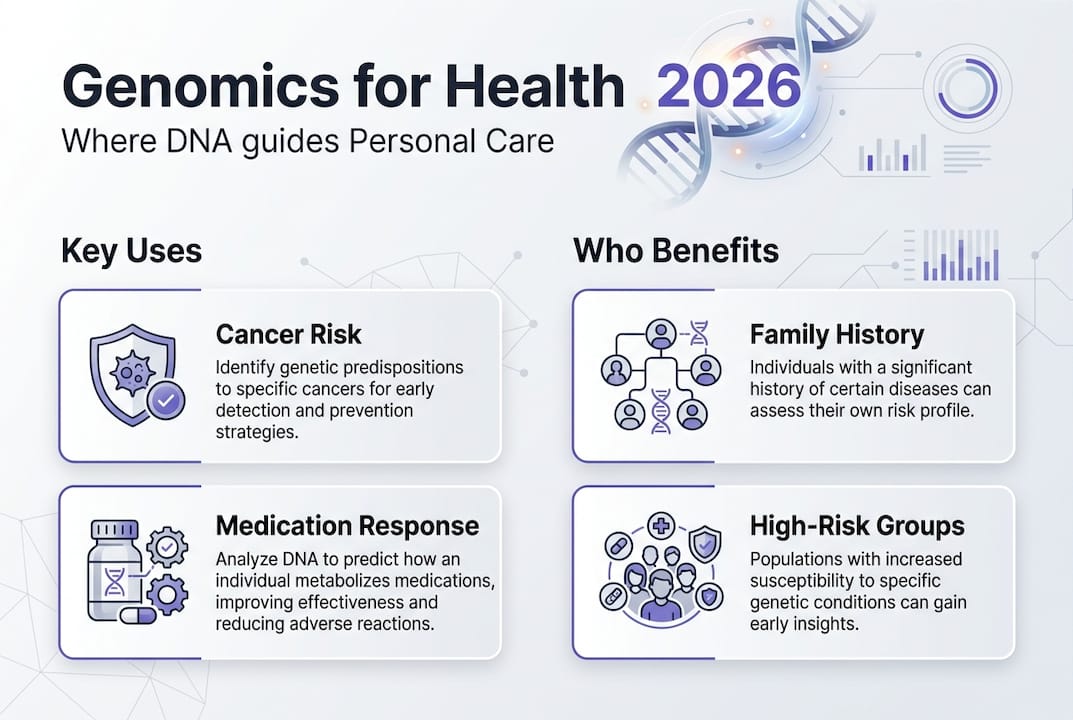
Pharmacogenomics and medication is the other major application. It studies how your DNA affects how you respond to drugs. Some people metabolize certain antidepressants too fast, making them ineffective. Others break down blood thinners too slowly, raising bleeding risk. Knowing this in advance means your doctor can prescribe the right drug at the right dose the first time.
Who should consider genomic testing? Anyone with a personal or family history of cancer (especially early-onset or multiple affected relatives), anyone experiencing unexplained medication reactions, and anyone who simply wants a full picture of their health risks. Learning more about genetic risk assessment can help clarify whether testing fits your situation.
Pro Tip: Your family history is your first genetic clue. Before any appointment, ask relatives about cancers diagnosed before age 50, multiple cancers in one person, or the same cancer appearing on one side of the family repeatedly.
Common concerns about genomic testing include privacy, cost, and whether results are actually useful. These are fair questions. Federal protections exist, testing costs have dropped significantly, and a well-designed test paired with expert interpretation delivers genuinely actionable information.
| Genomic application | What it tests | Key health benefit |
|---|---|---|
| Hereditary cancer panels | BRCA1/2, Lynch, and more | Early detection, preventive options |
| Pharmacogenomics (PGx) | Drug-metabolizing enzymes | Safer, more effective prescriptions |
| Nutrigenomics | Diet-gene interactions | Personalized nutrition plans |
| Psychiatric genomics | Psychiatric medication genes | Better mental health medication choices |
| Pediatric/carrier screening | Childhood-onset conditions | Family planning and early intervention |
As three-step genetic testing guidelines describe, the process involves pre-test counseling, panel selection, and post-test counseling, each of which adds critical context to your results.
Preparing for genetic testing: What to gather and expect
Once you understand genomics' benefits, the next step is getting ready for testing. Preparation is not complicated, but it makes your appointment far more productive.
Start by documenting your health and family history. Write down every cancer diagnosis you know of in your family, including the type, the age at diagnosis, and which side of the family was affected. Note any medication sensitivities or unexplained drug reactions. Gather your own medical records if you have had prior biopsies, surgeries, or relevant lab work.

Counseling and test selection guidance confirms that pre-test counseling assesses your individual risk level and determines the right testing strategy before a single sample is collected. This step is not optional; it shapes everything that follows.
Here is how to get organized before your first appointment:
- List all known cancers in your family going back two generations, including type and age of onset.
- Note any relatives with multiple primary cancers or rare tumor types.
- Document any medications that caused serious side effects or simply did not work as expected.
- Gather existing medical records including pathology reports if available.
- Call your insurance provider to ask about genomic testing coverage before booking.
- Write down your specific questions for the genetic counselor.
A genetic counselor is your most important resource. They interpret your family history, recommend the appropriate test panel, and explain what results will and will not tell you. Ask them directly: what does a positive result mean for me, and what are my options if results are uncertain?
Pro Tip: Write down patterns, not just diagnoses. Cancers clustered on one side of the family, or a parent and child both diagnosed with the same cancer, are more meaningful signals than isolated cases.
For practical family genetic testing tips, remember that at-home consumer DNA kits are very different from clinical genetic testing. Consumer kits test a limited number of variants and are not designed to guide medical decisions. Clinical testing through a certified lab examines the full relevant gene sequence and comes with professional interpretation.
| Test type | What it covers | Best suited for |
|---|---|---|
| Hereditary cancer panel | Specific high-risk genes | Cancer prevention planning |
| Pharmacogenomics panel | Drug-metabolizing genes | Medication optimization |
| Whole-exome sequencing | All protein-coding genes | Complex undiagnosed conditions |
| Whole-genome sequencing | Entire DNA sequence | Research and broadest coverage |
| Consumer at-home kit | Limited variant screening | Ancestry and curiosity only |
Knowing the genetic screening steps ahead of time removes the anxiety of the unknown and helps you use every appointment efficiently.
Step-by-step: The genetic testing and analysis process
With preparation complete, here is exactly what happens during testing from start to finish.
- Pre-test counseling. A genetic counselor reviews your history, confirms which panel fits your situation, and explains what to expect from results.
- Sample collection. Most tests use a blood draw or saliva sample. Next-generation sequencing on these samples provides highly accurate reads of your gene sequences.
- Panel selection and sequencing. The lab sequences the specific genes on your chosen panel. Multigene panel testing covers dozens of relevant genes at once rather than testing one gene at a time.
- Result interpretation. Lab scientists classify each variant found as pathogenic (harmful), benign, or a variant of uncertain significance (VUS).
- Post-test counseling. Your counselor explains your results in plain language, outlines what they mean for your health, and discusses next steps.
- Management plan. Based on findings, your medical team creates a personalized screening and prevention plan.
Timing varies by lab but typically ranges from two to four weeks for clinical panels. Gene Matrix delivers actionable reports within 72 hours using its AI platform.
Results fall into three categories. Positive means a clearly harmful variant was found. Negative means no high-risk variants were detected in the genes tested (not a guarantee of zero risk). VUS means a change was found but science has not yet determined its impact.
Important note: Genetic results may have implications for certain types of insurance. The Genetic Information Nondiscrimination Act (GINA) protects you from discrimination in health insurance and employment, but it does not cover life, disability, or long-term care insurance. Ask your counselor about these protections before testing.
As multigene panel insights research shows, panels detect more actionable variants but add complexity, and clinical outcome improvements are not guaranteed for every finding. Understanding this upfront sets realistic expectations.
Results that affect you can also affect your relatives. A precision medicine process for families includes cascade testing, where first-degree relatives are offered targeted tests for the specific variant found in you.
What your results mean: From risk reduction to personalized medication
Now, let's explore how to act on your results to best protect your health.
Positive variants enable enhanced surveillance, risk-reducing interventions, and cascade testing for family members. In practice, that means:
- Enhanced screening: More frequent mammograms, colonoscopies, or MRIs starting at earlier ages.
- Chemoprevention: Medications that lower cancer risk in high-risk individuals.
- Risk-reducing surgery: Prophylactic mastectomy or salpingo-oophorectomy for BRCA carriers who choose this path.
- Cascade testing: Offering targeted testing to siblings, parents, and children.
- Increased provider communication: Coordinating across specialists who all need to know your genetic status.
Stat callout: An estimated 5 to 10 percent of solid tumors are hereditary, yet most people have never had genetic counseling. And roughly 40 percent of variants found in testing are initially classified as VUS, meaning their significance is still being worked out.
If your result is a VUS, do not ignore it and do not panic. Watch for updates from your lab or provider because VUS classifications change as research accumulates. Schedule a follow-up review every few years.
On the medication side, pharmacogenomics guides personalized dosing and helps avoid adverse reactions. The FDA and the Clinical Pharmacogenomics Implementation Consortium (CPIC) have published specific guidelines for dozens of drug-gene pairs, covering everything from common antidepressants to cancer chemotherapy agents. Your personalized medicine overview will help you understand how these guidelines translate into your actual prescriptions.
Pro Tip: Always share your genetic results with every member of your care team, including your dentist before procedures requiring anesthesia or antibiotics. Drug-gene interactions affect far more medications than most people realize.
The real power (and limits) of genomics: What most guides miss
Stepping back, here is what families and individuals seldom hear about the journey with genomics. A positive genetic finding is not a diagnosis. Penetrance, which is the likelihood that a gene variant actually causes disease, varies enormously. A BRCA2 variant may carry a 45 to 69 percent lifetime breast cancer risk, but that still means some carriers never develop cancer. Environment, lifestyle, and other genes all factor in.
The harder truth is that VUS require ongoing reassessment as scientific criteria for classifying variants evolve and new evidence accumulates. That uncertainty is real and can be stressful. Families need support and clear follow-up plans, not just a report.
We also believe that genomics is not a one-time event. Science is moving fast. A result classified as uncertain today may be resolved within two to three years. AI's role in results updates is growing precisely because continuous reanalysis of stored genomic data can catch clinically meaningful changes without requiring a new test.
"Genomics isn't one-and-done. It's a lifelong tool for proactive, vigilant health."
The families who benefit most are the ones who treat their genetic data as a living health resource, revisiting it with their providers, sharing relevant findings with relatives, and adjusting their health plans as new evidence emerges.
Next steps: Bringing genomics into your proactive health plan
If you're ready to put genomics to work for your health, here is how to make the next step easy.
The single most important factor in getting value from genetic testing is choosing a provider with clinical-grade accuracy, expert interpretation, and a system built for long-term follow-up. Gene Matrix offers exactly that, with CLIA-certified hereditary cancer testing powered by AI analysis trained on over 500,000 genetic profiles.

You can manage your results, track updates, and stay connected with your care team through the mobile genetic health management app, designed for families who want ongoing genomic health support. For individuals and families ready to commit to proactive care, Gene Matrix also offers subscription DNA testing plans that include continuous monitoring and re-evaluation as science advances.
Frequently asked questions
Who should consider genomic testing for health?
Anyone with a family history of cancer or concern about medication reactions should consider testing, particularly if early-onset or multiple relatives are affected. Even without a strong family history, pharmacogenomic testing can prevent avoidable drug reactions.
What types of health decisions can genetic testing help with?
Results can guide cancer screening schedules, preventive surgeries, and safer medication prescribing, and they provide critical information for family members who may share the same risk. Risk-reducing interventions are most effective when started early.
How accurate are genetic tests and what are their limitations?
Next-generation sequencing is highly accurate, but VUS are common and represent findings whose clinical significance is not yet confirmed. These may be reclassified as research progresses, which is why periodic re-evaluation matters.
Can genetic results affect my insurance or job?
GINA protects against health insurance and employment discrimination based on genetic information, but it does not extend to life insurance, disability insurance, or long-term care policies. Ask your genetic counselor how to navigate this before testing.
How often should I update or re-analyze my genetic data?
Revisit your results with your provider every two to three years. Variant classification criteria change as evidence grows, meaning a previously uncertain result could become clinically actionable with no new test required.