

TL;DR:
- Personalized wellness uses genetic data, biomarkers, and lifestyle tracking to create tailored health plans. Its growing demand reflects a shift from generic advice to proactive, data-driven care that fits individual biology. This approach enables early risk detection and more effective, personalized health management.
Personalized wellness is defined as a health approach that adapts to your unique biology, lifestyle, and environment to support long-term well-being. Unlike generic health advice, it uses your genetic data, biomarkers, and daily habits to build a plan that fits you specifically. The global wellness market has reached US$1.8 trillion annually, driven largely by demand for AI-powered and biometric-driven personalization. That figure reflects a fundamental shift: people no longer accept one-size-fits-all health plans. The Duke Center for Personalized Health Care describes this as a move from reactive sick care to proactive prevention built around individual risk factors.
What is personalized wellness, and what data drives it?
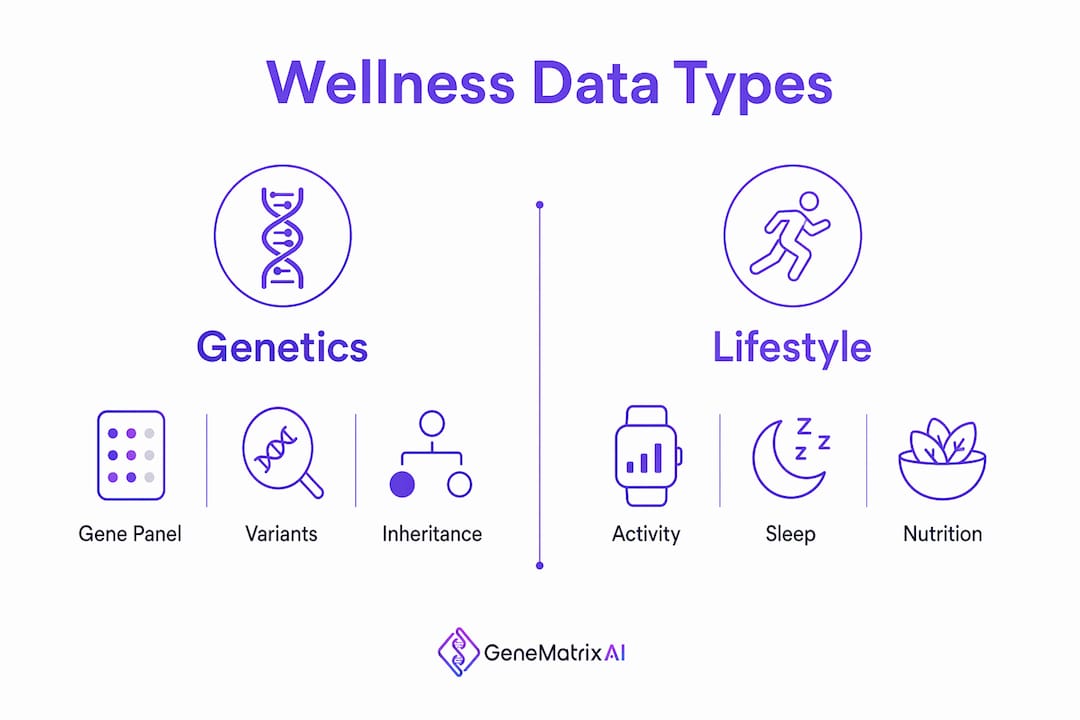
Personalized wellness pulls from four core data sources: genetics, biomarkers, lifestyle factors, and real-time biometric monitoring. Each layer adds precision that a standard annual checkup simply cannot provide.

Genetic testing as the foundation
Precision wellness testing examines over 100 genes across areas including inflammation, detoxification, neurotransmitters, and gut health. That breadth matters because two people with identical cholesterol readings can have completely different genetic risks for cardiovascular disease. Knowing which genes are active in your body lets a wellness plan target the right levers. Genematrix's GeneDiet module, for example, uses nutrigenomic data to tailor dietary recommendations directly to your genetic profile. You can learn more about how this works through nutrigenomics testing benefits.
Biomarkers beyond the standard blood panel
Standard lab work typically checks a handful of markers: blood glucose, cholesterol, and a basic metabolic panel. Personalized assessments analyze 50+ biomarkers covering lipids, inflammation, hormones, metabolism, and micronutrients. That expanded view catches patterns that standard tests miss entirely. A person with normal fasting glucose but elevated inflammatory markers, for instance, may be years away from a diagnosis but already on a trajectory that targeted lifestyle changes can reverse.
Lifestyle and AI-powered monitoring
Wearable devices, sleep trackers, and continuous glucose monitors feed real-time data into AI systems that adjust recommendations as your body changes. The AI and biometric data layer is what separates modern personalized wellness from older "customized" plans that were really just questionnaires. Genematrix's GeneMatrixAI platform, trained on 500,000+ genetic profiles, applies this principle to genomic analysis, delivering reports within 72 hours.
| Feature | Standard wellness checkup | Personalized wellness assessment |
|---|---|---|
| Genes analyzed | None | 100+ across 10 health areas |
| Biomarkers tested | 5–10 standard markers | 50+ including hormones and inflammation |
| Lifestyle data | Self-reported at visit | Continuous via wearables and apps |
| AI analysis | None | Real-time pattern recognition |
| Plan updates | Annual | Ongoing, based on new data |
How does personalized wellness differ from generic health plans?
Generic wellness plans fail for a predictable reason: they treat the average person, and almost nobody is average. A diet that works for one person can trigger inflammation in another. An exercise routine that builds endurance in one body can cause injury in another. Personalization reduces burnout from generic plans by aligning recommendations with your actual biology and lifestyle, not a statistical norm.
The mindset shift matters as much as the data. Personalized wellness focuses on gaining better insight into your individual biological and environmental complexity, not chasing a perfect health score. That reframe removes the all-or-nothing pressure that causes most people to abandon generic programs within weeks.
Here is where the practical difference shows up most clearly:
- Dietary response: Two people following identical low-carb diets can have opposite blood sugar outcomes based on their gut microbiome and insulin gene variants.
- Exercise tolerance: Genetic variants in the ACTN3 gene influence whether your body responds better to endurance training or strength training.
- Stress and sleep: Cortisol metabolism genes affect how quickly your body recovers from poor sleep, which changes how aggressively you need to prioritize rest.
- Medication sensitivity: Pharmacogenomic data, as analyzed through Genematrix's GenePGx module, reveals how your liver processes specific drugs, preventing adverse reactions before they happen.
- Nutrient absorption: Variants in the MTHFR gene affect folate metabolism, meaning standard supplement doses may be ineffective or even counterproductive for certain people.
Pro Tip: Before starting any wellness program, ask your doctor for an expanded biomarker panel rather than a standard checkup. The additional markers often reveal the specific areas where a tailored plan will have the greatest impact.
85% of US and UK consumers are actively interested in tailored health approaches. That level of demand signals a cultural shift, not a passing trend.
How to achieve personalized wellness: practical first steps
Starting a personalized wellness plan does not require a complete health overhaul. The process works best as a staged approach that builds on each layer of data.
-
Get a genetic test. A comprehensive genetic panel is the most durable data source you have. Your DNA does not change, so this investment pays off for life. Genematrix offers specialized modules including GeneCancer, GenePGx, GeneMind, GeneBaby, and GeneDiet, each targeting a specific health domain. Read more about using genetic data to inform your dietary choices.
-
Request an expanded biomarker panel. Ask your primary care provider to add inflammatory markers, hormone levels, and micronutrient status to your next blood draw. This gives you a baseline that your genetic data can be mapped against.
-
Track lifestyle data consistently. Use a wearable or app to log sleep, activity, heart rate variability, and food intake for at least 30 days. Patterns emerge quickly when data is continuous rather than self-reported once a year.
-
Schedule a consultation to interpret results. Personalized health assessments typically include 30–60 minute consultations to work through complex test results. This step is where data becomes direction.
-
Share your report with your primary care provider. Personalized data works best as a communication tool that enriches clinical conversations, not as a replacement for your doctor. Bring your wellness report to your next appointment and ask how the findings should inform your care plan.
-
Treat the plan as a living document. Your biology responds to interventions, stress, aging, and environmental changes. A plan that fits you today may need adjustment in six months.
Pro Tip: Schedule a follow-up biomarker test three to six months after starting a new wellness protocol. Comparing before-and-after data is the most reliable way to confirm that your plan is actually working for your body.
Ongoing data collection and periodic retesting turn personalized wellness plans into dynamic roadmaps rather than static documents. That adaptability is what separates them from a generic plan you follow once and abandon.
What are the main benefits of personalized wellness?
The most significant benefit is the shift from reactive to proactive health management. Standard healthcare waits for symptoms. Personalized wellness identifies risk factors years before symptoms appear, giving you time to act. Genetic predispositions provide prioritized leverage points for targeted lifestyle changes that significantly impact long-term health. That means your effort goes where it will actually matter for your specific body.
The benefits people report most consistently include:
- Better energy and mood. Correcting nutrient deficiencies and optimizing sleep based on your chronotype produces measurable improvements in daily energy levels.
- Reduced inflammation. Targeted dietary changes based on inflammatory gene variants can lower C-reactive protein levels without medication.
- Improved adherence. Personalized plans increase long-term adherence because people stay committed to programs that visibly work for their body.
- Empowered health conversations. Walking into a doctor's appointment with a detailed wellness report changes the quality of the conversation entirely.
- Disease prevention. Identifying hereditary cancer risk through BRCA1, BRCA2, or Lynch syndrome testing allows for earlier screening and preventive action.
The empowerment dimension is underrated. When you understand why your body responds the way it does, health decisions stop feeling arbitrary. You are no longer guessing whether a supplement or diet change will help. You have data that points to a specific answer for your specific biology. Explore how genetic testing supports prevention across multiple health domains.
Key Takeaways
Personalized wellness works because it replaces statistical averages with your actual genetic data, biomarkers, and lifestyle patterns to build a health plan that fits your biology.
| Point | Details |
|---|---|
| Definition of personalized wellness | A health approach built on your unique genetics, biomarkers, and lifestyle rather than population averages. |
| Core data sources | Genetic panels covering 100+ genes, 50+ biomarkers, and continuous lifestyle tracking form the foundation. |
| Key difference from generic plans | Personalized plans reduce burnout and increase adherence by matching recommendations to your actual biology. |
| Practical starting point | Begin with genetic testing, an expanded biomarker panel, and a 30-day lifestyle tracking period. |
| Best use of wellness reports | Share reports with your primary care provider to enrich clinical conversations and guide evidence-based decisions. |
Why I think most people are approaching personalized wellness backward
Most people I see come to personalized wellness after something goes wrong. A diagnosis, a medication that didn't work, a year of fatigue with no explanation. They treat it as a last resort rather than a starting point. That is the wrong order.
The real value of personalized wellness data is not in fixing problems. It is in identifying the specific risks that are most likely to become problems for your body, years before they do. Polygenic risk scores, for instance, can flag a genetic predisposition to cardiovascular disease in someone with perfectly normal current lab markers. That person has time to act. The person who waits for symptoms does not.
The other misconception I encounter constantly is that personalized wellness replaces your doctor. It does not. The best outcomes I have seen happen when people bring their genetic and biomarker reports into a clinical conversation and use them to ask better questions. A detailed wellness report turns a 15-minute appointment into a genuinely productive discussion about your specific risks and options.
Personalized wellness is also not a destination. Your body changes with age, stress, and environment. A plan that was right for you at 35 may need significant revision at 45. The people who get the most out of it are the ones who treat it as an ongoing practice, not a one-time test. If you are curious about where this field is heading, the role of AI in personalized medicine in 2026 is worth understanding before you start.
— Tarek
Genematrix and your personalized wellness path
Genematrix is a Chicago-based, CLIA-certified biotechnology company that applies AI-driven genomic analysis to personalized precision medicine. Its GeneMatrixAI platform, trained on 500,000+ genetic profiles, delivers reports within 72 hours across modules covering hereditary cancer risk, pharmacogenomics, psychiatric health, pediatric genetics, and nutrigenomics.

If you are ready to move from generic health advice to a plan built on your actual biology, Genematrix offers the genetic and biomarker testing that makes that possible. Whether your priority is cancer prevention, medication safety, or personalized nutrition, the data is the starting point. Visit Genematrix to learn which testing module fits your health goals and take the first concrete step toward a plan that is built for you.
FAQ
What is personalized wellness in simple terms?
Personalized wellness is a health approach that uses your genetic data, biomarkers, and lifestyle habits to build a plan specific to your body. It replaces population-average advice with recommendations that reflect your individual biology.
What is a personalized wellness report?
A personalized wellness report is a detailed document that summarizes your genetic variants, biomarker results, and lifestyle data, then translates those findings into specific health recommendations. It typically covers areas like nutrition, inflammation risk, sleep, and disease predisposition.
How does personalized wellness differ from standard healthcare?
Standard healthcare responds to symptoms after they appear. Personalized wellness identifies individual risk factors proactively, often years before symptoms develop, using genetic testing and expanded biomarker panels that go well beyond routine lab work.
How long does it take to see results from a personalized wellness plan?
Most people notice measurable changes in energy, sleep, or biomarker levels within three to six months of following a plan consistently. Periodic retesting at that interval confirms whether the interventions are working for your specific body.
Can a personalized wellness plan replace my doctor?
No. Personalized wellness data works best as a communication tool that enhances clinical conversations with your primary care provider. It adds precision to those discussions but does not replace medical diagnosis or treatment.