

TL;DR:
- Most diets often fail because they are not tailored to individual genetics, but nutrigenomics DNA testing can personalize nutrition based on your unique genetic makeup. By analyzing specific SNPs related to fat and carbohydrate metabolism, vitamin absorption, and inflammation, these tests provide insights to optimize dietary choices, though results require professional interpretation and behavioral adjustment. Ultimately, integrating genetic data with ongoing lifestyle changes and expert guidance offers the best chance for achieving lasting health improvements.
Most diets fail not because people lack willpower, but because they were never designed for those people in the first place. A nutrigenomics diet DNA test personalized to your genetic profile flips that equation entirely, replacing guesswork with data about how your body actually processes fat, metabolizes vitamins, and responds to carbohydrates. This guide walks you through exactly how these tests work, how to choose and use one correctly, and what realistic outcomes look like when you apply genetic insights to your eating habits.
Table of Contents
- Understanding nutrigenomics diet DNA testing
- Preparing for your nutrigenomics diet DNA test
- Executing your nutrigenomics diet DNA test and interpreting results
- Applying your nutrigenomics insights for better health outcomes
- Troubleshooting common challenges and verifying progress
- The nuanced truth about personalized nutrigenomics diets
- Take the next step with Gene Matrix personalized testing services
- Frequently asked questions
Key Takeaways
| Point | Details |
|---|---|
| Personalized insights | Nutrigenomics DNA tests analyze specific genetic markers to provide tailored diet recommendations. |
| Behavior is key | Health improvements depend more on sustained behavior changes than on genetics alone. |
| Not deterministic | Genetic predispositions offer clues, not fixed outcomes, for your nutrition plan. |
| Professional guidance | Consult qualified experts to interpret results within your overall health context. |
| Manage expectations | Personalized diets improve some metabolic markers but may not guarantee significant weight loss. |
Understanding nutrigenomics diet DNA testing
Nutritional genomics, or nutrigenomics, is the science of how your genes influence your response to food. The field rests on a simple observation: two people can follow the same diet and experience completely different outcomes. One thrives on a high-fat approach; the other gains weight and sees their triglycerides spike. That difference often has a genetic explanation.
Most consumer nutrigenomics tests work by genotyping specific SNPs to map diet guidance. SNPs, or single-nucleotide polymorphisms, are tiny variations in your DNA that function like switches. Flip a few of them differently, and your body breaks down saturated fat more slowly, absorbs folate less efficiently, or produces excess inflammation in response to certain foods.
Here is what a typical DNA diet analysis looks at:
- Fat metabolism: Variants in the APOA2 and APOE genes affect how saturated fat influences your cholesterol and weight.
- Carbohydrate sensitivity: Some people carry a version of the TCF7L2 gene that raises insulin resistance risk on high-carb diets.
- Vitamin absorption: MTHFR gene variants affect folate processing, which influences everything from energy to pregnancy health.
- Inflammatory response: IL-6 and TNF-alpha variants can predict whether certain dietary patterns amplify inflammation in your body.
- Caffeine and alcohol processing: CYP1A2 variants determine whether you are a fast or slow caffeine metabolizer, which has real implications for heart health and sleep.
The output you receive is a plain-language report, not a medical diagnosis. Think of it as DNA health tests for your plate rather than your prescription pad. It informs decisions; it does not dictate them.
Pro Tip: Before purchasing any personalized nutrition test, ask whether the company publishes the scientific studies behind each SNP it analyzes. If that information is not publicly available, treat the results with extra skepticism.
Preparing for your nutrigenomics diet DNA test
Choosing the right test matters as much as taking one. The market ranges from scientifically grounded to essentially unvalidated, and the price tag is not always a reliable signal of quality. The best approach is to treat this like any health purchase: verify the science first.
Here is a step-by-step process to prepare effectively:
- Research the company's scientific transparency. Look for published peer-reviewed studies that validate their specific SNP panels. A credible provider will list these prominently.
- Read the privacy policy carefully. Some companies retain your genetic data indefinitely or share it with third parties. Know exactly what you are consenting to before you swab.
- Check for CLIA certification. Labs that process clinical-grade genetic samples should hold this federal certification, which means the lab meets accuracy and quality standards.
- Understand the test's scope. Most personalized nutrition tests do not sequence your entire genome. They target a specific panel of SNPs relevant to diet, metabolism, and nutrient pathways.
- Consult your doctor or registered dietitian first. If you have existing conditions like Type 2 diabetes, thyroid disorders, or cardiovascular disease, your results need professional context from the start.
As a reputable company transparent about its science, a good provider will collect your sample via cheek swab or saliva, both non-invasive and straightforward. Once you receive the kit, you typically register it online, collect the sample at home, and mail it back in a prepaid envelope.
| Factor | What to look for | Red flag |
|---|---|---|
| Scientific backing | Peer-reviewed SNP citations | Vague references to "proprietary research" |
| Sample collection | Cheek swab or saliva | Blood draws without clinical context |
| Data privacy | Clear opt-out options | Selling data to third parties |
| Report clarity | Plain-language insights | Overly technical jargon with no actionable steps |
| Professional support | Dietitian consultation offered | Results delivered with no guidance |
Pro Tip: Register your kit the same day it arrives. Many companies require online registration before they process the sample, and delays can affect your timeline.
Executing your nutrigenomics diet DNA test and interpreting results
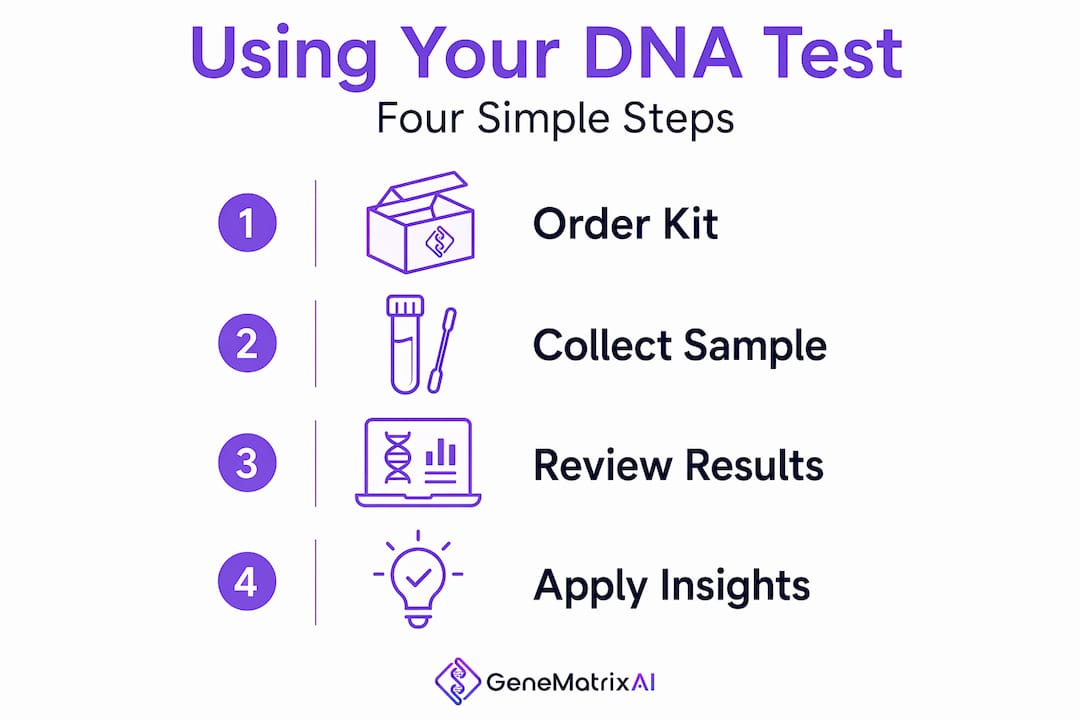
Sample collection sounds trivial, but errors here are the most common reason for retesting. Contamination from food, drink, or even mouthwash can compromise the sample. Follow the kit instructions precisely, which usually means no eating, drinking, or brushing for at least 30 minutes before swabbing.
Step-by-step sample collection:
- Register your kit online using the barcode or QR code included.
- Avoid food, drink, and oral hygiene products for at least 30 minutes.
- Swab the inside of each cheek firmly for the amount of time specified, typically 30 to 60 seconds per cheek.
- Place the swab into the provided stabilizing solution immediately.
- Seal the package and drop it in the mail on the same day if possible.
Once your sample reaches the lab, analysis typically takes one to three weeks. The resulting report covers your diet types, fat metabolism, vitamin pathways, and even exercise-related tendencies. You might learn, for example, that you carry a variant associated with reduced omega-3 conversion, making direct supplementation more valuable than relying on plant-based sources alone.
What the report will NOT tell you:
- Whether you currently have a nutritional deficiency (that requires bloodwork, not genetics)
- Exactly how many calories you should eat
- Whether you will develop a specific disease
- How quickly you will lose weight following its recommendations
The most useful thing you can do after receiving results is share them with a registered dietitian or a clinician trained in nutrigenomics. Professional interpretation by certified dietitians merges your genetic data with your health history, food preferences, and lifestyle factors to create plans that actually hold up in real life. Genetics without context is just data. Here is a practical overview of interpreting genetic test results to help you read your report intelligently.
Pro Tip: Highlight two or three specific actionable findings from your report, rather than trying to overhaul everything at once. Focusing on, say, sodium sensitivity and omega-3 conversion is far more manageable than redesigning your entire diet from scratch.

Applying your nutrigenomics insights for better health outcomes
Here is where expectations need to be calibrated carefully. Personalized nutrition based on genetics can improve diet quality and certain metabolic markers, but dramatic weight loss from a DNA report alone is not a realistic expectation. Studies show modest but meaningful improvements, particularly in dietary patterns, blood sugar regulation, and micronutrient intake, when people actively apply their results.
Practical ways to act on your nutrigenomics meal plan:
- Adjust fiber targets. If your report identifies a variant linked to slower glucose response with high fiber intake, increasing soluble fiber becomes a priority.
- Reduce sodium intelligently. Salt sensitivity variants like those near the ACE gene are common, and even modest sodium reduction produces measurable blood pressure improvements in carriers.
- Time your meals strategically. Some genetic profiles support better metabolic function with earlier caloric intake, making breakfast the meal to prioritize rather than skip.
- Substitute nutrients, not just foods. If your MTHFR variant impairs folate processing, switching from synthetic folic acid to methylfolate in your supplements is a specific, targeted change.
- Adjust dietary fat ratios. Rather than cutting all fat, your results may show you process monounsaturated fats well but respond poorly to saturated fat, allowing for a more nuanced approach.
| Genetic insight | Practical action | Expected benefit |
|---|---|---|
| Poor omega-3 conversion | Add direct EPA/DHA supplementation | Better cardiovascular and brain health markers |
| High sodium sensitivity | Reduce processed food intake | Measurable blood pressure improvement |
| Slow caffeine metabolism | Limit caffeine after noon | Improved sleep and reduced heart rhythm risk |
| Impaired folate processing | Use methylfolate supplements | Better energy and methylation support |
| High carbohydrate sensitivity | Prioritize complex over simple carbs | Improved blood sugar stability |
Behavior change following a genetic report improves health more than the genetic information alone. A report that motivates you to act is worth far more than one you read once and forget. For more on this, see how DNA tests for weight loss translate into sustained results when paired with consistent habits, and how genetic testing for wellness fits into a broader prevention strategy.
Pro Tip: Schedule a 90-day check-in with yourself or your dietitian after applying your results. Track two or three measurable markers, such as fasting glucose, energy levels, or digestive comfort, to see whether the changes are working for your body specifically.
Troubleshooting common challenges and verifying progress
The biggest mistake people make with DNA-based nutrition guidance is treating genetic variants as a verdict. A gene associated with higher saturated fat sensitivity does not mean cheese will give you a heart attack. It means the risk profile is elevated, and reducing intake is a worthwhile precaution.
Watch out for these common pitfalls:
- Deterministic thinking. Genetics loads the gun; lifestyle pulls the trigger. Do not ignore real-time feedback from your body in favor of what a report says should happen.
- Chasing marginal findings. Some variants have extremely small effect sizes. A difference of 0.3% in metabolic response is not worth restructuring your entire diet.
- Ignoring lifestyle context. Sleep quality, stress levels, and gut microbiome composition all influence how your genetic predispositions express themselves.
- Expecting overnight results. Dietary changes tied to genetic insights typically require three to six months before meaningful biomarker shifts become visible.
Many genetic testing claims are overhyped, and the biggest barrier to better outcomes is behavior, not genetics. The test is a starting point, not a solution. To verify progress, use bloodwork at three and six months as your primary feedback tool. Track markers like HbA1c, fasting insulin, vitamin D, folate, and inflammatory markers like CRP alongside your dietary changes.
Integrating your genetic insights with other health data, such as continuous glucose monitor readings, detailed food logs, or functional medicine assessments, creates a feedback loop that far outperforms static reports. Functional medicine integration frameworks treat the body as a dynamic system, which is exactly the right lens for applying nutrigenomics results. For a grounded overview of what DNA health tests can and cannot do, revisit the limitations of DNA health tests before drawing firm conclusions from your report.
Pro Tip: Keep a simple weekly log of your energy levels, digestion, and mood alongside your dietary changes. Subjective feedback is surprisingly predictive of which interventions are actually working for you.
The nuanced truth about personalized nutrigenomics diets
Here is the perspective most articles in this space skip entirely: a nutrigenomics DNA test is not a destination. It is a first data point in an ongoing conversation between you and your biology.
Most differences in nutrient response are small, and genetics should support individualized iterative planning, not a one-time DNA destiny outcome. The Institute for Functional Medicine puts it plainly: the goal is not to hand someone a genetic report and call it personalized care. The goal is to use that report as one input among many, updated regularly as the patient's health, goals, and circumstances evolve.
We have seen health-conscious individuals invest in a DNA diet analysis, receive a detailed report, make a few changes for three weeks, and then revert to old habits because nothing seemed to change dramatically. That is not a failure of the science. That is a failure of the framework. Genetics without behavioral scaffolding produces data, not results.
True dietary personalization requires iteration. Your gut microbiome, which changes with diet, stress, and antibiotic use, interacts with your genome in ways no static test can fully capture. Hormonal shifts, aging, and changes in activity level all alter how your genetic predispositions express. The people who get the most from nutrigenomics are those who treat it as a living, evolving part of their health strategy, not a one-time answer.
This is why working with clinicians who understand personalized medicine insights matters. They do not just read your report. They help you reinterpret it as your circumstances change, which is where the real value compounds over time.
Take the next step with Gene Matrix personalized testing services
If you are ready to move beyond generic wellness advice and into decisions grounded in your own biology, Gene Matrix offers the depth and rigor that serious health decisions require. As a CLIA-certified biotechnology company based in Chicago, Gene Matrix provides AI-powered genetic testing across hereditary cancer screening, pharmacogenomics, and precision wellness through its GeneDiet and other specialized modules.

Their GeneMatrixAI platform analyzes your results against a database of over 500,000 genetic profiles, delivering actionable reports within 72 hours. Whether you are looking to explore their full range of innovation services or are ready to find the right genetic test for your specific goals, Gene Matrix connects you with expert support to interpret and apply your results responsibly. They serve patients and health systems across a wide network, so check whether their service areas include your region and take the next step toward nutrition that actually fits you.
Frequently asked questions
What exactly does a nutrigenomics diet DNA test analyze?
It examines specific genetic SNPs linked to how your body metabolizes nutrients, processes vitamins, and responds to different macronutrient ratios, providing personalized diet guidance rather than a clinical diagnosis.
Can a DNA-based diet test guarantee weight loss?
No. Evidence shows modest effects on metabolic markers but inconsistent weight loss results with genotype-based diets; sustained behavior change is the primary driver of outcomes.
Are all nutrigenomics DNA diet tests regulated by the FDA?
FDA regulation depends on intended use, with tests claiming medical diagnoses subject to stricter oversight than those offering general wellness guidance.
How can I best use my nutrigenomics test results?
Treat them as targeted clues rather than fixed rules, implement changes gradually, and work with a trained dietitian to align the findings with your full health picture and track progress with bloodwork over time.
What are common pitfalls in nutrigenomics diet personalization?
Overhyped claims and deterministic thinking lead most people astray; expecting immediate results without committing to sustained behavior change is the single most common reason these tests underperform.