

TL;DR:
- DNA testing offers limited and inconsistent evidence for personalized weight loss strategies.
- Genetic insights can support motivation and identify metabolic risks but do not replace fundamental habits.
- Professional interpretation and a holistic approach are essential for effective, sustainable weight management.
You've tried calorie counting, low-carb, intermittent fasting, and still the scale barely moves. It's one of the most common frustrations in weight management, and it's exactly what makes DNA-based personalization so appealing. The idea is straightforward: your genes influence how your body processes fat, carbohydrates, and calories, so understanding them should help you build a plan that actually works for your biology. But the reality is more layered than the marketing suggests, and knowing how to use genetic insights correctly is what separates people who get results from those who feel let down.
Table of Contents
- Understanding DNA testing for weight loss: Promise and reality
- What you need before starting: Preparation checklist
- How to use DNA test results to personalize your plan
- Troubleshooting and maximizing your results
- The real value of DNA testing in weight loss: A nuanced perspective
- Ready to advance your personalized wellness journey?
- Frequently asked questions
Key Takeaways
| Point | Details |
|---|---|
| DNA is only one piece | Genetic testing offers some new insights but doesn't replace diet or exercise fundamentals. |
| Choose tests carefully | Pick clinically validated or FDA-cleared providers and review privacy policies before using any service. |
| Results guide, not dictate | Most users will benefit most by layering DNA insights with proven behavior change skills and health habits. |
| Track the real outcomes | Always measure success by real progress—body composition, labs, health—rather than just genetic predictions. |
Understanding DNA testing for weight loss: Promise and reality
DNA testing for weight loss analyzes specific genetic variants, called single nucleotide polymorphisms (SNPs, pronounced "snips"), that are associated with how your body handles food, regulates appetite, and responds to exercise. Companies selling direct-to-consumer (DTC) nutrigenomic tests claim their reports can tell you whether you're genetically suited for a low-fat or low-carb diet, how fast your metabolism runs, and how likely you are to lose weight with certain interventions.
The science behind this is real in part. Genes like FTO, PPARG, and ADRB2 do show associations with body weight and fat storage in large population studies. The problem is that associations in a population don't always translate into reliable individual predictions, especially when you're looking at complex traits like weight that involve hundreds of genes interacting with environment, behavior, and gut microbiome.
Here's where the clinical evidence matters most. Randomized controlled trials show mixed results: the MyGeneMyDiet trial, which followed 27 completers over 12 months, found no superior weight or BMI loss compared to standard advice, with a difference of just -0.36 kg. That's essentially nothing. Meanwhile, DTC nutrigenomic tests lack strong clinical validation for weight loss claims, and both the FDA and FTC have cautioned against unsubstantiated health benefit claims from these products.
That said, dismissing genetic testing entirely would miss its real value. Understanding your genetic tendencies can support motivation, help identify nutritional sensitivities like lactose or gluten tolerance variants, and flag metabolic risks worth discussing with your doctor. Explored thoughtfully, genetic testing for wellness can be a meaningful layer of self-knowledge, especially when you approach it as a tool rather than a prescription.
| Claim | What evidence says |
|---|---|
| DNA tests identify your ideal diet | Limited support in RCTs; no consistent weight loss advantage |
| Gene variants predict appetite | Some association, but weak individual predictive power |
| Genetic nutrition improves metabolic markers | Some evidence for HbA1c, triglycerides; weight loss less clear |
| DTC tests are FDA-cleared | Very few specific reports meet this bar |
Key things DNA tests may legitimately help with:
- Identifying risk for conditions like type 2 diabetes or cardiovascular disease
- Flagging genetic variants linked to nutrient metabolism (folate, vitamin D, caffeine)
- Guiding pharmacogenomic choices, including medication-based weight loss
- Supporting motivation by making the plan feel personalized and specific
"A genetic test is not a diet plan. It's a data point, and like any data point, its value depends entirely on what you do with it."
Understanding personalized medicine basics helps set the right frame here: precision health is about layering insights, not finding one magic variable. That's the mindset to bring into your DNA weight loss journey.
What you need before starting: Preparation checklist
Now that you understand the pros and cons, let's outline what you'll need to get started safely and effectively with a DNA-based plan.
Before you order a kit or upload a saliva sample, you need a few fundamentals in place. Jumping into genetic testing without preparation often leads to misinterpretation, wasted money, or false reassurance. Personalized nutrition improves dietary quality and some metabolic markers like HbA1c and triglycerides, but genotype-alone approaches often show limited weight loss differences. Preparation is what bridges that gap.
Your pre-test checklist:
- Know your current health status: blood pressure, fasting glucose, lipid panel
- Understand basic nutrition concepts (calorie balance, macronutrient roles)
- Have a clear, specific goal: lose 15 pounds, reduce visceral fat, lower A1C
- Research providers carefully before choosing one
- Plan to share results with a registered dietitian or physician
Choosing the right test provider is where most people stumble. Not all DNA tests are created equal. Look for providers that use clinically referenced SNP panels, publish their methodology transparently, and don't make sweeping dietary claims without referencing peer-reviewed research. When exploring gene panel testing, make sure the provider explains which genes they analyze and what the evidence base is for each recommendation.
| Feature to look for | Why it matters |
|---|---|
| CLIA-certified lab | Ensures laboratory accuracy and regulatory compliance |
| Published methodology | You can evaluate the evidence behind recommendations |
| Registered genetic counselor access | Helps you interpret results correctly |
| HIPAA-compliant data handling | Protects your sensitive genetic information |
| No direct treatment sales | Avoids conflict of interest in recommendations |
Privacy is a serious consideration that many people overlook. Your DNA is permanently identifying. Once shared, it can't be unshared. Review the provider's data sharing policies, opt out of research participation if you prefer, and read the terms around third-party data sales. For practical guidance on protecting yourself, genetic data privacy tips cover what to check before you hand over your sample.
Setting realistic expectations is the final prep step. Think of the test as a starting conversation, not a final answer. If you go in hoping your results will tell you the one food to cut out so the weight falls off, you'll be disappointed. If you go in hoping to understand tendencies and refine your existing plan, you're well positioned.
Pro Tip: Schedule a 30-minute appointment with a registered dietitian before you receive your results. Come with questions like "What would change in my plan if I have a low-fat gene variant?" That way you're ready to act, not scramble.
How to use DNA test results to personalize your plan
Once your results are in hand, the key is turning genetic insights into practical, sustainable action.

Most people open their DNA report, see a lot of variant names and percentages, and freeze. The report looks scientific, but it's not always clear what to do next. Here's a step-by-step approach that actually works.
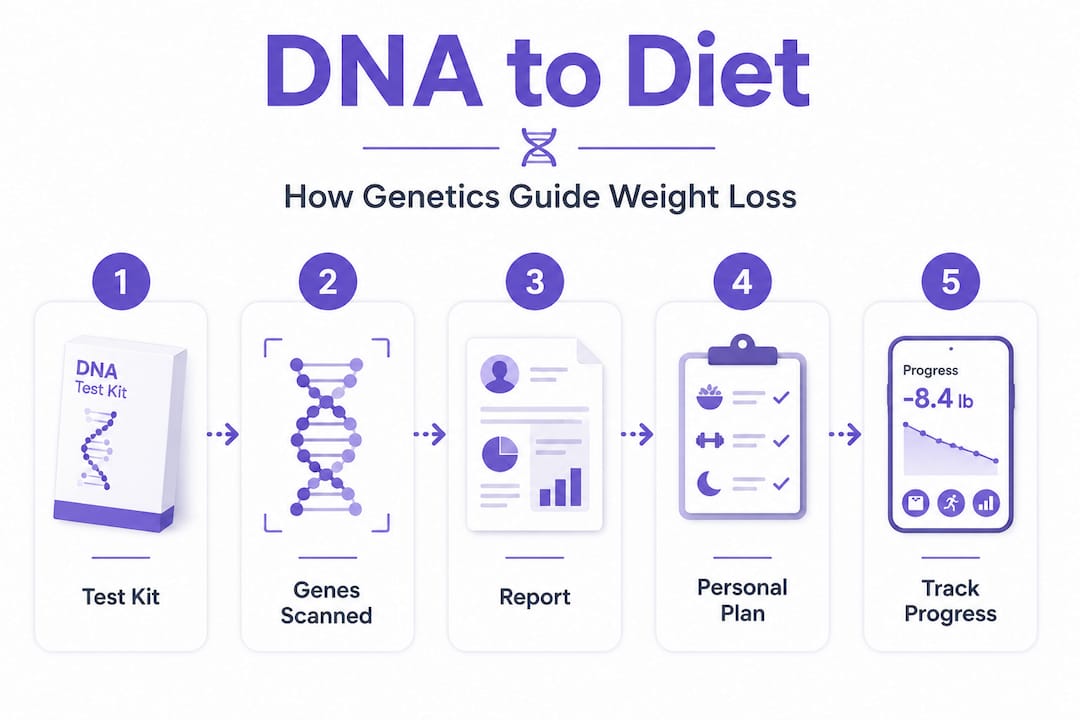
Step 1: Identify the actionable nutrition and fitness traits in your report. Most quality reports break results into categories: macronutrient metabolism, appetite regulation, exercise response, and nutrient needs. Start with the top two or three findings that align with your goals. If your goal is weight loss, focus on fat metabolism variants and insulin sensitivity markers.
Step 2: Cross-reference gene-diet links with established evidence. Not every gene-diet recommendation in a consumer report is equally supported. For example, GLP1R variants are among the more clinically promising findings, particularly for predicting drug response. Research shows that polygenic scores combined with behavior support work better for weight loss than short trials analyzing only a few SNPs. The same research highlights that GLP-1 pharmacogenomics is one of the more exciting near-term applications for people who haven't responded to standard weight management approaches.
Step 3: Adapt your diet and fitness based on what the evidence supports. If your report suggests you're a poor fat metabolizer, that's a reasonable cue to reduce saturated fat and increase complex carbohydrates, while watching caloric density. If you have variants associated with poor aerobic adaptation, you might prioritize resistance training over long cardio sessions. Use the AI-powered genomics benefits that modern platforms offer to contextualize your report within broader population data.
Step 4: Never abandon the fundamentals. Genetic variants modulate effect, but they don't override physics. A caloric deficit is still how fat is lost. Whole foods, sleep, stress management, and consistent movement still matter more than any SNP. Think of your genetic insights as turning up or turning down the volume on biological tendencies, not switching entire systems on or off.
Step 5: Track, measure, and adjust. Set a 90-day checkpoint. Measure body composition (not just weight), track energy levels, and rerun any relevant labs like fasting insulin or triglycerides. Genetic insights give you a hypothesis. Tracking tells you whether the hypothesis holds for your actual body. Explore a clear personalized health path and revisit it regularly as your circumstances change.
Pro Tip: Layer your genetic insights with behavior change coaching. A coach or dietitian who understands nutrigenomics can help you build habits that stick, rather than just making one-time changes based on a report.
Troubleshooting and maximizing your results
Even with promising guidance, challenges and misconceptions can derail your progress. Here's how to stay on track.
The single biggest pitfall in DNA-based weight loss is over-reliance on the genetic report at the expense of basic habits. People sometimes use a "bad gene" result as an excuse for poor adherence or, conversely, a "good gene" result as justification for skipping workouts. Neither response serves you.
Common problems and how to fix them:
- You're not losing weight despite following genetic recommendations: Check caloric intake first. Genetic guidance doesn't override energy balance.
- Your diet changes feel unsustainable: Genetic recommendations should narrow options, not eliminate enjoyment. Adjust within the framework, not against it.
- Your results seem to contradict each other: Some variants pull in opposite directions. A genetic counselor can help you prioritize based on your full clinical picture.
- You're experiencing unexpected side effects from a weight loss medication: This is where pharmacogenomics becomes critical. GLP-1 variants in GLP1R and GIPR predict both the degree of weight loss (roughly 0.76 kg extra per allele) and side effects like nausea on semaglutide. If you're on a GLP-1 medication and not responding well, genetic data may explain why and guide dose adjustments.
Tracking is non-negotiable. Weight alone is a poor measure of progress. Track waist circumference, energy levels, sleep quality, and ideally body composition via DEXA or bioimpedance. Repeat labs at 3 to 6 months. If metabolic markers are improving, you're moving in the right direction even if the scale is slow. The importance of rapid genetic testing lies in getting actionable data fast enough to iterate on your plan, not just for one-time reference.
Revisit your plan at least every 6 months. Circumstances change: your activity level, stress, age, and medical status all affect how your genetics express in real life. A static plan built on a one-time test is better than nothing, but a living plan that adapts is far more powerful.
Warning: False reassurance is a real risk in genetic wellness testing. A "favorable" gene profile can mask unhealthy habits, while a "risky" profile can cause unnecessary anxiety. Always interpret results alongside a qualified professional, and never share raw genetic files with unvetted platforms.
For practical support on a GLP-1 weight loss timeline, working alongside your genetic data gives you context for what outcomes are realistic and at what pace.
The real value of DNA testing in weight loss: A nuanced perspective
Step back from the science for a moment. The honest assessment is that DNA testing for weight loss is a useful adjunct, not a revolution. Effective weight management strategies all converge on the same fundamentals: caloric balance, whole food quality, consistent movement, and sustainable behavior change. Genetics doesn't change this equation. It adds context to it.
Where DNA testing adds genuine value is in two specific situations. First, for people who have repeatedly failed standard approaches despite strong adherence, genetic insights can reveal real biological reasons for non-response, from poor fat oxidation variants to predispositions toward insulin resistance. Second, for people in medical weight loss programs using GLP-1 medications, pharmacogenomics is showing real promise in predicting who will respond and who will struggle with side effects.
The risk of overpromising is significant in this space. Clinics and DTC companies that sell genetic testing as a standalone solution without professional counseling are doing their customers a disservice. The evidence is clear that personalized nutrition combined with behavior support is the framework that actually delivers improved dietary quality and metabolic markers, not genetic data alone. You need both.
The future looks genuinely exciting. Multi-omics approaches that combine genomics with microbiome analysis, metabolomics, and continuous glucose monitoring are showing early promise in predicting individual responses to diet with far more accuracy than any single gene panel. As these platforms mature and become more accessible, the gap between genetic insight and real-world weight loss outcome should narrow considerably. Right now, holistic wellness through genetics means using genetic data as one layer in a broader health picture. That's both an honest limitation and a genuine starting point.
Ready to advance your personalized wellness journey?
If you've been convinced that genetic insights are worth exploring thoughtfully, the next step is finding a platform that pairs rigorous science with practical, actionable reporting. At Gene Matrix, our GeneMatrix AI app delivers AI-powered genetic analysis trained on over 500,000 profiles, with results in 72 hours and reports designed to support real clinical decisions.

Our GeneDiet module specifically addresses nutrigenomics, covering metabolic tendencies, nutrient needs, and dietary sensitivities with evidence-referenced recommendations. Whether you're approaching weight management on your own or working with a care team, our DNA testing subscription plans give you ongoing access to your data and updated insights as the science evolves. Precision medicine works best as a continuous practice, not a one-time test.
Frequently asked questions
Do DNA tests guarantee better weight loss results?
No. Randomized trials show that DNA tests do not consistently outperform standard weight loss advice, though they may support improved dietary quality and motivation.
Can genetic testing show which diets work best for me?
Genetic tests may offer personalized suggestions, but current evidence shows limited ability to match diets to specific genes for meaningful weight loss differences.
How do I choose a reliable DNA test for diet or fitness?
Select tests from CLIA-certified labs and check whether specific reports are FDA-cleared. Most DTC tests are not FDA-cleared for weight management, so working with a genetic counselor adds critical context.
What ongoing research may improve DNA-based weight loss programs?
Polygenic scores combined with behavior support and longer-term interventions are showing more promise than single-gene approaches in current research.
Can DNA testing help with medication-based weight loss treatments?
Yes. GLP1R and GIPR variants predict both the degree of weight loss and the likelihood of side effects like nausea on semaglutide, making pharmacogenomics a practical tool in medication-based weight management.