

TL;DR:
- Precision oncology uses molecular tumor profiling to guide personalized cancer treatment decisions. It involves a five-step process, including tumor profiling, multidisciplinary interpretation, targeted therapy, and monitoring for resistance. Advances like AI and liquid biopsies aim to expand access and improve outcomes while addressing current limitations.
Precision oncology is defined as a personalized approach to cancer treatment that uses the molecular profile of a patient's tumor to guide therapy decisions. Rather than treating all breast cancers or lung cancers the same way, this approach reads the genetic and protein "fingerprint" of each tumor and matches it to therapies most likely to work. The American Cancer Society recognizes precision medicine as a distinct treatment category separate from standard chemotherapy. The National Institutes of Health and major oncology societies including ASCO have each published frameworks supporting molecular-guided care. Understanding what precision oncology is gives patients and caregivers a real foundation for asking better questions and making more informed decisions.
What is precision oncology and how does it work?
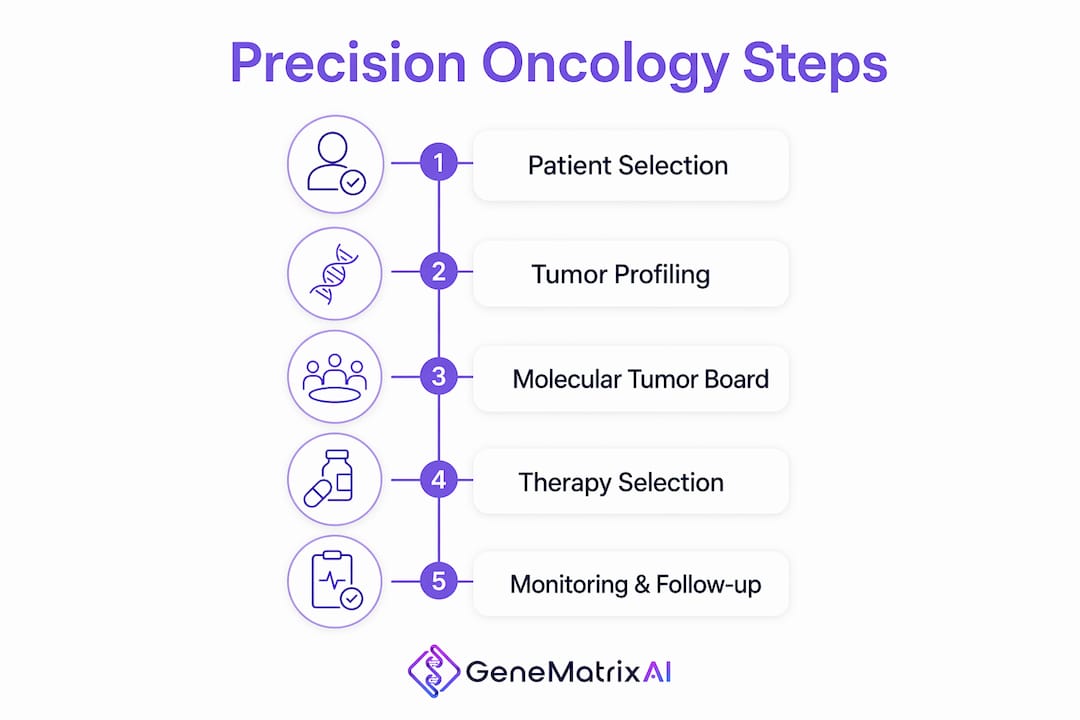
The precision oncology workflow follows five core steps: patient selection, comprehensive tumor profiling, multidisciplinary tumor board discussion, targeted therapy implementation, and ongoing monitoring for resistance or relapse. Each step depends on the one before it, and the process is iterative. If a therapy stops working, the team returns to profiling and reassesses.
Patient selection and tumor profiling
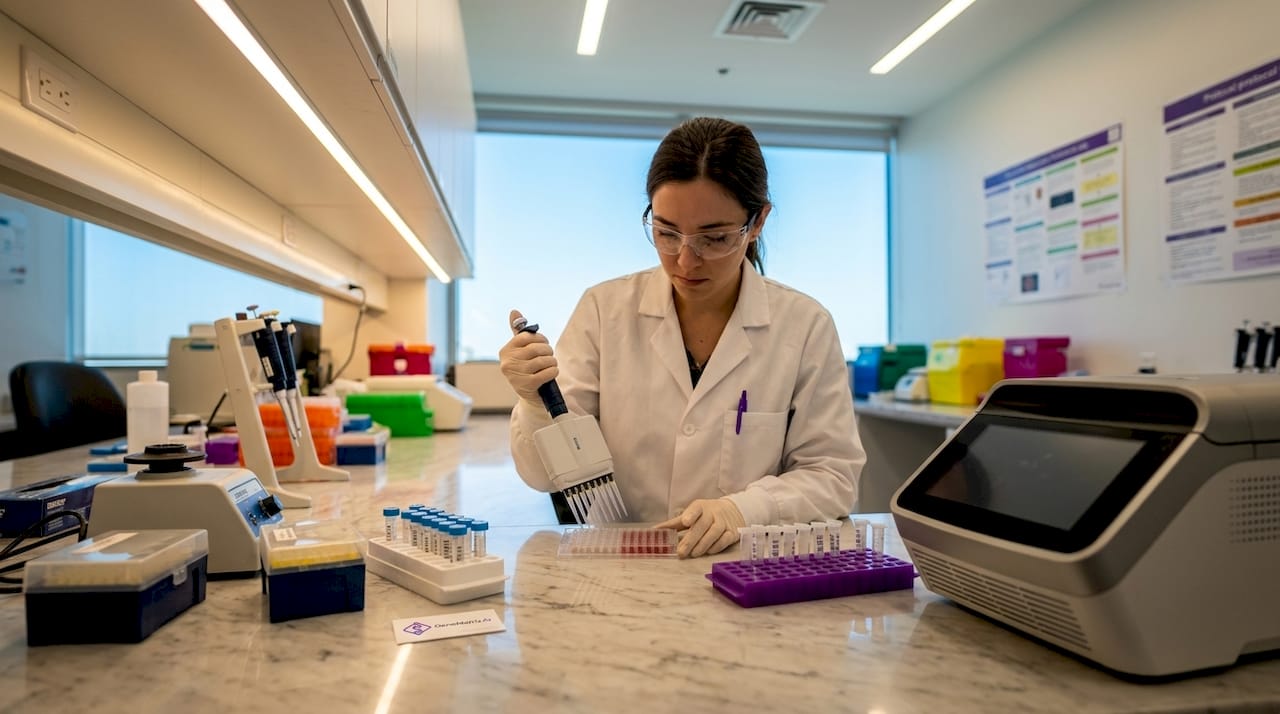
Not every patient is a candidate for precision oncology at the outset. Oncologists first assess whether a patient's cancer type, stage, and prior treatment history make molecular profiling worthwhile. When profiling proceeds, the lab analyzes the tumor biopsy using technologies like next-generation sequencing (NGS), which reads thousands of DNA mutations simultaneously. NGS can identify mutations in genes like BRCA1, BRCA2, EGFR, or ALK that predict response to specific drugs. This is where genomic profiling becomes the foundation of the entire treatment plan.
The role of the Molecular Tumor Board
The Molecular Tumor Board is a multidisciplinary panel of oncologists, geneticists, pathologists, and pharmacologists who interpret complex genomic reports together. Treatment decisions result from their collective consensus, not from a single test result. This distinction matters enormously for patients. A genomic report can flag dozens of mutations, but only a trained team can determine which ones are clinically actionable and in what order therapies should be applied. Patients at centers without a Molecular Tumor Board receive less thorough interpretation of their results.
Therapy and monitoring
Once a therapy is selected, the team monitors the patient closely for signs of resistance. Cancer cells can evolve and develop new mutations that make a previously effective drug useless. Liquid biopsies, which analyze circulating tumor DNA from a blood sample, allow oncologists to detect resistance earlier than traditional imaging. The precision medicine workflow at experienced centers includes scheduled re-profiling checkpoints to catch these changes before they become clinical crises.
Pro Tip: Ask your oncologist whether your care team includes a Molecular Tumor Board. If not, ask for a referral to a cancer center that has one. This single question can change the quality of your treatment plan.
Why is precision oncology important compared to traditional treatments?
The primary goal of precision oncology is to optimize the therapeutic index, meaning delivering the right treatment to the right patient at the right dose and time. Traditional chemotherapy attacks all rapidly dividing cells, which is why it causes hair loss, nausea, and immune suppression. Precision therapies target specific molecular drivers of cancer growth, sparing healthy tissue.
The clinical benefits are concrete:
- Reduced toxicity. Targeted agents cause fewer side effects than broad-spectrum chemotherapy because they act on cancer-specific pathways.
- Higher response rates. Patients whose tumors carry the matched biomarker respond at significantly higher rates than unselected populations.
- Better quality of life. Less toxicity means patients can maintain daily function during treatment.
- Smarter sequencing. Personalized dosing and treatment sequencing are under-recognized factors that directly affect outcomes and patient wellbeing.
- Tumor-agnostic options. Some therapies now target genetic alterations regardless of where the cancer originated in the body.
Precision oncology is not a single test or a guaranteed cure. It is a framework for making every treatment decision as specific to your cancer as possible. The goal is not just to fight cancer harder. It is to fight it smarter, with less collateral damage to the patient.
One of the most significant advances is the concept of tumor-agnostic therapies, which treat cancers based on their genetic alteration rather than their tissue of origin. A patient with a NTRK fusion in a salivary gland tumor and a patient with the same fusion in a lung tumor may both respond to the same drug. This represents a fundamental shift in how oncologists classify and treat cancer.
What are the challenges and limitations of precision oncology today?
Precision oncology delivers real benefits, but patients and caregivers need a clear-eyed view of its current limitations. The field is advancing rapidly, and the gap between what is scientifically possible and what is clinically available remains wide.
The most pressing challenges include:
- Biopsy quality. Insufficient tumor samples lead to inconclusive genomic testing and treatment delays. A poorly collected or degraded biopsy can derail the entire profiling process.
- Lack of standardization. Protocols vary significantly across institutions. A patient at a community hospital may receive a very different level of molecular analysis than a patient at a major academic cancer center.
- Limited applicability. Tumor-agnostic therapies apply to a minority of patients who meet strict molecular criteria. Not every genomic finding has a matched approved drug.
- Clinical trial dependency. Precision oncology often requires trial enrollment for investigational drugs, which brings logistical and financial burdens that many patients are not prepared for.
- Access and equity. Advanced molecular testing and Molecular Tumor Boards are concentrated in urban academic centers, leaving rural and underserved patients with fewer options.
Pro Tip: Before your biopsy, ask your care team about sample quality requirements for molecular testing. Requesting that a pathologist confirm adequate tissue before the procedure closes can prevent weeks of delays.
The top precision medicine tests available today vary widely in scope and clinical utility. Patients benefit from understanding which tests their institution offers and whether a broader panel might be available through a referral or clinical trial program.
What does the future hold for precision oncology?
The future of precision oncology is defined by three converging forces: artificial intelligence, multi-omic profiling, and decentralized care delivery. Each is already reshaping how oncologists plan and monitor treatment.
| Emerging Development | Current Status | Patient Impact |
|---|---|---|
| AI-driven treatment matching | Active in academic centers | Faster, more accurate therapy selection |
| Multi-omic profiling | Research and select clinical use | Deeper tumor characterization |
| N-of-1 clinical trial designs | Early adoption phase | Personalized trials for single patients |
| Liquid biopsy monitoring | Increasingly standard | Earlier resistance detection |
| Decentralized care delivery | Growing access programs | Treatment closer to home |
AI platforms trained on large genomic datasets can now cross-reference a patient's tumor profile against thousands of prior cases to suggest therapy combinations that a human team might not consider. This does not replace the Molecular Tumor Board. It gives the board better information faster.
N-of-1 trials represent the most individualized form of clinical research. A single patient receives a tailored drug combination designed specifically for their tumor's molecular profile, with outcomes tracked in real time. These trials are rare today but represent the logical endpoint of where precision oncology is heading.
Decentralized care is equally important. The types of precision healthcare models emerging in 2026 include remote molecular tumor board consultations and at-home liquid biopsy collection kits. Patients in rural areas can now access expert interpretation of their genomic data without traveling to a major cancer center. Patient advocacy also plays a growing role. Informed patients who understand their molecular reports and ask specific questions about treatment sequencing consistently receive more thorough care.
Key Takeaways
Precision oncology works because it matches therapy to the molecular profile of each patient's tumor, improving efficacy and reducing toxicity compared to standard chemotherapy.
| Point | Details |
|---|---|
| Core definition | Precision oncology uses tumor molecular profiling to guide individualized cancer treatment decisions. |
| Five-step workflow | Patient selection, tumor profiling, tumor board review, therapy, and monitoring form the standard process. |
| Molecular Tumor Board | A multidisciplinary panel interprets genomic data; treatment decisions reflect team consensus, not one test. |
| Key limitation | Biopsy quality and institutional variation directly affect whether molecular testing succeeds or fails. |
| Future direction | AI, multi-omic profiling, and decentralized care are expanding access and precision for more patients. |
What I've learned watching patients navigate precision oncology
Patients often arrive at their first oncology appointment expecting precision oncology to mean one test and one answer. The reality is more layered, and that gap in expectations causes real distress.
The most common mistake I see is patients accepting a genomic report without asking who reviewed it. A printed report from a lab is not a treatment plan. A Molecular Tumor Board review of that report is. These are not the same thing, and the difference in clinical depth is significant. Patients who ask "Did a tumor board review my results?" get better answers and, often, better options.
Tissue quality is the other issue that catches people off guard. A biopsy that was collected for diagnostic purposes may not have enough material left for comprehensive molecular testing. By the time a patient learns this, weeks have passed. Asking about tissue banking and sample adequacy before the biopsy closes is one of the highest-value questions a patient can ask.
Managing expectations about clinical trials is also critical. Precision oncology frequently means enrolling in a trial to access a matched investigational drug. That is not a failure of standard care. It is often the most scientifically sound path forward. Patients who understand this going in handle the logistics and uncertainty far better than those who are surprised by it.
The patient care workflow at centers with strong precision medicine programs shares a common feature: patients are treated as active participants, not passive recipients. Ask about treatment sequencing. Ask about dosing rationale. Ask whether a different order of therapies might preserve more options for the future. These questions are not overstepping. They are exactly what precision oncology demands of everyone involved.
— Tarek
Genematrix and your precision oncology path
Hereditary cancer risk does not wait for symptoms to appear. Genematrix, a CLIA-certified biotechnology company based in Chicago, provides AI-driven hereditary cancer screening and pharmacogenomics testing that gives patients and physicians a molecular foundation before treatment decisions are made.

The GeneMatrixAI platform is trained on 500,000+ genetic profiles and delivers reports within 72 hours. Testing modules include GeneCancer for hereditary cancer risk, covering BRCA1, BRCA2, and Lynch syndrome, and GenePGx for drug-gene interaction analysis. Patients who understand their genetic risk profile enter oncology conversations with more information and more options. Learn about the science behind the testing or manage your genetic health insights through the GeneMatrixAI app, available on iOS and Android.
FAQ
What is the precision oncology definition in simple terms?
Precision oncology is cancer treatment guided by the molecular profile of a patient's specific tumor, rather than by cancer type alone. It uses genetic testing to match each patient to therapies most likely to work for their cancer.
How does precision oncology differ from standard chemotherapy?
Standard chemotherapy targets all rapidly dividing cells, causing broad side effects. Precision oncology targets specific molecular drivers of a patient's tumor, which improves response rates and reduces damage to healthy tissue.
What is a Molecular Tumor Board and why does it matter?
A Molecular Tumor Board is a multidisciplinary team that interprets complex genomic data to recommend individualized treatment plans. Their consensus review goes well beyond matching a single biomarker to a single drug.
Are tumor-agnostic therapies available to all cancer patients?
Tumor-agnostic therapies target genetic alterations regardless of where cancer originated, but they currently apply only to patients whose tumors carry specific qualifying molecular markers. Most patients will not meet the criteria for these treatments.
How can I prepare for precision oncology testing?
Ask your care team about tissue sample requirements before your biopsy and confirm that adequate material will be preserved for molecular testing. Also ask whether your institution has a Molecular Tumor Board to review your results.