

TL;DR:
- Cancer risk assessment evaluates personal health, family history, and lifestyle factors to estimate cancer chances. Most cancers are linked to modifiable factors like smoking and diet, which can be reduced through targeted lifestyle changes. Genetic testing identifies inherited mutations that significantly increase individual cancer risk, guiding personalized prevention strategies.
Cancer risk assessment is the process of evaluating your personal health history, family background, lifestyle habits, and genetic factors to estimate your likelihood of developing cancer. Knowing how to assess cancer risk gives you a concrete starting point for decisions that actually matter, from scheduling your next screening to making a specific lifestyle change. About 40% of cancers link to modifiable risk factors, while roughly 10% trace back to inherited genetic mutations. That split means most people have real leverage over their risk, and the first step is knowing where you stand.
What key factors should you include in a cancer risk assessment checklist?
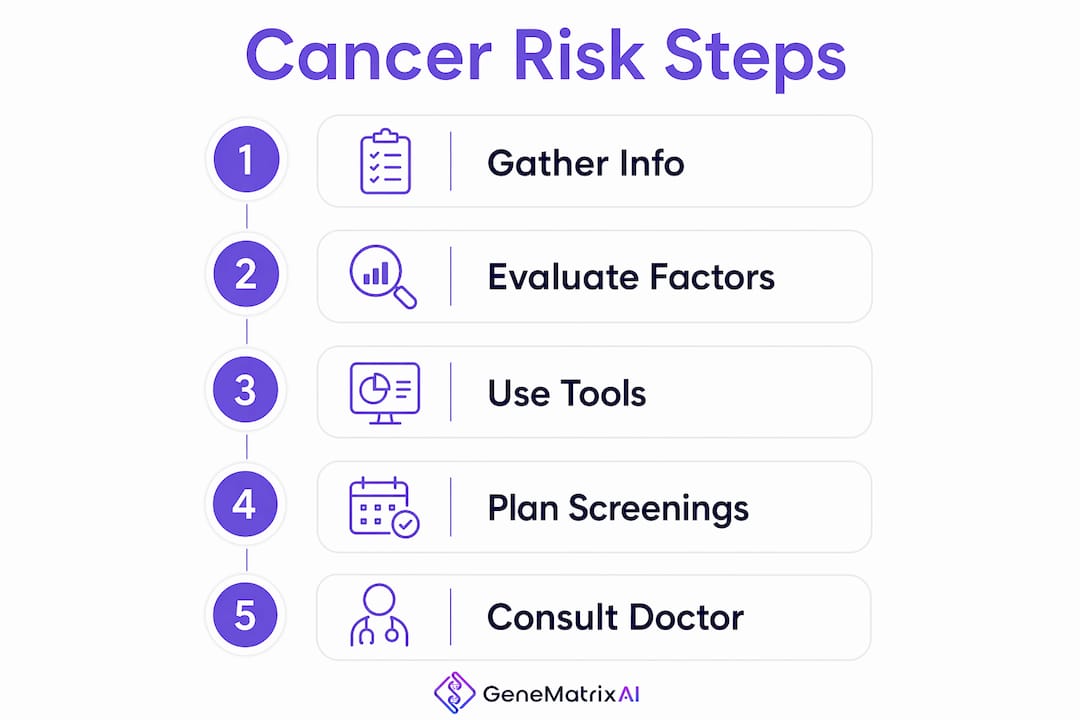
A cancer risk assessment checklist works best when it captures four categories of information: demographics, personal health history, family history, and environmental exposures. Missing even one category can skew your results significantly. Collecting precise personal and family health details before using any risk tool improves accuracy. Vague or incomplete data produces unreliable scores.

Demographics and physical data
Start with the basics: age, sex, height, and weight. These factors correlate with biological processes that influence cancer risk. Height and BMI, for example, reflect underlying hormonal and metabolic patterns rather than height itself. A clinician can explain what those correlations mean for your specific situation.
Personal health and lifestyle history
Your own medical record carries significant weight in any cancer risk evaluation. Gather the following before you begin:
- Prior cancer diagnoses or precancerous conditions
- Vaccination status, particularly for HPV and Hepatitis B
- Smoking history, including pack years and quit date if applicable
- Alcohol consumption, measured in standard drinks per week
- Physical activity level, measured in minutes per week
- Dietary patterns, especially red meat, processed food, and fiber intake
Family history details
First-degree relatives diagnosed with cancer under age 50 are a significant red flag in any hereditary cancer evaluation. Document which relatives had cancer, what type, and at what age. Include both maternal and paternal sides of your family. Patterns across generations matter as much as individual cases.
Environmental and occupational exposures
UV radiation, radon gas, asbestos, and certain industrial chemicals all raise cancer risk. Note your sun exposure habits, your home's radon test results if available, and any occupational hazards from current or past jobs.
Pro Tip: Prepare a one-page family health summary before you open any online risk tool. List each relative, their cancer type, and their age at diagnosis. This single step cuts your data entry time in half and produces far more accurate results.
How to use available tools and models for assessing your cancer risk
Several validated models exist for cancer risk evaluation, and choosing the right one depends on your specific concern and risk profile. Most evidence-based online tools take 5–10 minutes to complete. That short time investment can produce genuinely useful information.
Here is a step-by-step approach to using these tools effectively:
- Identify your primary concern. Are you focused on breast cancer, colorectal cancer, or overall cancer risk? Different models address different cancers.
- Choose a validated model. The Gail model estimates five-year breast cancer risk using age, biopsy history, and family history. The Tyrer-Cuzick model adds hormonal and genetic factors for a more detailed breast cancer estimate. General tools like the Cancer Risk Estimator aggregate modifiable and non-modifiable factors into a 0–100 score with feedback on each driver.
- Enter your data carefully. Use the family health summary you prepared. Inaccurate inputs produce inaccurate outputs.
- Read the scenario table. Many tools generate a scenario table showing how your score changes if you quit smoking, increase activity, or get vaccinated. Scenario tables help prioritize risk drivers so you can focus on the changes with the highest impact.
- Note what the tool does not measure. Most general calculators do not account for specific genetic mutations, rare hereditary syndromes, or occupational exposures in detail.
Understanding modifiable versus non-modifiable factors
Modifiable factors include tobacco use, alcohol consumption, physical inactivity, diet, UV exposure, and vaccination status. Non-modifiable factors include age, sex, and inherited genetic variants. A good risk tool separates these two categories so you can see where you have control and where you need closer medical monitoring instead.
Pro Tip: Run your results through the scenario table before you close the tool. Change one variable at a time, such as quitting smoking or adding 150 minutes of weekly exercise, and watch how your score shifts. This makes abstract risk numbers feel concrete and motivating.
Risk assessment models can over- or underestimate risk depending on the population dataset they were built on. Many breast cancer models, for instance, were developed using data from women in the UK or Sweden. That means results may not fully apply to every individual. Always treat online tool outputs as educational starting points, not clinical diagnoses.
Which lifestyle changes and screenings can lower your assessed cancer risk?
Lifestyle modification is the most direct way to act on a cancer risk evaluation. Quitting smoking, reducing alcohol, increasing physical activity, and improving diet each reduce cancer risk through distinct biological pathways. The evidence behind these changes is strong and consistent across cancer types.
High-impact lifestyle changes
- Tobacco cessation reduces risk for lung, throat, bladder, kidney, and several other cancers. The benefit begins within months of quitting.
- Alcohol reduction lowers risk for breast, liver, colorectal, and esophageal cancers. No amount of alcohol is risk-free.
- Physical activity at 150 minutes or more per week reduces risk for colorectal, breast, and endometrial cancers through hormonal and inflammatory pathways.
- Dietary changes toward more vegetables, fiber, and whole grains and away from processed meats reduce colorectal cancer risk in particular.
- Sun protection through SPF 30+ sunscreen, protective clothing, and avoiding peak UV hours cuts melanoma risk substantially.
- Vaccinations against HPV prevent cervical, throat, and anal cancers. The Hepatitis B vaccine reduces liver cancer risk.
Screening recommendations based on risk level
Risk assessment tools inform decisions on screening frequency, but they do not replace routine screenings. People at average risk follow standard age-based schedules: colonoscopy starting at 45, mammograms starting at 40 or 45 depending on guidelines, and annual low-dose CT scans for long-term heavy smokers. People at elevated risk, identified through a formal assessment, often begin screening earlier and repeat it more frequently. Your 2026 early detection guide can help you match your risk level to the right screening schedule.
Pro Tip: Pair each lifestyle goal with a specific, measurable target. "Exercise more" fails. "Walk 30 minutes after dinner five days a week" works. Specificity is what turns a risk assessment result into a lasting behavior change.
A healthcare provider should review your assessment results and screening plan together. Self-assessment tools are educational. A physician or genetic counselor adds clinical context that no algorithm can fully replicate.
How to understand genetic contributions to cancer risk
Hereditary cancer accounts for roughly 10% of all cancer diagnoses, but its impact on individual families can be far greater. Mutations in genes like BRCA1, BRCA2, MLH1, MSH2, and others associated with Lynch syndrome dramatically raise lifetime cancer risk. Understanding whether you carry one of these mutations changes the entire approach to prevention and screening.
When to consider genetic testing
Genetic testing is recommended for people who meet any of the following criteria:
- A first-degree relative diagnosed with cancer before age 50
- Multiple relatives on the same side of the family with the same cancer type
- A personal or family history of rare cancers such as male breast cancer or ovarian cancer
- A known pathogenic mutation in the family, such as a BRCA variant
- A cancer type strongly associated with hereditary syndromes, such as colorectal cancer with Lynch syndrome features
What genetic testing reveals
A genetic risk assessment identifies specific inherited mutations that raise your cancer risk. A positive result does not mean you will develop cancer. It means your risk is elevated and that targeted surveillance or preventive interventions are warranted. A negative result in someone with a strong family history still warrants discussion with a genetic counselor, since not all hereditary risk is explained by currently tested genes.
Integrating genetic results with lifestyle and screening data
Genetic insights work best when combined with lifestyle data and a structured screening plan. Someone who carries a BRCA2 mutation and also smokes faces compounding risks that require a coordinated response. Genetic counseling helps translate test results into a practical, personalized plan that accounts for both inherited and modifiable factors.
Key Takeaways
Effective cancer risk assessment combines lifestyle data, family history, and genetic testing to produce a complete picture that guides both prevention and screening decisions.
| Point | Details |
|---|---|
| Start with a complete checklist | Gather demographics, personal history, family history, and exposures before using any tool. |
| Use validated models | Tools like the Gail model and Cancer Risk Estimator provide structured, evidence-based scoring. |
| Act on modifiable factors | Tobacco cessation, alcohol reduction, and physical activity each produce measurable risk reduction. |
| Know when genetics matter | Family history of early-onset cancer or known mutations warrants formal genetic counseling and testing. |
| Treat results as educational | Online tools guide clinical conversations but do not replace professional diagnosis or screening. |
Why I think most people misuse cancer risk assessments
People tend to treat a cancer risk score the way they treat a credit score: they check it once, feel relieved or anxious, and then move on. That is the wrong approach entirely. A risk assessment is not a verdict. It is a map.
The most useful thing I have seen people do with their results is bring them to a physician appointment and ask one specific question: "Which of these risk factors should we address first?" That question converts a number into a conversation. And that conversation is where real decisions get made, whether that means scheduling a colonoscopy two years earlier than standard guidelines suggest, or finally committing to a smoking cessation program.
The limitation I see most often is over-reliance on general calculators for situations that actually require genetic testing. If your mother and her sister both had breast cancer before age 45, a general online tool will flag elevated risk. But it cannot tell you whether you carry a BRCA1 mutation. Only a clinical genetic test can do that. The gap between "elevated risk" and "known mutation" is enormous in terms of what actions are appropriate.
My honest advice: use online tools to prepare for a clinical conversation, not to replace one. The assessment is the starting point. The professional consultation is where it becomes useful.
— Tarek
Genematrix and personalized cancer risk evaluation
Knowing your risk is one thing. Having a clear plan based on your actual genetic profile is another.

Genematrix, a CLIA-certified biotechnology company based in Chicago, combines AI-driven genetic analysis with hereditary cancer screening to give you results that go beyond a general risk score. The GeneMatrixAI platform, trained on 500,000+ genetic profiles, delivers reports within 72 hours covering BRCA1/BRCA2, Lynch syndrome, and other hereditary cancer genes. The GeneCancer module integrates your genetic data with lifestyle and family history to produce a complete risk picture. Learn more about Genematrix's scientific approach to hereditary cancer testing, or explore personalized genetic testing options built for proactive health management.
FAQ
What is a cancer risk assessment?
A cancer risk assessment is a structured evaluation of your personal health history, family background, lifestyle habits, and genetic factors to estimate your likelihood of developing cancer. It produces a risk score or profile that guides screening and prevention decisions.
How long does an online cancer risk assessment take?
Most evidence-based online cancer risk tools take 5–10 minutes to complete. Accuracy improves significantly when you prepare your family health history and personal medical details before starting.
When should I consider genetic testing for cancer risk?
Genetic testing is recommended when a first-degree relative was diagnosed with cancer before age 50, when multiple relatives share the same cancer type, or when a known hereditary mutation exists in your family. A genetic counselor can confirm whether testing is appropriate for your situation.
Can a cancer risk assessment replace routine screening?
No. Risk assessment tools inform how often and when to screen, but they do not replace standard screenings like colonoscopies or mammograms. People at elevated risk often begin screening earlier and repeat it more frequently based on their assessment results.
What genes are most commonly tested in hereditary cancer screening?
BRCA1 and BRCA2 are the most widely tested genes, linked to elevated breast and ovarian cancer risk. Lynch syndrome genes including MLH1, MSH2, MSH6, and PMS2 are tested for hereditary colorectal and endometrial cancer risk.