

TL;DR:
- Genetic insights in healthcare use DNA analysis to guide disease prevention, diagnosis, and treatment decisions.
- Proper interpretation requires targeted testing, professional guidance, and integration into ongoing care routines.
Genetic insights in healthcare are defined as clinically actionable findings derived from DNA analysis that guide disease prevention, diagnosis, and treatment decisions. Knowing how to use genetic insights in care means translating your genomic data into specific steps: adjusting medications, screening earlier for hereditary cancers, or modifying lifestyle choices based on real biological risk. Tools like polygenic risk scores, pharmacogenomics (PGx) testing, and BRCA1/BRCA2 screening have moved from research labs into everyday clinical practice. This guide walks you through the prerequisites, interpretation, and practical integration of genetic data so your results become a plan, not just a printout.
How to use genetic insights in care: what you need first
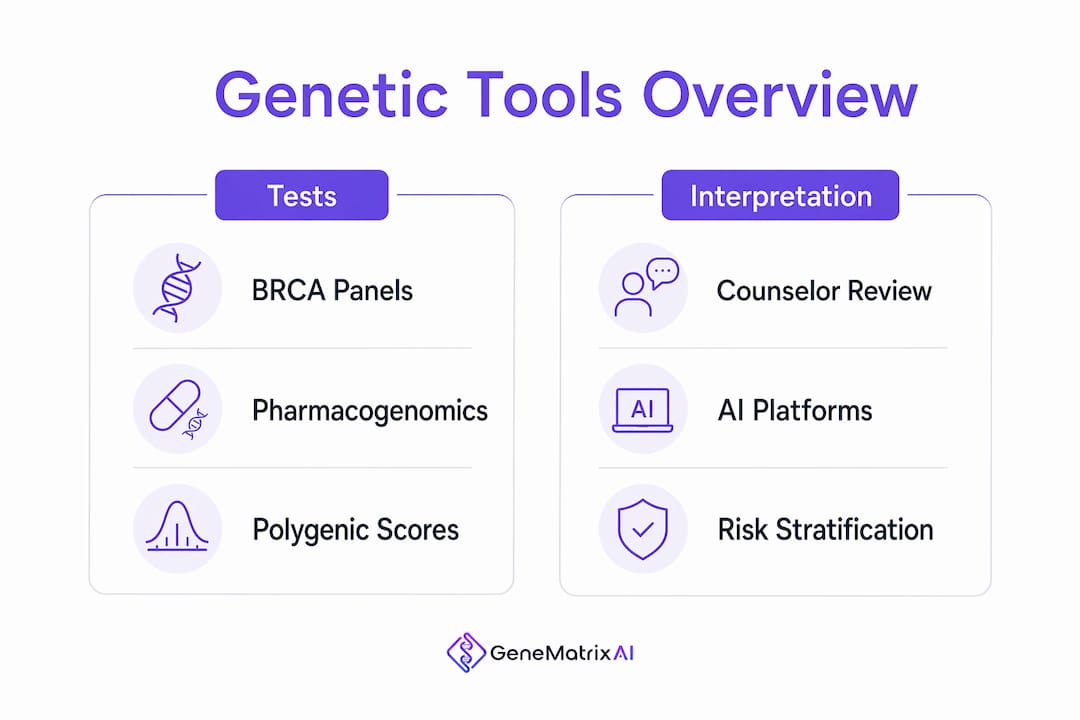
Before you can act on genetic data, you need the right test for the right question. Genetic testing falls into several categories: single-gene tests (such as BRCA1/BRCA2 for hereditary breast and ovarian cancer), panel tests (such as Lynch syndrome multigene panels), pharmacogenomic profiles, and polygenic risk score assessments. Each serves a different clinical purpose, and choosing the wrong one produces results that are hard to interpret and even harder to act on.
International standards mandate comprehensive pre-test information and strict informed consent to protect your privacy during genetic testing. That requirement exists for a reason. Genetic data is permanent, affects family members, and carries insurance and psychological implications. You should receive a clear explanation of what the test measures, what it cannot tell you, and what the results might mean for relatives before you ever submit a sample.
Who should be on your care team
Applying genetic insights in healthcare requires more than a test kit. A multidisciplinary team typically includes a genetic counselor, a clinical geneticist, and, for medication-related questions, a clinical pharmacologist. Genetic test reports should be interpreted by these specialists together to ensure clinical accountability and appropriate therapeutic decisions. Your primary care physician coordinates the process, but the specialists translate the data into decisions.
Pro Tip: Before ordering any genetic test, write down the specific health question you want answered. "Am I at risk for colon cancer given my family history?" is a testable question. "Tell me everything about my DNA" is not. Focused questions produce focused, useful results.
Tools and services at a glance
| Tool or service | Primary use | Who interprets it |
|---|---|---|
| BRCA1/BRCA2 panel | Hereditary breast and ovarian cancer risk | Genetic counselor, oncologist |
| Lynch syndrome panel | Hereditary colorectal cancer risk | Genetic counselor, gastroenterologist |
| Pharmacogenomic (PGx) profile | Medication metabolism and safety | Clinical pharmacologist, prescriber |
| Polygenic risk score (PRS) | Multifactorial disease risk estimate | Geneticist, cardiologist, psychiatrist |
| Nutrigenomics panel | Diet and metabolic response | Dietitian, primary care physician |
How do you interpret genetic test results for personalized care?
Reading a genetic test report without guidance is like reading a lab panel without knowing the reference ranges. The report will flag variants as pathogenic, likely pathogenic, variant of uncertain significance (VUS), likely benign, or benign. Pathogenic and likely pathogenic variants require immediate clinical follow-up. A VUS means the science is not yet settled, and you should revisit it as databases update.

Polygenic risk scores combined with clinical factors provide more accurate personalized disease risk estimates than genetics alone. A high PRS for cardiovascular disease means more when paired with your blood pressure, cholesterol, and smoking history. Without those clinical anchors, a score is just a number. Your cardiologist or primary care physician should always layer your PRS onto your full clinical picture before recommending action.
Pharmacogenomics: matching drugs to your biology
Pharmacogenomics is the study of how your genes affect your response to medications. PGx testing can reduce adverse drug reactions and improve medication safety by personalizing prescriptions based on your metabolizer status. For example, a person who is a poor metabolizer of CYP2D6 will accumulate standard doses of codeine or certain antidepressants to toxic levels. Knowing this before prescribing prevents harm rather than correcting it after the fact.
AI systems now extract pharmacogenomic data with 91.9% accuracy from biomedical literature, enabling faster clinical application in prescriptions. That accuracy level means AI-assisted PGx tools are reliable enough for real prescribing decisions. Platforms like Genematrix's GeneMatrixAI use this kind of analysis to deliver reports within 72 hours, making the turnaround practical for active treatment planning.
Key markers to ask your provider about include:
- CYP2D6 and CYP2C19: govern metabolism of antidepressants, antipsychotics, and antiplatelet drugs
- TPMT and NUDT15: determine safe dosing for thiopurine chemotherapy agents
- SLCO1B1: affects statin-related muscle toxicity risk
- HLA-B*5701: predicts severe hypersensitivity to abacavir in HIV treatment
Pro Tip: Ask your pharmacist or physician whether your current medication list has been reviewed against your PGx profile. Many drug interactions are preventable with genetic medication review before a prescription is written.
What are the practical steps to incorporate genetic insights into ongoing care?
Genetic data is not a one-time event. Your profile stays relevant across your lifetime, and the clinical guidelines that interpret it keep evolving. Incorporating genetic insights into ongoing care requires a structured approach.
- Share your results with every provider. Give copies of your genetic test reports to your primary care physician, specialists, and pharmacist. Do not assume records transfer automatically between systems.
- Carry a pharmacogenomic wallet card. Patients often serve as their own advocates by maintaining PGx wallet cards to share genetic information with providers in emergency or urgent care settings where your full record may not be accessible.
- Request EHR integration. Ask your healthcare system whether your PGx profile can be added to your electronic health record. Clinicians need comprehensive PGx profiles integrated into EHRs to effectively use genetic insights at the prescribing point.
- Schedule periodic reviews. Revisit your genetic counselor every one to two years, or after any major diagnosis in a first-degree relative. New variants are reclassified regularly as research advances.
- Engage a multidisciplinary team. Interdisciplinary collaboration and clinician genomic literacy are critical to success when utilizing genetic data for patient care. A single provider rarely has the full picture.
Comparing integration approaches
| Approach | Best for | Key limitation |
|---|---|---|
| Patient-held wallet card | Emergency settings, multi-provider care | Relies on patient to carry and present it |
| EHR-embedded PGx alerts | Active prescribing decisions | Requires system-level implementation |
| Periodic genetic counselor review | Long-term risk management | Scheduling gaps can delay reclassification updates |
| Multidisciplinary tumor board | Complex hereditary cancer cases | Not available in all healthcare systems |
How to avoid common mistakes when using genetic insights in care
The most frequent mistake is collecting genetic data without a clear clinical question. Genetic testing is most valuable when focused on specific clinical questions rather than broad screenings, because unfocused results generate probabilistic noise that is difficult to act on. A panel that returns dozens of variants of uncertain significance creates anxiety without direction.
A second common error is treating genetic risk as genetic destiny. A high polygenic risk score for type 2 diabetes does not mean you will develop it. It means your baseline risk is elevated and that lifestyle and monitoring interventions carry higher return for you than for someone with average genetic risk. Polygenic risk scores require transparency, standardization, and combined interpretation with clinical factors to be effective. Taken alone, they are incomplete.
Other pitfalls to avoid:
- Skipping genetic counseling before or after testing, especially for hereditary cancer panels
- Ordering direct-to-consumer tests for clinical decisions without professional validation
- Ignoring family history when interpreting results, since genetic risk is always contextual
- Failing to update providers when new test results arrive or family diagnoses change
"Accumulating genetic data without focused clinical questions may lead to confusion; phenotype measurements often provide clearer actionable information." — Peter Attia, MD
Ethical considerations matter here too. Genetic information about you is also information about your biological relatives. Decisions about disclosure, insurance implications, and reproductive planning should involve a genetic counselor who understands both the science and the personal dimensions of the data.
Key takeaways
Applying genetic insights in healthcare delivers the most value when paired with focused clinical questions, professional interpretation, and active integration into your ongoing care routine.
| Point | Details |
|---|---|
| Start with a specific question | Focused tests yield actionable results; broad screenings often produce uninterpretable noise. |
| Use a multidisciplinary team | Geneticists, pharmacologists, and counselors together produce safer, more accurate clinical decisions. |
| Integrate PGx into your EHR | EHR-embedded alerts deliver real-time prescribing guidance and reduce adverse drug reactions. |
| Carry your PGx profile | A wallet card or portable summary protects you in emergency settings where records are unavailable. |
| Revisit results regularly | Variant classifications change as research advances; annual or biannual reviews keep your care current. |
What I've learned about genetic insights that most guides skip
I have watched families receive genetic test results and then do nothing with them for years, not because they did not care, but because no one handed them a clear next step. The test was the end of the process instead of the beginning. That gap is the real problem in applying genetic insights in healthcare today.
The technology has outpaced the infrastructure. AI-driven platforms like Genematrix's GeneMatrixAI can return a hereditary cancer risk report within 72 hours. But if your primary care physician has not been trained to read a PGx report, that speed means nothing. The bottleneck is human, not computational.
My honest recommendation: treat genetic testing the way you treat a specialist referral. You would not see a cardiologist without sending your records ahead. Do not get a genetic test without scheduling a follow-up with a genetic counselor before you even receive the results. That single habit changes the outcome more than any specific test or platform.
The families who benefit most from genetic insights are not the ones with the most data. They are the ones who asked the sharpest questions and built the right team around the answers.
— Tarek
How Genematrix helps you act on your genetic data
Genematrix is a Chicago-based, CLIA-certified biotechnology company built specifically for the gap between genetic data and clinical action. Their GeneMatrixAI platform is trained on 500,000+ genetic profiles and delivers reports within 72 hours across hereditary cancer screening, pharmacogenomics, psychiatric genetics, pediatric testing, and nutrigenomics.

If you are ready to move from information to a care plan, Genematrix's hereditary cancer testing service covers BRCA1/BRCA2, Lynch syndrome, and dozens of additional hereditary cancer genes with AI-powered interpretation. For families navigating congenital heart disease and genetic risk, resources like CHD genetic risk information complement the clinical picture. Visit Genematrix's science page to review their research, lab certifications, and testing technology before you start.
FAQ
What does it mean to use genetic insights in care?
Using genetic insights in care means applying DNA-based findings, such as polygenic risk scores or pharmacogenomic profiles, to guide specific healthcare decisions including disease screening, medication selection, and prevention strategies.
How does genetic testing inform treatment decisions?
Genetic testing identifies variants that affect drug metabolism, disease risk, and biological function. Pharmacogenomic results, for example, tell prescribers which medications are safe and effective for your specific metabolizer status, reducing trial-and-error prescribing.
What is a polygenic risk score and how is it used?
A polygenic risk score estimates your genetic predisposition to conditions like heart disease, diabetes, or certain cancers by analyzing hundreds of thousands of genetic variants. It is most useful when combined with clinical factors like blood pressure, cholesterol, and family history rather than interpreted in isolation.
Do I need a genetic counselor before testing?
Yes. International guidelines require pre-test counseling and informed consent before hereditary genetic testing. A genetic counselor explains what the test can and cannot tell you, prepares you for possible outcomes, and helps you plan next steps based on results.
How often should I update my genetic care plan?
Genetic variant classifications are updated regularly as research advances. Reviewing your results with a genetic counselor every one to two years, or after a new diagnosis in a close relative, keeps your care plan current and clinically relevant.