

TL;DR:
- Gene-based therapies modify, add, or silence genes to treat diseases at their biological source.
- They include gene transfer, gene editing, and gene silencing, each suited to different clinical needs.
Gene-based therapies are medical techniques that modify, add, replace, or silence genes to treat or prevent disease at its biological root. The term covers a broad field that clinicians and researchers formally call gene therapy, though defining gene-based therapies today also includes gene editing, which goes further by directly rewriting DNA sequences. According to Genome.gov, gene therapy uses viral or non-viral vectors to deliver genetic material into cells. The FDA frames this shift as medicine moving away from symptom management toward curative genetic approaches. For patients, caregivers, and anyone navigating genetic medicine, understanding these distinctions matters more now than ever.
What are the main types and mechanisms of gene-based therapies?
Gene-based therapies fall into two broad categories: gene transfer and gene editing. Each works differently at the molecular level, and each suits different clinical situations.
Gene transfer delivers a working copy of a gene into a patient's cells without changing the existing DNA. The added gene compensates for a faulty or missing one. This approach works well when a single defective gene causes a disease, such as in hemophilia or spinal muscular atrophy.
Gene editing goes a step further. Techniques like CRISPR-Cas9 cut the DNA at a specific location and either remove, replace, or repair a sequence. Gene editing directly alters DNA sequences to correct mutations at their source. This precision makes editing attractive for conditions where the faulty gene actively causes harm rather than simply failing to function.
A third mechanism, gene silencing, switches off genes that produce harmful proteins. This approach is used in some cancer therapies and in conditions caused by overactive gene expression.
Therapies also divide along a biological line: somatic versus germline. Somatic gene therapies modify cells in a living patient and affect only that individual. Germline modifications change reproductive cells and would pass to future generations. Germline editing in humans remains ethically restricted and is not currently approved for clinical use.
| Therapy type | Mechanism | Example application |
|---|---|---|
| Gene addition | Inserts a functional gene copy | Hemophilia, SMA |
| Gene replacement | Swaps a faulty gene for a working one | Inherited retinal disease |
| Gene silencing | Suppresses harmful gene expression | Certain cancers, transthyretin amyloidosis |
| Gene editing (CRISPR) | Cuts and rewrites a DNA sequence | Sickle cell disease, beta-thalassemia |
| Germline modification | Alters reproductive cell DNA | Not approved for clinical use |
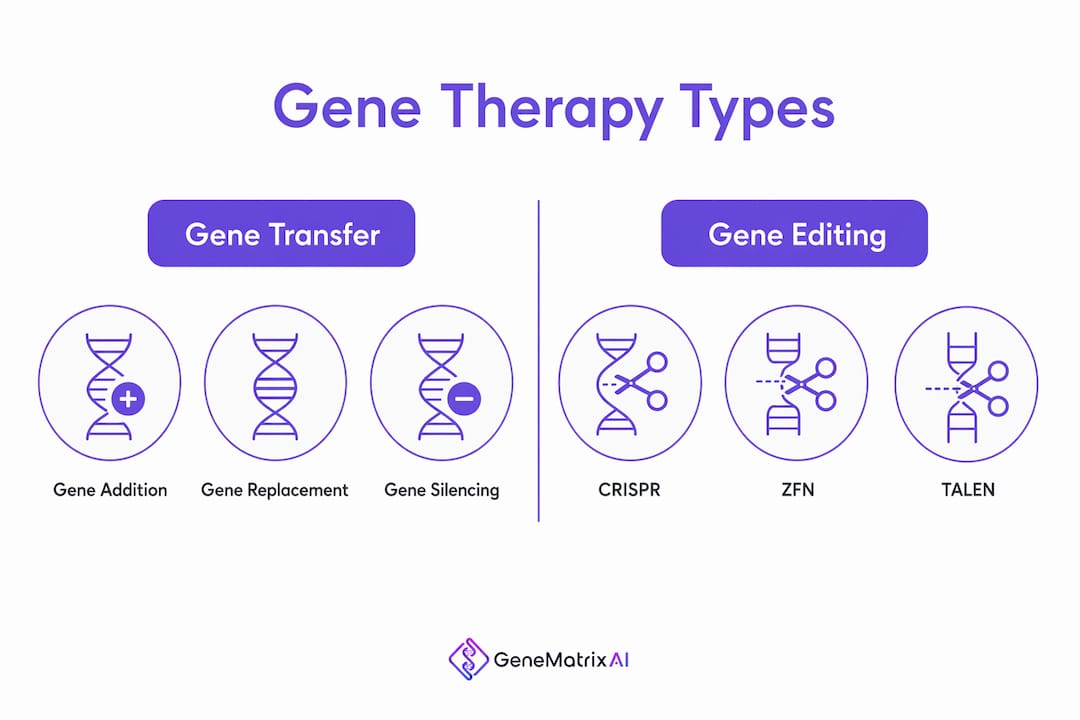
Understanding clinical genomics helps place these therapy types in their broader medical context.
How are gene-based therapies delivered to patients?
Delivery method determines where and how the genetic material reaches its target cells. Two primary approaches exist: in vivo and ex vivo.

In vivo gene therapy injects vectors directly into the patient's body. The vector travels through the bloodstream or is injected into a specific tissue, such as the eye or muscle, and delivers its genetic payload to target cells. This method is simpler logistically but requires the vector to navigate the body's immune defenses.
Ex vivo therapy takes a different path. Clinicians collect cells from the patient, modify them in a laboratory setting, and then reinfuse the corrected cells back into the body. The stem cell collection process uses mobilized apheresis, a 4–6 hour procedure similar to platelet donation. Patients often underestimate the time and recovery this step requires.
Vectors are the delivery vehicles that carry genetic material into cells. Viral vectors, particularly adeno-associated virus (AAV) and lentivirus, are the most common. Viral vectors are engineered to be non-pathogenic by removing the components that cause disease while preserving their ability to enter cells. Non-viral vectors, such as lipid nanoparticles, offer an alternative with a lower immune response risk, though they typically deliver genes less efficiently.
- AAV vectors: Preferred for in vivo delivery to muscle, liver, and eye tissues; low immune reactivity
- Lentiviral vectors: Used in ex vivo therapies; integrate stably into the genome for long-term expression
- Lipid nanoparticles: Non-viral option; used in mRNA-based therapies; no integration into DNA
- Plasmid DNA: Simple non-viral option; lower efficiency but useful in some cancer vaccine applications
Pro Tip: If you or a family member is preparing for an ex vivo gene therapy, ask your care team specifically about the apheresis schedule. The collection alone takes most of a working day, and some protocols require multiple sessions before the modified cells are ready for reinfusion.
What are the current clinical applications and challenges?
Gene-based therapies now treat a growing list of diseases, and the clinical scope is expanding. Early approvals focused on rare inherited disorders where a single gene defect causes severe illness. Treatments for spinal muscular atrophy, inherited retinal dystrophy, and certain immune deficiencies have received regulatory approval in the United States.
Cancer is the fastest-growing application area. CAR-T cell therapy, a form of ex vivo gene therapy, engineers a patient's own immune cells to recognize and attack cancer cells. This approach has shown strong results in certain blood cancers, including B-cell lymphomas and multiple myeloma. Gene therapy is expanding toward cancer and other common conditions as delivery precision improves. That expansion reflects both scientific progress and growing clinical confidence in the technology.
Personalized treatment frameworks increasingly incorporate genetic therapy options, particularly for patients with hereditary cancer syndromes.
| Disease area | Therapy type used | Key challenge |
|---|---|---|
| Spinal muscular atrophy | In vivo gene addition (AAV) | High cost, one-time dosing window |
| Inherited retinal dystrophy | In vivo gene addition (AAV) | Delivery precision to retinal cells |
| Sickle cell disease | Ex vivo gene editing (CRISPR) | Complex manufacturing and collection |
| B-cell lymphoma | Ex vivo CAR-T (gene transfer) | Cytokine release syndrome risk |
| Beta-thalassemia | Ex vivo gene addition | Long-term expression durability |
Three technical challenges define the current limits of the field. First, sustained gene expression remains difficult. Cells divide, and the inserted gene may dilute over time or be silenced by the body. Second, immune responses to vectors can reduce efficacy or cause adverse events. Third, delivering genes precisely to the right tissue without off-target effects requires highly specialized engineering. These hurdles explain why gene therapies remain complex, expensive, and largely confined to specialized medical centers.
Pro Tip: When researching a specific gene therapy, look for whether the trial or approved product reports long-term follow-up data beyond two years. Short-term results often look strong; durability data tells the real story about whether the therapy holds.
How do gene therapy and gene editing differ and complement each other?
The terms "gene therapy" and "gene editing" are often used interchangeably, but they describe distinct approaches. Knowing the difference helps patients and caregivers ask better questions and understand what a proposed treatment actually does.
Gene therapy delivers a functional gene into a cell to compensate for a defective one. The original faulty gene stays in place. The new gene works alongside it, producing the protein the body needs. This approach does not rewrite the genome. It adds to it.
Gene editing modifies the actual DNA sequence. Tools like CRISPR-Cas9 act as molecular scissors, cutting DNA at a precise location. The cell's natural repair machinery then fixes the break, either by inserting a new sequence or by disabling the gene entirely. Gene editing and gene therapy are complementary, each suited to different clinical scenarios.
The choice between them depends on the disease mechanism:
- Use gene therapy when: the goal is to restore a missing function; the faulty gene is recessive; long-term expression from a stable vector is acceptable
- Use gene editing when: the faulty gene is dominant and actively harmful; a precise correction is needed; the goal is a permanent, one-time fix at the DNA level
- Gene editing carries higher precision requirements because an off-target cut in the wrong location can create new mutations
- Gene therapy carries vector-related risks including immune response and, with some viral vectors, a small risk of insertional mutagenesis
How genetic data informs healthcare decisions is central to choosing between these two paths. A patient's specific mutation type, inheritance pattern, and overall health profile all shape which approach a clinical team will recommend.
Key Takeaways
Gene-based therapies work by modifying, adding, or editing genetic material to address disease at its biological source, with delivery method, vector choice, and therapy type each determining clinical outcomes.
| Point | Details |
|---|---|
| Core definition | Gene-based therapies modify genes through addition, replacement, silencing, or editing to treat disease. |
| Two delivery paths | In vivo injects vectors directly; ex vivo modifies cells outside the body before reinfusion. |
| Therapy vs. editing | Gene therapy adds functional genes; gene editing rewrites the DNA sequence itself. |
| Expanding applications | Approved uses now include SMA, retinal dystrophy, sickle cell disease, and blood cancers. |
| Key challenges | Sustained expression, immune response, and delivery precision remain the main technical hurdles. |
The part of gene therapy most people overlook
Most conversations about gene-based therapies focus on the science, and rightly so. But after following this field closely, the gap I keep seeing is not scientific. It is about patient preparation and expectation management.
People hear "gene therapy" and imagine a single injection that fixes everything. The reality for ex vivo therapies is far more demanding. The apheresis collection alone takes most of a day. Manufacturing the modified cells can take weeks. Then comes the reinfusion, followed by close monitoring for immune reactions. That is a months-long process, not a clinic visit.
The other thing worth saying plainly: gene editing is not the same as gene therapy, and conflating them leads to poor questions and worse decisions. A patient asking about CRISPR-based sickle cell treatment needs to understand they are discussing a permanent DNA rewrite, not a gene supplement. That distinction changes the informed consent conversation entirely.
The field is genuinely moving toward curative outcomes rather than lifelong symptom management. That is real progress. But the complexity of these treatments means that genomics-based patient management requires as much attention to patient education as it does to molecular biology. The science is ahead of most patients' understanding, and that gap needs to close.
— Tarek
Hereditary cancer testing and personalized genetic medicine
Understanding gene-based therapies starts with knowing your own genetic profile. For people with a family history of cancer, that means identifying whether inherited mutations like BRCA1, BRCA2, or Lynch syndrome variants are present before symptoms appear.

Genematrix is a Chicago-based, CLIA-certified biotechnology company that offers hereditary cancer genetic testing with AI-driven analysis trained on 500,000+ genetic profiles. Results come back within 72 hours and include a report that connects your genetic data to real clinical decisions. For physicians and health systems, Genematrix's GeneCancer module provides the kind of precise, early-stage risk data that makes proactive treatment planning possible. Knowing your genetic risk is the first step toward using the advances in genetic medicine that this field now offers.
FAQ
What is the gene therapy definition in simple terms?
Gene therapy is a medical technique that delivers genetic material into a patient's cells to treat or prevent disease. It works by adding, replacing, or silencing genes using a delivery vehicle called a vector.
What are the main types of gene-based therapies?
The main types are gene addition, gene replacement, gene silencing, and gene editing. Each targets disease differently, from compensating for a missing gene to directly rewriting a faulty DNA sequence.
How does CRISPR differ from traditional gene therapy?
Traditional gene therapy adds a functional gene without changing existing DNA. CRISPR is a gene editing tool that cuts and rewrites the DNA sequence itself, making it a more permanent but technically demanding approach.
What diseases are currently treated with gene-based therapies?
Approved treatments exist for spinal muscular atrophy, inherited retinal dystrophy, sickle cell disease, beta-thalassemia, and certain blood cancers including B-cell lymphomas. The field is expanding toward more common conditions as delivery technology improves.
Are viral vectors in gene therapy safe?
Viral vectors used in approved gene therapies are engineered to remove disease-causing components, making them non-pathogenic. The FDA requires extensive safety testing before any vector-based therapy reaches patients.